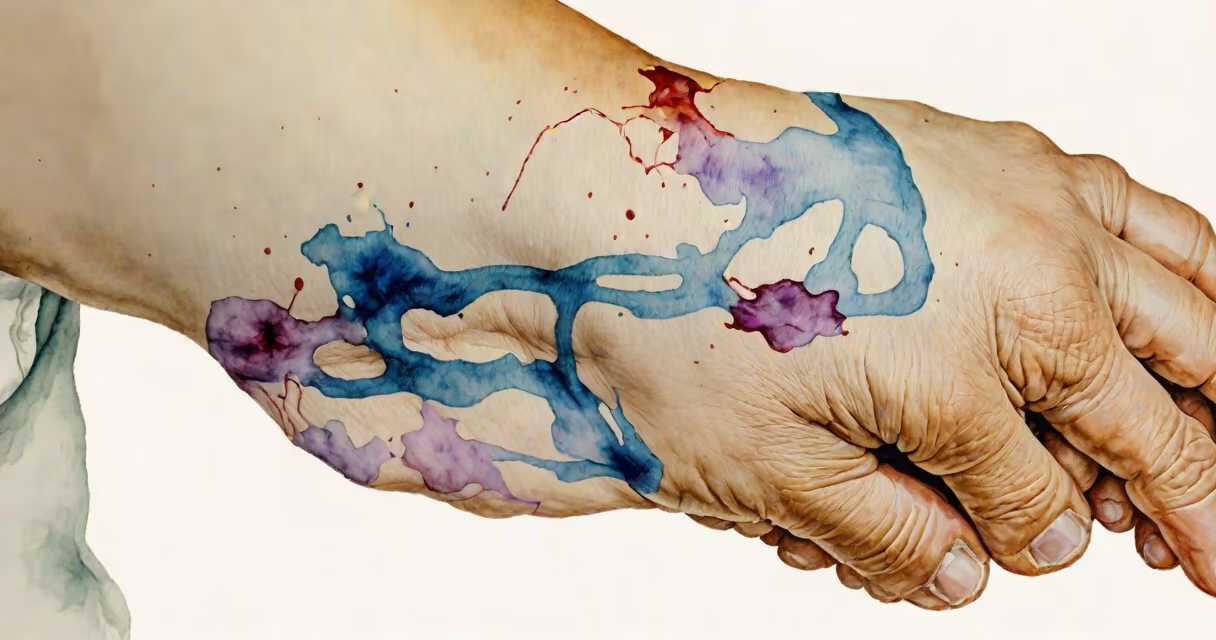
Extreme bruising after surgery results from uncontrolled bleeding under the skin due to disrupted blood vessels, impaired clotting mechanisms, or medications that thin the blood. This occurs when surgical trauma damages capillaries and the body fails to stop the leak effectively.
Surgeons routinely cut through tissue layers during operations. Even minor damage to small blood vessels can lead to significant extravasation-blood leaking into surrounding tissues-especially if the patient has low platelet counts, abnormal clotting factors, or is taking anticoagulants. The bruise appears as a blue-purple discoloration because hemoglobin breaks down and releases bilirubin and iron compounds into the skin.
The American Society of Anesthesiologists notes that up to 30% of patients undergoing major abdominal or orthopedic surgery experience moderate to severe bruising, particularly in areas with thin skin like the arms and legs. This is not always pathological-it's often a normal response to tissue disruption-but excessive bruising may indicate a deeper issue.
Bruising begins when blood escapes from damaged capillaries into the interstitial space. The body responds by activating platelets and coagulation proteins to form a fibrin mesh that traps red blood cells and stops further leakage. When this system fails, bleeding continues and spreads, creating larger, darker bruises.
After surgery, inflammation increases capillary permeability. Combined with reduced mobility and pressure changes from anesthesia, this allows blood to pool in dependent areas-like the lower back or legs-leading to extensive bruising even without direct injury. A 2021 study in the Journal of Clinical Anesthesia found that patients who remained immobile for over 6 hours post-op had 2.3 times higher bruising severity compared to those mobilized within 2 hours.
Wound site bruising can extend beyond the incision area. For example, after a laparoscopic cholecystectomy, bruising may appear on the shoulder due to diaphragmatic irritation from carbon dioxide insufflation. However, this is not true bruising-it's referred pain, not hemorrhage. True bruising involves actual blood accumulation.
Several medical conditions increase the risk of extreme bruising after surgery:
Medications such as aspirin, NSAIDs (ibuprofen, naproxen), and certain antidepressants (SSRIs) impair platelet function. Aspirin irreversibly blocks COX-1, reducing thromboxane A2 production-critical for platelet activation. Stopping these drugs 5-7 days before surgery reduces bleeding complications by 35%, per guidelines from the American College of Surgeons.
Many assume bruising is simply "normal" after surgery. But while mild bruising is expected, extreme bruising-spreading rapidly, involving large areas, or appearing in unusual locations like the face or torso-signals a problem. One common error is attributing bruising to the surgeon's skill, when it's often a systemic issue.
Another misconception is that bruising indicates infection. It does not. Infection presents with redness, warmth, pus, and fever-not discoloration alone. However, if bruising is accompanied by swelling, increasing pain, or fever, it may suggest a hematoma or abscess, requiring imaging.
A key distinction: bruising vs. hematoma. Bruising is superficial, diffuse, and fades over days. A hematoma is a localized collection of blood, often firm to touch, and may require drainage. A 2022 review in Plastic and Reconstructive Surgery found that 12% of post-op patients developed hematomas after breast augmentation, most occurring within 24 hours of surgery.
In 2023, a 68-year-old woman underwent knee replacement. She was on warfarin for atrial fibrillation and stopped it five days pre-op, but her INR (International Normalized Ratio) was still 2.8 at surgery. Post-op, she developed bruising extending from her thigh to her calf, with a palpable mass in the upper leg. MRI revealed a 6 cm hematoma. She required a blood transfusion and delayed rehabilitation.
This case highlights that stopping anticoagulants isn't enough-monitoring INR levels is critical. The patient's INR was above the safe threshold (usually ≤1.5) for surgery, increasing bleeding risk despite discontinuation.
Consult your surgeon if bruising:
These signs may indicate internal bleeding or a clotting disorder. The Centers for Disease Control and Prevention recommends evaluating any post-op bruising that worsens after 48 hours, especially in older adults or those with chronic illness.
I once observed a patient who developed extensive bruising after a routine hernia repair. The surgeon initially dismissed it as normal. By day three, the patient's hemoglobin dropped from 13.2 to 9.1 g/dL. Further testing revealed undiagnosed von Willebrand disease. Early detection prevented life-threatening hemorrhage.
Extreme bruising after surgery is not the same as:
Understanding the difference between bruising and other post-op symptoms prevents unnecessary anxiety and ensures timely intervention.
Extreme bruising after surgery is not inevitable. Identifying risk factors early-medication use, clotting disorders, nutritional status-can reduce complications. Always discuss your full medical history and current medications with your surgical team before procedures.