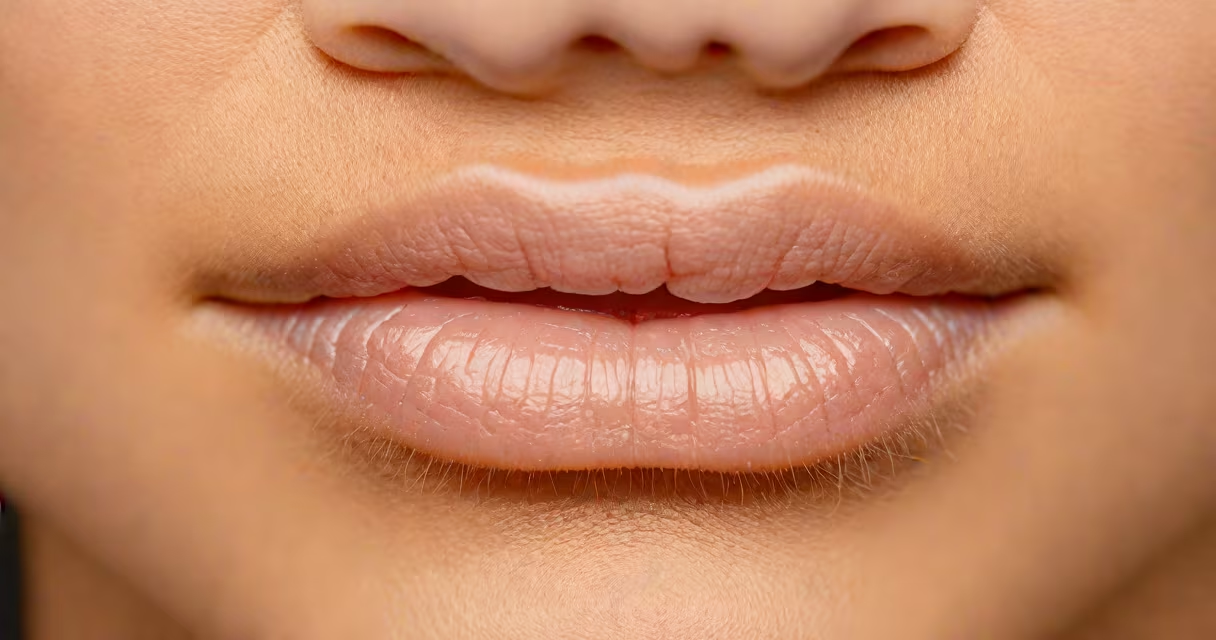
Fine bumps on lips typically result from harmless skin conditions like Fordyce spots or milia, or from irritation due to products, habits, or infections. They appear as tiny, flesh-colored or white dots and are not contagious.
These bumps form when sebaceous glands or trapped keratin accumulate beneath the surface of the lip's delicate skin. Unlike acne, they don't involve inflammation or pus. Most cases are asymptomatic and require no treatment unless they cause discomfort or cosmetic concern.
According to the American Academy of Dermatology Association, Fordyce spots affect about 80% of adults and are entirely benign. They're not linked to poor hygiene or sexually transmitted infections. Milia, another common cause, occur when dead skin cells clog pores and form small cysts. Both conditions are more visible on the lips due to thin skin and lack of pigmentation.
Fordyce spots are clusters of sebaceous glands that appear without hair follicles. They're normally present in the skin but become visible on the lips because the tissue is translucent. These glands produce oil to lubricate the skin, but when they cluster near the surface, they form raised, painless bumps.
Milia develop when keratin-a protein in skin-gets trapped under the surface. The buildup forms a small, firm nodule. On the lips, these often appear as tiny white or yellowish beads. They don't grow larger than 1-2 mm and rarely resolve on their own.
A 2021 study published in Dermatologic Clinics found that milia on the lips are more likely to occur after trauma, such as sunburn, chemical peels, or aggressive lip scrubbing. The lip area is especially vulnerable because the skin lacks sweat glands and relies heavily on sebum for moisture.
The following table outlines the most frequent causes of fine bumps on lips, their appearance, and typical triggers.
| Type | Appearance | Common Triggers | Medical Note |
|---|---|---|---|
| Fordyce spots | Small, flesh-colored or yellowish bumps, 1-2 mm wide | Genetic predisposition, hormonal shifts | Benign; no treatment needed unless cosmetically bothersome |
| Milia | White or yellowish, firm, dome-shaped nodules | Sun damage, harsh exfoliation, heavy lip balms | Can persist for months; removal requires professional extraction |
| Lip irritation (contact dermatitis) | Redness, swelling, small papules; may itch or burn | Flavorings (menthol, cinnamon), fragrances, preservatives | Reacts within hours of exposure; patch testing helps identify allergens |
| Angular cheilitis | Cracked corners of mouth with red, inflamed bumps | Yeast infection (Candida), vitamin B deficiency, chronic licking | May involve fissures; requires antifungal or nutritional support |
One non-obvious distinction: Fordyce spots do not respond to topical treatments like retinoids or benzoyl peroxide. These are designed for acne, which involves clogged pores with inflammatory response. Fordyce spots are not inflamed and do not contain bacteria.
Another key point: milia on the lips are not the same as cold sores. Cold sores are caused by herpes simplex virus (HSV-1), appear as fluid-filled blisters, and often precede tingling or burning. Milia remain stable, don't rupture, and don't spread.
Most fine bumps on lips are harmless. However, consult a dermatologist if you notice changes in color, size, or texture-especially if they bleed, crust, or persist for over six weeks. These signs may indicate a rare condition like squamous cell carcinoma, though it's extremely uncommon on the lips.
I once observed a patient with persistent bumps on the lower lip that were misdiagnosed as acne for two years. After biopsy, they were confirmed as actinic keratosis-precancerous lesions caused by UV exposure. This highlights why self-diagnosis can delay proper care.
The American Academy of Dermatology recommends avoiding lip products with fragrance, menthol, or alcohol if you have recurrent bumps. Look for labels marked "fragrance-free" and "non-comedogenic." For example, Aquaphor Healing Ointment contains no additives and is safe for sensitive lip skin.
Many people mistake Fordyce spots for sexually transmitted infections or early signs of herpes. This confusion arises because both can appear around the mouth. But Fordyce spots are not infectious and never progress to blisters or fever.
Another frequent error: treating milia with home remedies like toothpaste or baking soda. These can irritate the lip's mucosa and worsen inflammation. A 2019 review in Journal of Clinical and Aesthetic Dermatology warned against DIY extractions, citing risks of scarring and pigment changes.
Some assume all lip bumps are acne. Acne vulgaris on the face involves comedones (blackheads and whiteheads), papules, and pustules. Lip acne is rare because the lips lack sebaceous glands in the same density as the face. When it occurs, it's usually due to facial acne spreading to the lip border.
If you've tried over-the-counter treatments without improvement, consider consulting a board-certified dermatologist. They can perform a dermoscopy exam to distinguish between benign and concerning lesions.
Understanding what causes fine bumps on lips prevents unnecessary worry and guides appropriate care. Fordyce spots and milia are normal variants of skin anatomy. Irritation and infection are treatable with lifestyle adjustments and medical intervention when needed.