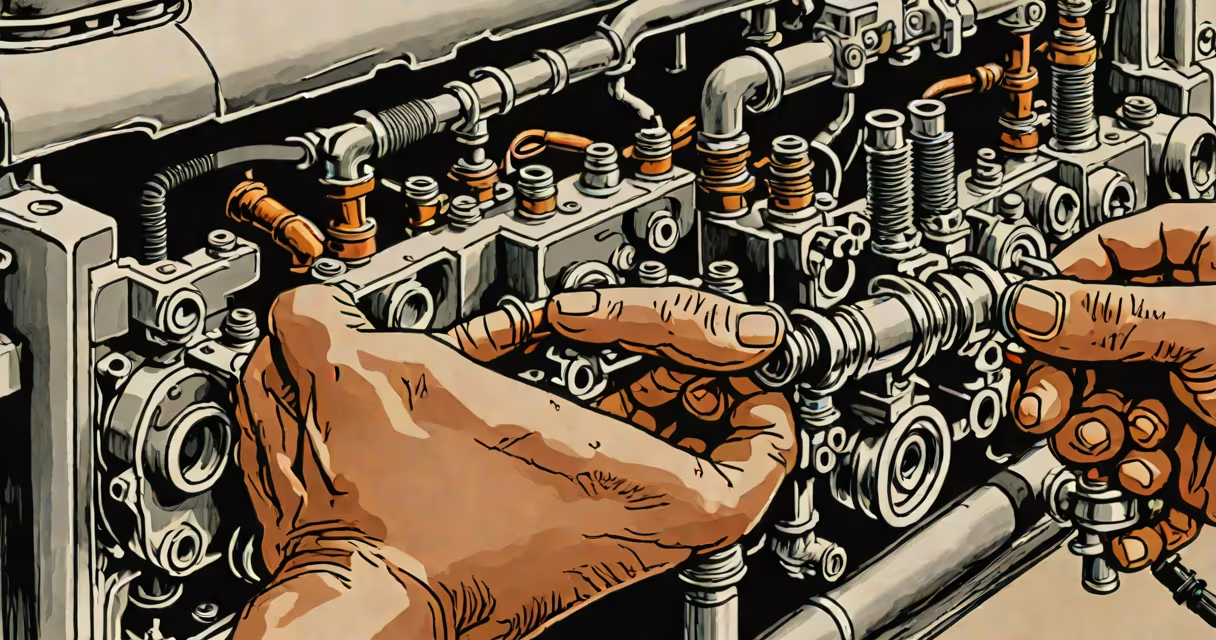
Diesel technicians diagnose, repair, and maintain diesel-powered engines in commercial vehicles, construction equipment, and industrial machinery. They work with high-pressure fuel systems, advanced emissions controls, and electronic engine management to ensure performance, safety, and compliance with environmental regulations.
Diesel engines run on compressed air ignition, not spark plugs. This requires precise fuel injection timing and pressure control-typically between 20,000 and 30,000 psi. A diesel technician ensures these systems function within tight tolerances. They use diagnostic scanners, pressure gauges, and oscilloscopes to identify issues ranging from clogged injectors to faulty sensors.
According to the U.S. Bureau of Labor Statistics, diesel technicians held about 365,000 jobs in 2022, with median annual pay of $54,190. The field demands mechanical aptitude, attention to detail, and formal training. Most employers require completion of a vocational program or certification from the National Institute for Automotive Service Excellence (ASE).
A diesel technician performs routine inspections, replaces worn components, and resolves complex failures. Their work begins with a symptom report-engine misfires, reduced power, or excessive smoke-and ends with verified performance. They follow manufacturer service bulletins and use torque wrenches, micrometers, and digital multimeters to meet specifications.
Common tasks include replacing fuel filters, adjusting injector spray patterns, testing glow plug circuits, and calibrating electronic control modules. When a truck fails to start, they may check the battery voltage, fuel pump prime, and crankshaft position sensor. A single loose ground wire can prevent cranking, so systematic elimination of causes is essential.
One real-world example: a long-haul trucker reported a sudden loss of power during highway driving. On inspection, the diesel technician found a cracked fuel line near the high-pressure common rail. After replacing the line and bleeding the system, the engine returned to full output. The fix took 90 minutes and prevented a costly tow.
Diesel engines vary by application. Light-duty systems power delivery vans and school buses. Medium-duty units run city transit buses and garbage trucks. Heavy-duty systems operate mining trucks, marine vessels, and locomotives. Each uses different fuel injection strategies and emission control technologies.
| Type | Fuel System | Emission Control | Typical Use |
|---|---|---|---|
| Direct Injection (DI) | High-pressure injectors (up to 30,000 psi) | DPF, SCR, EGR | Trucks, buses |
| Indirect Injection (IDI) | Precombustion chamber | Basic catalytic converter | Older farm equipment |
| Common Rail | Precise timing via electronic control | Advanced DPF, urea injection | Modern heavy equipment |
Common rail systems dominate new vehicles. They store fuel at extreme pressure in a rail connected to all injectors. Electronic control allows variable injection timing and multiple injection events per cycle-improving efficiency and reducing noise. A technician must understand both mechanical and electrical aspects to troubleshoot them.
One non-obvious fact: many diesel engines use exhaust gas recirculation (EGR) to reduce nitrogen oxide emissions. But EGR can cause carbon buildup in intake manifolds. Technicians often clean these passages during scheduled maintenance, even if no fault codes appear. Ignoring this leads to poor combustion and increased fuel consumption.
Diesel engines power most freight transport in the U.S. The American Trucking Associations report that 95% of long-haul freight moves via diesel trucks. These vehicles travel over 100 million miles annually. Without skilled technicians, breakdowns would halt supply chains and increase delivery costs.
Construction sites rely on diesel-powered excavators, bulldozers, and cranes. A malfunctioning hydraulic pump or turbocharger can stop work for days. On-site diesel technicians reduce downtime and avoid expensive rental replacements. Many contractors hire mobile technicians who travel to job sites with full toolkits.
Marine and rail industries also depend on diesel mechanics. Locomotives use diesel-electric systems-engines drive generators that power traction motors. A failure in the alternator or rectifier can immobilize entire trains. Technicians perform regular checks on cooling systems, battery banks, and grounding circuits to prevent such failures.
I once watched a diesel technician diagnose a marine engine that wouldn't idle. The issue wasn't the fuel system-it was a corroded ground connection behind the engine control unit. After cleaning the terminal and resealing the connection, the engine ran smoothly. This case shows how small electrical faults can mimic major mechanical problems.
People often confuse diesel technicians with general auto mechanics. While both work on engines, diesel systems differ. Gasoline engines use spark plugs and lower compression ratios. Diesel engines compress air to over 500 psi, then inject fuel. This creates higher thermal efficiency-around 40% compared to 25% for gasoline engines-but also greater stress on parts.
Another misconception: diesel engines don't need oil changes. In fact, they require more frequent oil changes due to soot buildup from incomplete combustion. Most manufacturers recommend changing oil every 7,500 miles, versus 10,000 for gasoline engines. Technicians test oil for contamination using spectrometric analysis kits.
Some assume diesel mechanics only fix engines. In reality, they handle transmissions, brakes, steering systems, and electrical networks. Modern diesel vehicles have over 100 sensors feeding data to central control units. A technician must interpret fault codes, verify wiring integrity, and replace actuators when needed.
Most diesel technicians complete a 6-month to 2-year certificate program at a technical college. Programs cover engine fundamentals, hydraulics, electronics, and safety procedures. Students learn to read service manuals, use scan tools, and pass ASE certification exams.
Certification is not mandatory but improves job prospects. ASE offers credentials in areas like diesel engines, brakes, and electrical systems. Technicians must renew certifications every five years through continuing education.
Entry-level positions pay around $40,000 annually. With experience and specialization-such as working on hybrid diesel-electric buses or offshore drilling rigs-earnings exceed $75,000. Some technicians advance to supervisory roles, managing fleets or training new hires.
For those considering the field, diesel fuel prices fluctuate based on crude oil markets and refining capacity. Technicians should understand fuel economy metrics and cost-per-mile calculations to advise fleet operators effectively.
Diesel technicians keep critical infrastructure running. Their work ensures safe, efficient movement of goods, people, and materials across land, sea, and rail. Without them, modern logistics would stall.