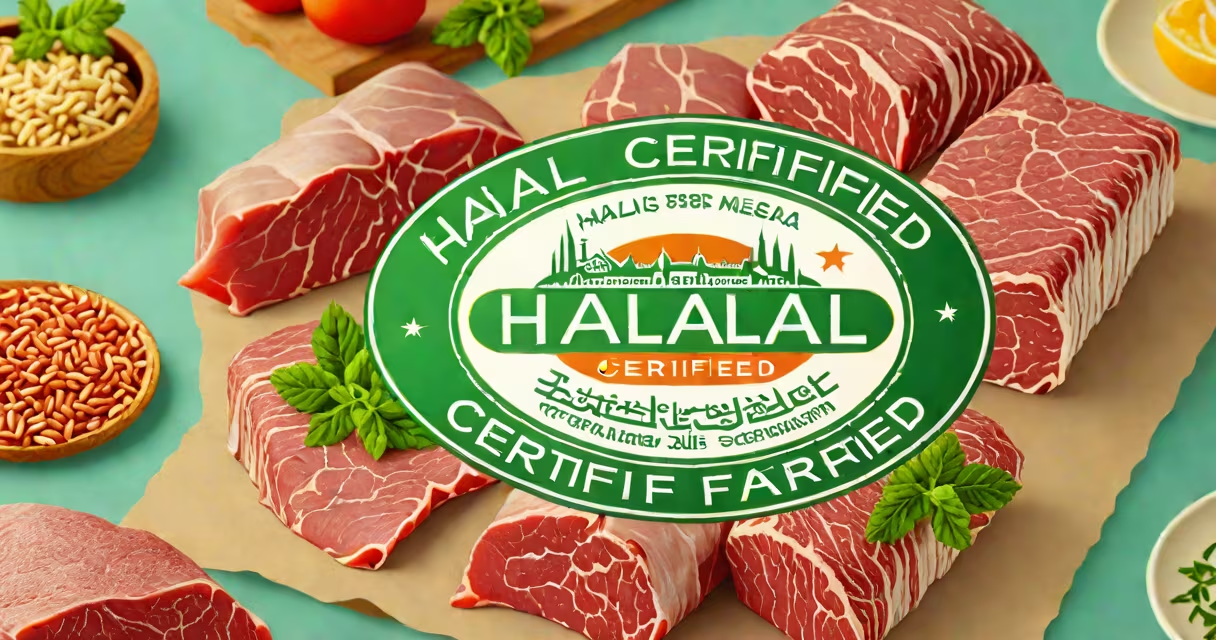
Halal certified means a product meets Islamic law standards for purity, ethical sourcing, and preparation. This includes proper animal slaughter, absence of prohibited substances like alcohol or pork, and clean handling throughout production.
Halal certification applies to food, cosmetics, pharmaceuticals, and even financial services. The term originates from Arabic, meaning "permissible" under Sharia law. For food, this means animals are slaughtered in a specific way-throat cut with a sharp knife while invoking God's name-and blood is fully drained. Non-food items must avoid ingredients derived from pigs or alcohol.
The process involves inspection by a recognized halal certification body. These organizations verify sourcing, processing methods, equipment cleanliness, and recordkeeping. Once approved, a license or label is issued. Certification is not automatic-it requires ongoing audits and documentation.
Certification begins with an application submitted to a halal authority such as the Islamic Food and Nutrition Council of America (IFANCA), the Halal Certification Authority (HCA), or the European Halal Integrity Association (EHIA). The applicant provides details about raw materials, suppliers, manufacturing processes, and facility layout.
A site audit follows. Inspectors verify that no non-halal ingredients are used, that cross-contamination is prevented through dedicated equipment or thorough cleaning, and that all staff understand halal principles. For meat, they confirm the method of slaughter aligns with Islamic guidelines-animals must be alive and healthy at time of slaughter, and the cut must sever the trachea, esophagus, and major blood vessels.
After approval, the organization receives a certificate valid for one year. Renewal requires another audit. Some bodies offer continuous monitoring via digital dashboards or QR codes linked to real-time compliance data.
Different regions have distinct certification authorities. Their standards vary slightly, but all require adherence to core Islamic principles. The following table compares major global certifiers:
| Organization | Region Served | Key Standards | Recognition Level |
|---|---|---|---|
| IFANCA | North America, parts of Europe | Requires full traceability of ingredients; prohibits alcohol-based additives | Widely accepted by retailers and restaurants |
| HCA | UK, Middle East, South Asia | Emphasizes local slaughterhouse oversight; allows third-party verification | Recognized by UK supermarkets and halal chains |
| EHIA | Europe, Scandinavia | Requires environmental impact assessment; bans synthetic colors | Used by EU-based halal importers |
Some companies seek multiple certifications to expand market reach. A product may carry both IFANCA and HCA labels if targeting North American and British consumers.
Food is the most common category. Over 60% of halal-certified products globally are food items, according to the World Halal Forum. Examples include frozen chicken nuggets, plant-based meat alternatives, and dairy-free yogurt.
Non-food applications are growing. In 2023, the UAE mandated halal certification for all medical supplies used in public hospitals. Cosmetics must be free of animal-derived ingredients unless sourced from halal-slaughtered animals. Even tech products like smartphones are being evaluated for halal compliance based on supply chain ethics and labor practices.
Financial services also use halal certification. Sharia-compliant banking avoids interest-based transactions and speculative investments. Institutions like Al Rajhi Bank in Saudi Arabia and Meezan Bank in Pakistan operate under halal finance frameworks verified by independent auditors.
Halal does not mean "organic." While some halal-certified products are organic, the two systems differ. Organic focuses on farming methods and chemical use; halal focuses on religious compliance and ritual purity. A product can be organic but not halal if it contains alcohol or was produced using non-halal slaughter.
Another myth: halal certification guarantees health safety. It does not. A halal-certified product may still contain allergens or exceed safe levels of sodium. Halal status only confirms religious compliance-not nutritional quality or food safety beyond basic hygiene.
There's also confusion between halal and kosher. Both involve ritual slaughter and dietary restrictions, but they stem from different religious traditions. Kosher applies to Jewish law and permits different animal species and slaughtering techniques. A product labeled both halal and kosher is rare but exists-such as certain olive oils certified by both systems.
One non-obvious fact: halal certification does not require a Muslim to perform the slaughter. According to IFANCA's standards, a person of any faith can carry out the cut as long as the correct invocation ("Bismillah") is spoken aloud and the procedure follows established guidelines. This allows flexibility in multinational supply chains.
In 2021, McDonald's in Malaysia began offering halal-certified menu items. The company partnered with JAKIM (Department of Islamic Development Malaysia) to audit all ingredients and kitchen procedures. Beef patties were traced to halal-slaughtered cattle raised in Australia. Fries were cooked in oil free from animal fat. Staff underwent training on halal handling protocols.
After six months of testing, the entire Kuala Lumpur branch received certification. Sales increased by 18% within three months. The success led to rollout across 120 Malaysian outlets. This case shows how certification expands access to Muslim consumers without altering core recipes.
I once visited a halal-certified bakery in Toronto during Ramadan. The owner explained that their ovens were cleaned daily with halal-approved cleaners. All flour came from farms certified under IFANCA's supplier program. Even the sugar used in pastries had been tested for ethanol residue. The level of detail surprised me-this wasn't just branding; it was operational rigor.
Halal certification is not a government mandate in most countries. In the U.S., it's voluntary. The USDA does not regulate halal labeling. In Canada, the Canadian Halal Integrity Alliance oversees standards, but enforcement relies on consumer complaints and industry self-regulation.
Also, halal does not imply higher quality. A halal-certified chicken burger may use lower-grade meat than a non-halal version. Certification only confirms ritual compliance, not taste, texture, or nutritional value.
Finally, halal is not synonymous with vegetarian or vegan. While many halal foods are plant-based, the term applies to any product meeting Islamic law-even those containing fish or poultry. Vegetarian items aren't automatically halal unless verified.
These comparisons show that "certified" means different things depending on context. Halal certification is unique in that it combines religious doctrine with third-party verification. It's not just a seal-it's a promise of adherence to a belief system.
For Muslims, halal certification offers assurance that consumption aligns with faith. For businesses, it opens markets in countries with large Muslim populations. In 2022, the global halal market reached $3.4 trillion, according to the Global Islamic Economy Report. This growth drives demand for transparent, trustworthy certification processes.
What is halal certified mean? It means a product has been verified by a qualified authority to meet Islamic dietary and ethical standards. This includes sourcing, processing, labeling, and handling. The process ensures authenticity and trust, especially in complex global supply chains.