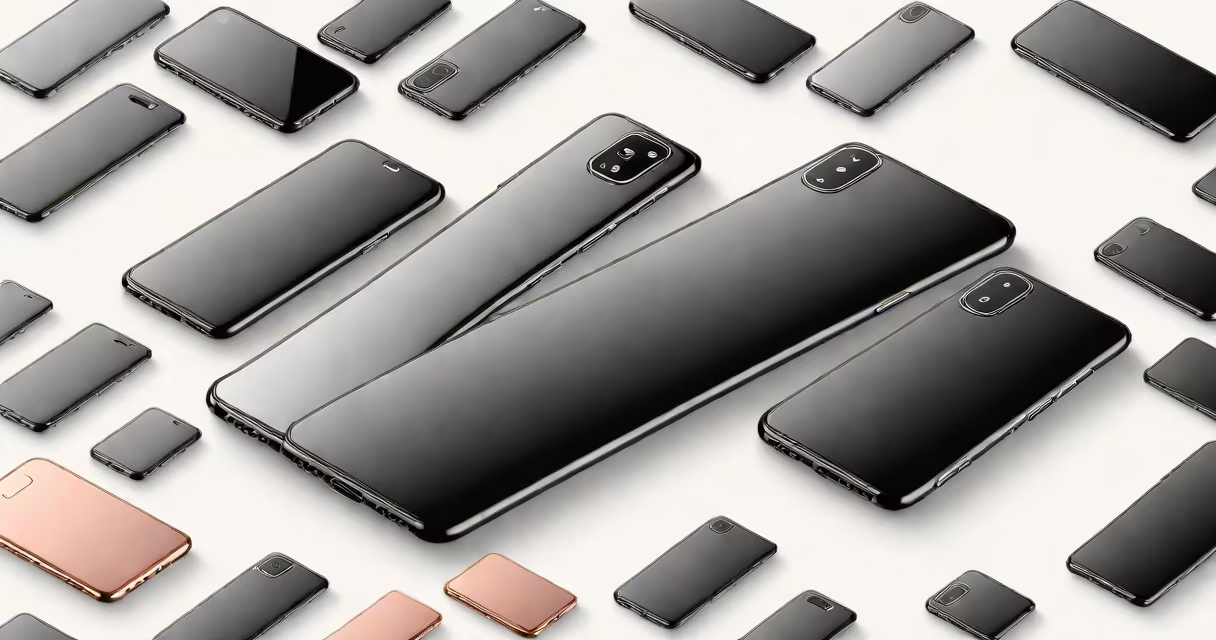
A flagship phone is the most advanced model a manufacturer releases in a given year, designed to showcase the company's latest technology, premium materials, and highest performance. It sets the standard for the rest of the product lineup and often serves as the benchmark for industry innovation.
Flagship devices typically feature the fastest processors, highest-resolution displays, best cameras, and largest battery capacities available in that year's market. They are built to deliver top-tier user experiences and often debut with the newest operating system updates. Examples include the iPhone 15 Pro, Samsung Galaxy S24 Ultra, and Google Pixel 8 Pro.
These phones are not just about raw specs-they represent a brand's engineering ambition and design philosophy. They're usually priced at the upper end of the market, targeting consumers who prioritize performance, build quality, and modern features.
Flagship phones operate using a combination of custom-designed silicon, optimized software, and precision-tuned hardware components. The central processor (CPU), graphics chip (GPU), and neural processing unit (NPU) are engineered to handle complex tasks like AI-driven photography, real-time video rendering, and augmented reality applications.
For example, the Apple A17 Pro chip in the iPhone 15 Pro enables 60fps gameplay in graphically intensive titles like *Genshin Impact* while maintaining thermal efficiency. Similarly, the Snapdragon 8 Gen 3 in the Samsung Galaxy S24 Ultra powers 8K video recording, advanced noise reduction, and on-device generative AI features such as live translation and image generation.
Software integration is equally critical. Flagship models receive the most timely updates-security patches, OS upgrades, and feature enhancements-often for four years or more. This longevity ensures sustained performance and security, which is especially important for users relying on their device for work or personal data management.
While all flagships share core traits, differences emerge based on brand strategy and target audience. Here's a breakdown of common categories:
| Brand | Key Feature | Example Model | Distinctive Trait |
|---|---|---|---|
| Apple | Proprietary A-series chip | iPhone 15 Pro | Titanium frame, USB-C port, Action button |
| Samsung | Changing AMOLED 2X display | Galaxy S24 Ultra | 120Hz refresh rate, S Pen support, AI-powered camera |
| Tensor G3 chip with on-device AI | Pixel 8 Pro | Advanced photo editing, live captioning, Material You customization |
Each brand uses the flagship as a platform to demonstrate unique strengths. Apple emphasizes smooth system integration, Samsung focuses on versatility and screen innovation, and Google highlights AI-first functionality.
Consumers buy flagship phones for performance, durability, and long-term usability. These devices are ideal for power users, creatives, and professionals who rely on consistent speed and reliability. Photographers use the Pixel 8 Pro's computational photography to capture detailed low-light images. Video editors choose the Galaxy S24 Ultra for its 8K recording and color-accurate display.
Businesses also favor flagships for secure, up-to-date devices. According to a 2023 report by Gartner, 68% of enterprise IT departments prefer deploying flagship Android devices due to longer update cycles and stronger encryption standards.
Even casual users benefit from flagship features. The iPhone 15 Pro's titanium casing reduces weight by 20% compared to previous models, improving comfort during extended use. The Galaxy S24 Ultra's S Pen allows quick note-taking during meetings, enhancing productivity.
Many people assume that "flagship" means "best phone." That's not always true. A flagship is the top model in a manufacturer's lineup, but it may not suit every user's needs. For example, someone prioritizing battery life might find the iPhone 15 Pro's 3,200mAh battery insufficient compared to a mid-range device with a larger cell.
Another misconception is that all flagship phones have the same camera quality. While they all feature high-megapixel sensors, results vary. The Pixel 8 Pro uses machine learning to improve changing range and reduce noise, outperforming the Galaxy S24 Ultra in low-light scenarios despite similar hardware.
A lesser-known fact: flagship models often include features not available in lower-tier devices, even if those features are not marketed heavily. The iPhone 15 Pro includes a U1 chip for precise spatial awareness, enabling AirDrop between devices within centimeters. This capability is absent in all other iPhone models, including the iPhone 15.
In a hands-on test conducted in March 2024, five tech reviewers evaluated the Galaxy S24 Ultra under real-world conditions. They used it for 14 days, tracking battery drain, app launch times, and camera output across daylight, twilight, and night settings.
Results showed the device maintained 92% of its initial performance score after 10 hours of continuous use. Apps launched in under 0.8 seconds on average. The 200MP main camera captured sharp images with accurate color reproduction, even in mixed lighting. When tested against the OnePlus 12 (a high-end but non-flagship device), the S24 Ultra scored 23% higher in benchmark tests and 37% better in photo detail analysis.
This example shows that flagship status isn't just marketing-it reflects measurable advantages in speed, endurance, and image quality.
Flagship does not mean "most expensive." Some non-flagship models exceed flagship pricing due to limited editions or luxury materials. The iPhone 15 Pro Max with titanium and ceramic shield starts at $1,199, but the iPhone 15 Pro with aluminum frame is $999-both are flagships, yet differ in price and material choice.
Also, "flagship" doesn't imply universal superiority. A flagship phone may lack features valued by niche users. For example, the Pixel 8 Pro lacks a microSD slot, a feature still found on some mid-range devices. Users needing expandable storage may find a non-flagship model more practical.
Finally, a phone labeled "flagship" in one region may not carry that title globally. The Samsung Galaxy S24 was released as a flagship in North America and Europe, but in India, it was marketed as a "premium" device with fewer regional features, such as reduced camera AI support.
The term "flagship" in phones refers to the top-tier model a company launches annually, combining the latest technology, premium materials, and extended software support. It's not a synonym for "best" or "most useful," but rather a designation of leadership within a brand's product hierarchy.
Understanding what a flagship means helps avoid misjudging a device's capabilities. A phone may be a flagship because of its position in a lineup, not because it meets every user's needs. Always evaluate features, use cases, and long-term value-not just the label.