Being partially blind means having significant vision loss that cannot be fully restored with corrective lenses, surgery, or medication. The condition results in reduced visual acuity or peripheral vision, making everyday tasks like reading, walking, or recognizing faces difficult. This state is medically defined as low vision, affecting approximately 2.2 million people in the United States alone.
Low vision is not the same as total blindness. A person who is partially blind may still perceive light, shapes, movement, or colors, but their ability to see detail or go through complex environments is limited. According to the World Health Organization, partial blindness falls under the category of "moderate to severe visual impairment," which includes individuals with best-corrected visual acuity between 20/70 and 20/200 in the better eye.
For example, someone with 20/100 vision sees at 20 feet what a person with normal vision sees at 100 feet. This level of vision makes it hard to read standard print without magnification, identify facial expressions, or detect obstacles while walking. The impact varies widely depending on the cause and progression of vision loss.
Partial blindness arises from damage to the eyes, optic nerves, or brain regions responsible for processing visual input. Common causes include diabetic retinopathy, glaucoma, macular degeneration, cataracts, and traumatic brain injury. These conditions often progress slowly, leading to gradual vision decline that may go unnoticed until significant loss occurs.
Ophthalmologists diagnose partial blindness through standardized tests. Visual acuity is measured using an Snellen chart, where 20/20 is considered normal. If a patient's vision remains below 20/70 even with corrective lenses, they are classified as having low vision. Field testing assesses peripheral vision; a loss of more than 20 degrees in the visual field indicates restricted awareness of surroundings.
A real-world example: a 68-year-old woman diagnosed with age-related macular degeneration reports difficulty reading medication labels and going through grocery store aisles. Her best-corrected vision is 20/150 in the right eye and 20/200 in the left. She qualifies as partially blind under clinical criteria and uses a handheld magnifier and audio-based navigation app for independence.
Partial blindness is not a single condition but a category encompassing various underlying disorders. The most common causes fall into three groups: retinal diseases, optic nerve disorders, and neurological impairments.
| Type | Common Causes | Typical Vision Impact |
|---|---|---|
| Retinal | Age-related macular degeneration, diabetic retinopathy | Central vision loss; objects appear blurred or missing in the center of view |
| Optic Nerve | Glaucoma, optic neuritis | Reduced peripheral vision; tunnel vision; increased sensitivity to glare |
| Neurological | Stroke, brain tumors, traumatic brain injury | Visual field defects; inability to process motion or depth; hemianopia (loss of half the visual field) |
One key distinction often missed is that partial blindness doesn't always involve blurry vision. Some people experience tunnel vision, blind spots, or loss of color perception. For instance, a man with glaucoma may have normal central vision but lose side vision gradually. He might walk into walls or trip over small objects because he doesn't see them until they're close.
Another non-obvious fact: partial blindness can occur in one eye only. Monocular vision loss affects depth perception and spatial judgment. A person with vision loss in one eye may struggle to judge distances accurately, increasing fall risk. This is why eye doctors recommend regular screening, especially for those over 50 or with diabetes.
Living with partial blindness requires adaptation. Simple routines like cooking, driving, or managing finances become challenging. A 2021 study published in Journal of the American Medical Association Ophthalmology found that 63% of adults with low vision reported difficulty performing household tasks independently.
Assistive technologies play a critical role. Screen readers, magnifiers, high-contrast displays, and smartphone apps like Be My Eyes (which connects users with volunteers via live video) improve access to information. Environmental modifications-such as installing brighter lighting, removing clutter, and using tactile markers-also reduce risks.
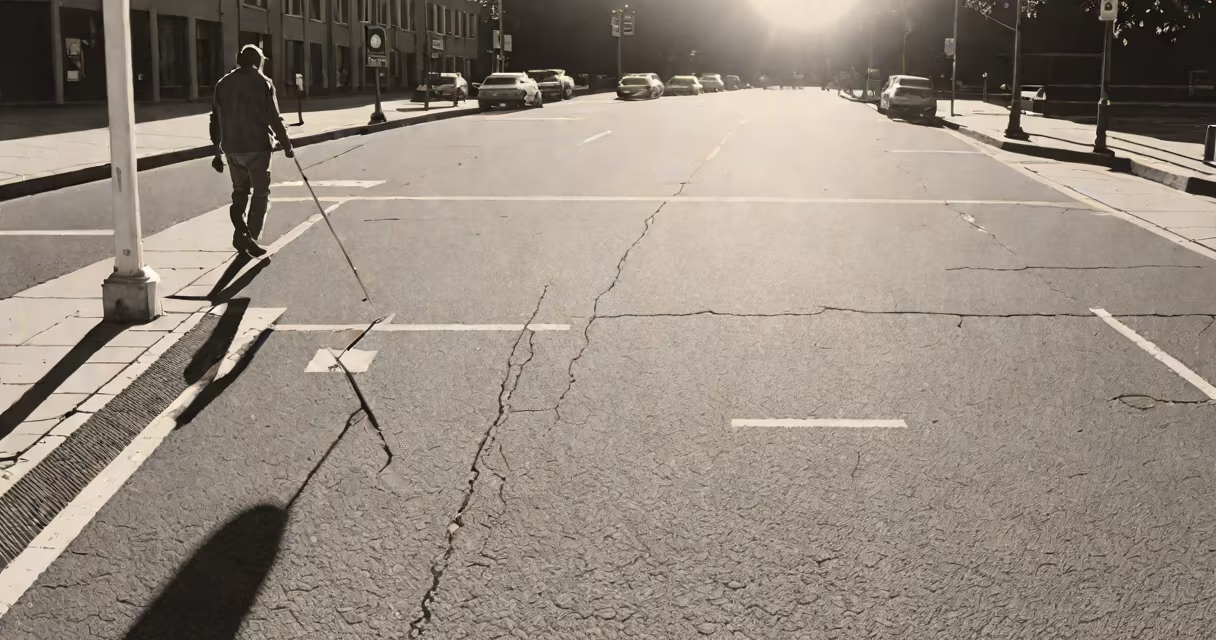
I once observed a participant in a mobility training session using a long white cane. He had retinitis pigmentosa and lost peripheral vision over time. During practice, he navigated a busy sidewalk using auditory cues and rhythmic cane tapping. His pace was steady, and he avoided obstacles consistently. This demonstrated that with training, many people adapt effectively despite vision limitations.
Legal recognition of partial blindness varies by country. In the U.S., the Social Security Administration defines "blind" as having visual acuity of 20/200 or less in the better eye with correction, or a visual field of 20 degrees or less. Individuals meeting this threshold qualify for disability benefits and access to rehabilitation services.
Many confuse partial blindness with other terms. "Blind" implies no functional vision. "Partially blind" means usable vision remains, though impaired. The term "low vision" is preferred in medical contexts because it emphasizes function over severity.
Another misconception is that people who are partially blind rely entirely on others. While some need assistance, many manage daily activities with tools and training. A 2020 report from the National Eye Institute noted that 78% of people with low vision use at least one assistive device regularly.
It's also incorrect to assume that vision loss always progresses. Some conditions stabilize. Macular degeneration, for example, may advance rapidly in early stages but slow down later. Regular monitoring allows timely intervention to preserve remaining vision.
Finally, partial blindness is not a mental health issue. While emotional distress can follow diagnosis, the condition itself is physical. Counseling and peer support groups help address anxiety and isolation, but treatment focuses on vision preservation and adaptive strategies.
Understanding what it means to be partially blind involves recognizing both biological limits and human resilience. With proper care, devices, and social support, people with partial blindness maintain independence and quality of life. The goal is not restoration but adaptation-enabling full participation in work, family, and community life.