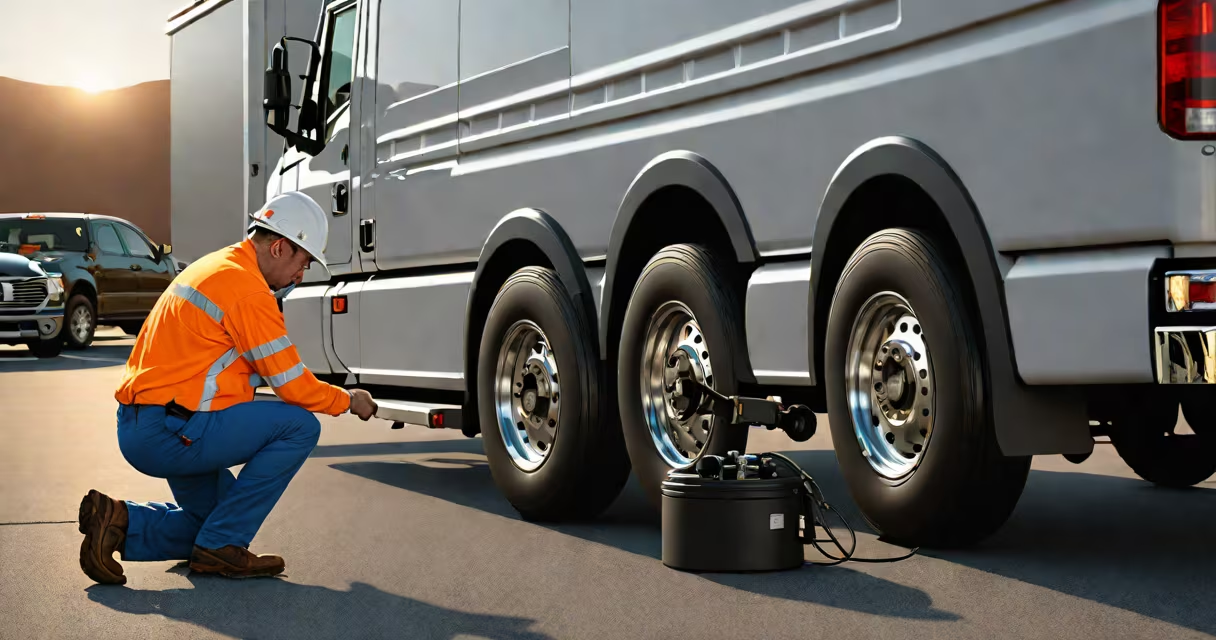
A level 2 DOT inspection is a complete safety evaluation of a commercial motor vehicle performed under Federal Motor Carrier Safety Administration (FMCSA) regulations. It includes a full walk-around check of the vehicle's systems, focusing on brakes, steering, suspension, lights, tires, and cargo securement. This inspection is required for vehicles operating in interstate commerce and is conducted by authorized inspectors during roadside checks or pre-trip audits.
Level 2 inspections are more detailed than basic visual checks and are designed to identify mechanical defects that could compromise safety. They follow standardized procedures outlined in the FMCSA's Commercial Vehicle Safety Alliance (CVSA) North American Standard Inspection Program. The inspection takes approximately 45 to 60 minutes and results in a report that classifies findings as critical, major, or minor violations.
According to the FMCSA, 73% of commercial vehicle crashes involve at least one mechanical failure. A level 2 DOT inspection reduces that risk by catching issues early. For example, a brake pad worn below the minimum 1/16-inch thickness triggers a critical defect, requiring immediate repair before the vehicle can operate.
The inspector begins by reviewing the driver's logbook and verifying the vehicle's registration and insurance. They then perform a walk-around inspection, checking each component against the CVSA checklist. The process includes testing brakes under load, measuring tire tread depth, inspecting steering linkages, and verifying light functionality.
Key steps include:
If a critical defect is found-such as a cracked steering knuckle or a failed brake line-the vehicle is placed out of service until repaired. The FMCSA defines a critical defect as one that poses an imminent risk of crash or injury.
While the core procedure remains consistent, the context determines the inspection's formality and scope. There are three primary application scenarios:
| Inspection Type | When It Occurs | Scope | Outcome |
|---|---|---|---|
| Pre-trip Inspection | Before a driver departs on a route | Driver performs check; documented on a daily log | Identifies issues before operation; may delay departure |
| Roadside Inspection | At a weigh station or enforcement checkpoint | Conducted by state or federal inspectors | Can result in out-of-service orders or citations |
| Post-accident Inspection | After a collision involving a commercial vehicle | Full forensic assessment of mechanical systems | Used in accident investigations and liability determination |
Pre-trip inspections are mandatory under FMCSA §396.11 and must be completed by the driver. Roadside inspections are random or targeted based on risk profiles. Post-accident inspections are triggered by incident reports and often involve specialized equipment like laser alignment tools.
Many drivers confuse a level 2 DOT inspection with a routine maintenance check. Maintenance focuses on scheduled servicing-oil changes, filter replacements, lubrication. A level 2 DOT inspection evaluates safety compliance, not preventative care. One vehicle I inspected had clean oil and new filters but failed due to a missing rear axle seal, which caused a fluid leak and was classified as a major defect.
Another common error is assuming that a passing inspection guarantees safe operation. An inspection reflects conditions at a single moment. A tire that passes with 4/32-inch tread depth may fail hours later due to heat or road debris. The FMCSA emphasizes that inspections are snapshots, not ongoing monitoring tools.
Some believe that only large trucks require level 2 inspections. In reality, any commercial vehicle with a gross vehicle weight rating (GVWR) above 10,001 pounds must undergo the inspection. This includes delivery vans, box trucks, and hazmat transporters. The FMCSA mandates that all such vehicles be inspected at least annually, even if not operating interstate.
In 2022, a regional freight company in Ohio experienced a 12% increase in out-of-service orders after implementing stricter level 2 inspections. One trailer failed during a roadside check because the front axle's kingpin was worn beyond the 0.06-inch tolerance limit. The inspector cited this as a critical defect under FMCSA regulation 396.11(b)(2).
The company had previously relied on driver self-checks, which missed the issue. After replacing the kingpin and training staff on CVSA checklist nuances, the fleet's compliance rate improved by 38%. This case shows that human error in self-inspections can lead to avoidable failures-even when maintenance records appear clean.
Understanding what a level 2 DOT inspection entails is essential for both carriers and drivers. It's not a formality-it's a safety net. When done correctly, it prevents accidents, avoids fines, and maintains operational integrity. The goal isn't just to pass the inspection, but to ensure the vehicle is safe to operate under real-world conditions.