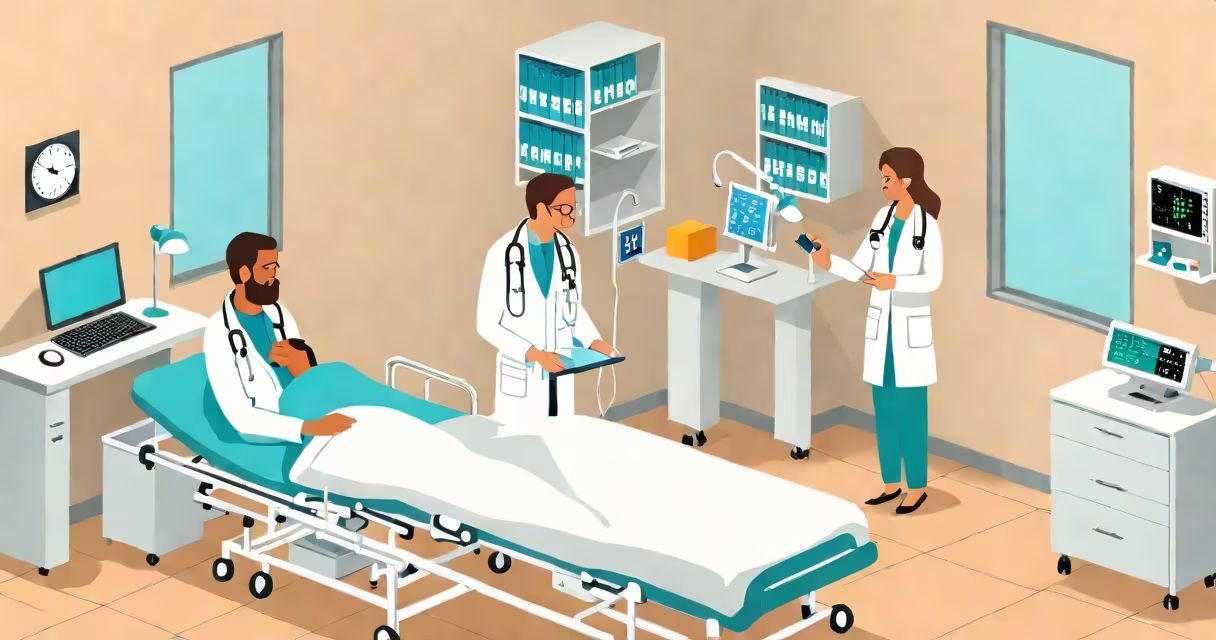
A medical residency program is a postgraduate training phase where newly graduated doctors complete supervised clinical work in a specific medical specialty, such as internal medicine, surgery, or pediatrics, before becoming licensed to practice independently.
Residency programs typically last between three and seven years, depending on the specialty. They are mandated by the Accreditation Council for Graduate Medical Education (ACGME) in the United States and require participation in accredited institutions. During this time, residents rotate through various departments, manage patient care under supervision, and attend didactic lectures and conferences.
Completion of a residency program is required for board certification and licensure to practice medicine in most U.S. states. Without finishing a residency, a physician cannot legally prescribe medications, perform procedures, or assume independent responsibility for patient outcomes.
After graduating from medical school, students enter a competitive match process called the National Resident Matching Program (NRMP), often referred to as "The Match." Applicants rank their preferred programs, and programs rank applicants based on interviews and evaluations. The algorithm then assigns residents to programs based on mutual preferences.
Once matched, residents begin their training with a set schedule that includes clinical rotations, night shifts, weekend coverage, and on-call duties. A typical workweek ranges from 60 to 80 hours, though recent reforms have capped hours to improve patient safety and resident well-being.
Residents progress through levels: intern (first year), junior resident (second year), and senior resident (final year). Each level involves increasing responsibility. For example, a first-year resident may assist in surgeries under direct supervision, while a final-year resident may lead surgical teams during complex operations.
Residency programs vary by specialty. Some are shorter, others much longer. The duration depends on the complexity of training and the level of skill required.
| Specialty | Duration | Examples of Training Focus |
|---|---|---|
| Family Medicine | 3 years | Primary care, preventive health, chronic disease management |
| Internal Medicine | 3 years | Diagnosis and treatment of adult diseases, critical care rotation |
| General Surgery | 5 years | Open and laparoscopic procedures, trauma care, operating room leadership |
| Pediatrics | 3 years | Child development, neonatal care, adolescent medicine |
| Neurological Surgery | 7 years | Complex brain and spine operations, intensive monitoring, long-term rehabilitation planning |
Some specialties require additional training beyond residency. For example, a doctor who completes a 3-year internal medicine residency may pursue a 1- to 2-year fellowship in cardiology or rheumatology. These fellowships are distinct from residency but follow it.
Many people assume that a residency program is simply a job with a salary. While residents do receive compensation-averaging $60,000 to $75,000 annually in the U.S.-it is not employment in the traditional sense. Residents are trainees, not employees. Their primary role is learning clinical skills, not generating revenue for hospitals.
Another misconception is that all residency programs are equally demanding. This is false. Surgical specialties involve higher physical and emotional strain due to long hours, emergency cases, and high-stakes decision-making. In contrast, psychiatry or dermatology residencies may offer more predictable schedules and lower stress levels, though they still demand intense focus and continuous learning.
A less obvious but critical distinction: not all residency programs are created equal. ACGME accreditation ensures quality standards, but differences in program culture, mentorship availability, and access to advanced technology exist. A resident in a top-tier academic hospital may train with renowned specialists and use modern equipment, while a resident in a rural community hospital may face limited resources and fewer teaching opportunities.
Consider Dr. Elena Martinez, a second-year resident at a large urban teaching hospital. Her day begins at 6:30 a.m. with a morning report, where she presents four patients' cases to her team. She reviews lab results, adjusts medications, and consults with attending physicians on complex diagnoses.
At 8:00 a.m., she rounds on the inpatient ward, checking vitals, updating charts, and discussing treatment plans with nurses and social workers. By noon, she's scheduled for a cardiac consultation and spends 45 minutes reviewing echocardiograms and discussing management options with a cardiologist.
She attends a noon conference on diabetes management, followed by a procedure lab session where she practices placing central lines under simulation. After a brief lunch, she handles two new admissions, writes discharge summaries, and finishes the day with a late-night call shift.
Her schedule reflects the dual nature of residency: clinical responsibility paired with ongoing education. She earns $72,000 annually, but works 70-hour weeks. Her training is not just about seeing patients-it's about learning how to think like a physician.
Residency programs serve as the bridge between theoretical medical education and real-world clinical practice. They ensure that doctors develop the judgment, technical skill, and emotional resilience needed to handle emergencies, communicate effectively with patients, and make ethical decisions under pressure.
The American Board of Medical Specialties (ABMS) requires completion of an ACGME-accredited residency for certification in any of its 24 medical specialties. Without this training, even the highest-scoring medical school graduate cannot become a specialist.
One non-obvious fact: many residency programs now emphasize wellness and mental health support. A 2021 study published in JAMA Internal Medicine found that nearly 30% of residents reported symptoms of depression, and 15% had suicidal thoughts. As a result, many programs now include mandatory counseling sessions, peer support groups, and protected time for self-care.
During my own observation of a neurology residency clinic, I noticed that residents spent more time discussing patient communication strategies than diagnosing rare conditions. This highlighted a shift in training priorities: competence in empathy and shared decision-making is now as valued as technical accuracy.
After completing a residency, physicians may choose to pursue a fellowship for further specialization. A cardiology fellow, for example, trains for two more years in interventional techniques, echocardiography interpretation, and managing heart failure. Fellowships are optional but necessary for subspecialty board certification.
Alternatively, some physicians enter private practice, join public health agencies, or take academic roles. But regardless of path, the foundation laid during residency remains essential. The skills learned-how to interpret imaging, manage sepsis, deliver bad news-are applied daily in clinical settings.
For those considering a career in medicine, understanding what is a medical residency program is not just about knowing the timeline. It's about recognizing that this phase is not a formality-it's the crucible where doctors become clinicians.
Residency is not a job. It's a transformation. And it's the reason patients trust their care to someone who has trained for years, not days.