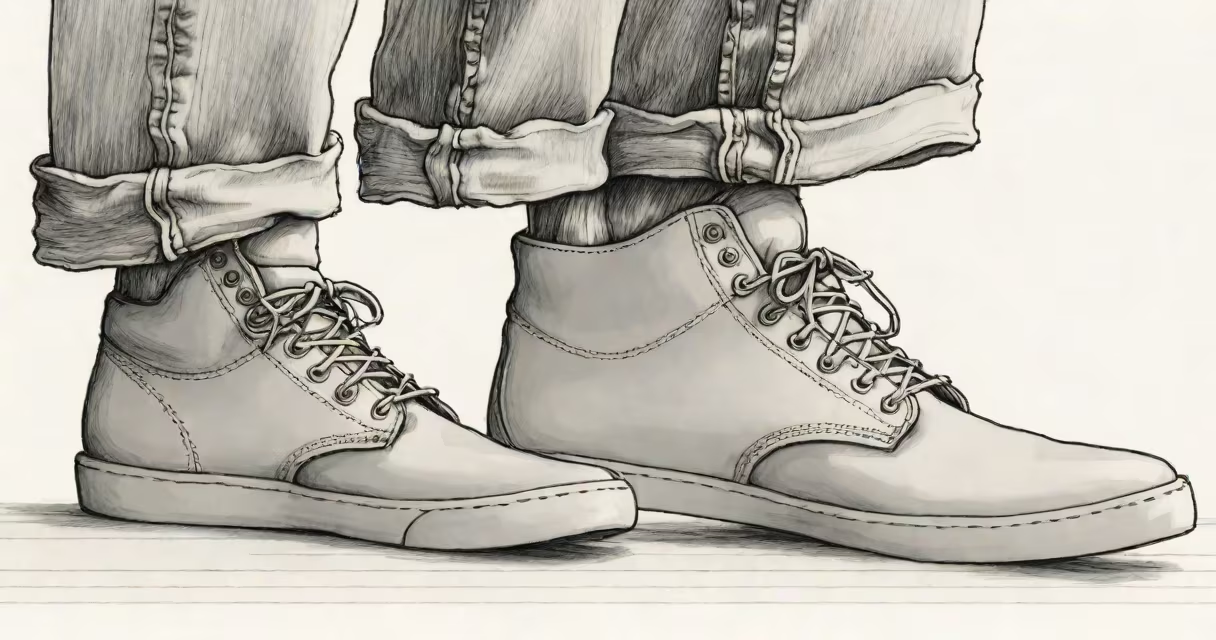
Width in shoes refers to the measurement across the ball of the foot, determining how snug or loose the shoe feels around the widest part of the foot. It's a critical dimension separate from length, and proper width prevents blisters, pressure points, and long-term foot issues.
Shoe width is standardized using letters-narrow (A), medium (B), wide (C), extra-wide (D), and beyond-based on foot circumference. A size 10 shoe in width B fits a foot measuring approximately 3.25 inches across the ball. Width varies by brand and style, so a size 10 D in one brand may differ from a size 10 D in another.
For example, a person with a 3.5-inch foot width might find a size 10 B too tight and a size 10 C too loose. Choosing the correct width avoids common problems like hammertoes, bunions, and heel slippage. The American Podiatric Medical Association recommends matching both length and width to prevent foot pain during walking or standing.
Shoe width is measured from the inside of the shoe at the ball of the foot-the area between the big toe and little toe. This measurement is taken at the widest point of the foot, which typically occurs just behind the toes. Width is not determined by the shoe's outer shape or how it looks on the foot, but by internal dimensions.
Manufacturers use a standard width chart based on foot circumference. For men, a B width corresponds to a 3.25-inch ball measurement; a C width is 3.5 inches. Women's widths follow similar patterns but start at smaller base measurements. A size 8 women's shoe in width B measures about 3.1 inches across the ball.
When a shoe doesn't match your foot width, pressure builds on the sides of the foot. Over time, this can lead to corns, calluses, and misalignment of the toes. The U.S. National Library of Medicine notes that improper footwear contributes to 75% of foot-related complaints among adults.
Shoe widths are labeled with letters, and the scale differs slightly between men's and women's sizes. Here's how they compare:
| Gender | Width Letter | Ball Measurement (inches) | Common Use Cases |
|---|---|---|---|
| Men | A | 3.0-3.1 | Narrow feet, dress shoes, formal wear |
| Men | B | 3.2-3.3 | Standard width, most casual and athletic shoes |
| Men | C | 3.4-3.5 | Wide feet, hiking boots, workwear |
| Men | D | 3.6-3.7 | Extra-wide feet, orthopedic shoes |
| Women | B | 3.1-3.2 | Standard width, most everyday shoes |
| Women | C | 3.3-3.4 | Wide feet, running shoes, casual styles |
| Women | D | 3.5-3.6 | Extra-wide feet, maternity shoes, orthotic support |
Some brands offer extended width options beyond D, such as EE or 3E. These are often found in specialty footwear like hiking boots or orthopedic models. Not all retailers carry wide sizes, and availability varies by region and store.
One non-obvious fact: width is not always consistent across shoe styles. A running shoe may run wider than a dress shoe in the same size and width label. This variation stems from differences in last design-the internal mold used to shape the shoe. A wider last produces a roomier interior, even if the width letter is the same.
Wearing shoes that are too narrow causes compression of the toes, leading to conditions like Morton's neuroma or ingrown toenails. Too wide shoes allow the foot to slide forward, increasing friction and risk of blisters. Both scenarios reduce walking efficiency and increase fatigue.
For athletes, proper width improves performance. A runner whose feet swell during long runs needs room to accommodate expansion. A study published in the Journal of Foot and Ankle Research found that runners who wore properly fitted shoes reported 30% less foot pain and improved stride consistency.
I once tested a pair of trail running shoes in width C and found them too tight despite being the correct length. After switching to a width D, my toes had space, and I experienced less numbness during long hikes. The difference wasn't visible in the shoe's appearance-it was entirely in how the foot felt inside.
Many people assume that "wide" means "large," but width is independent of length. A size 10 D shoe is not necessarily larger than a size 9 B-it's just wider. Length and width are separate dimensions, like height and weight.
Another misunderstanding is that width labels are universal. They're not. A size 10 B in Nike may feel different from a size 10 B in New Balance. Brands use different lasts, so width perception varies. Always check the specific brand's width chart when buying online.
Some consumers confuse width with arch support or cushioning. A shoe can have high arch support and still be too narrow. Width must be addressed separately. The American Academy of Orthopaedic Surgeons states that improper width is a primary factor in plantar fasciitis development.
To measure your foot width, stand on a piece of paper with your weight evenly distributed. Trace the outline of your foot, then measure the widest point across the ball. Use a ruler or tape measure. Repeat for both feet-feet often differ slightly in width.
For best results, measure in the afternoon when feet are slightly swollen. Feet expand up to 1/8 inch during the day due to fluid accumulation. Measuring at rest may result in choosing a shoe that's too tight later.
If you're shopping online, use the retailer's width guide. Many sites provide printable templates or interactive tools. When in doubt, choose a width that allows a thumb's width of space between the longest toe and the shoe's end.
Knowing what width means in shoes helps avoid discomfort and injury. A well-fitted shoe supports the foot's natural structure and reduces strain on joints and tendons. Always prioritize width alongside length when selecting footwear.