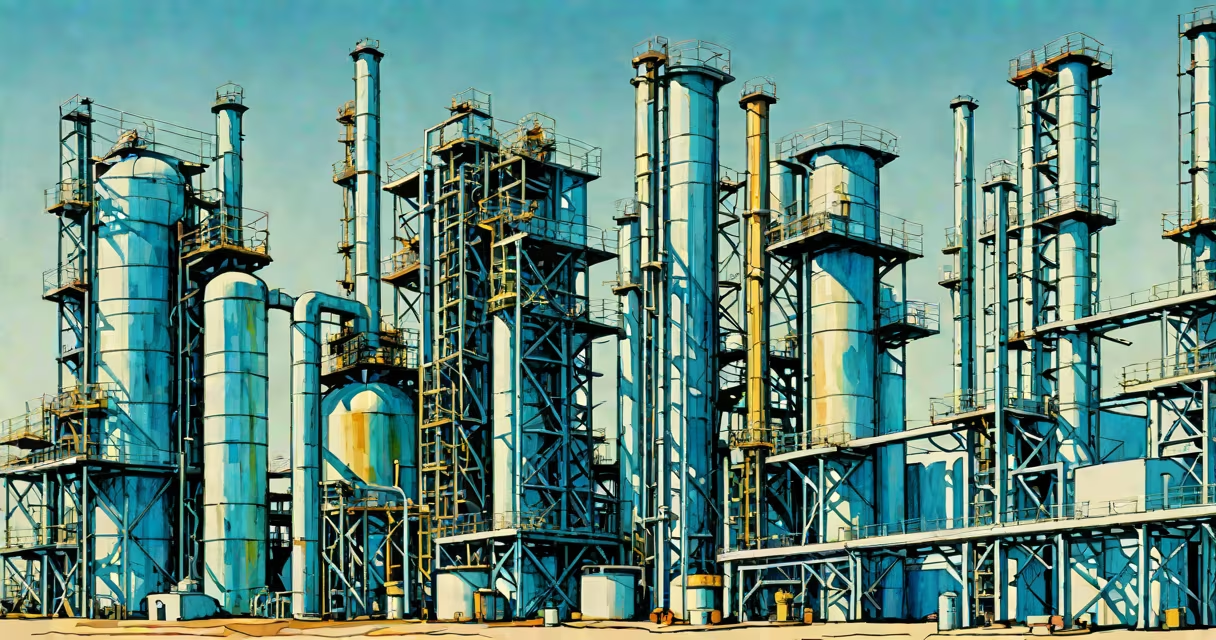
A petrochemical plant processes crude oil and natural gas into basic chemicals like ethylene, propylene, and benzene, which serve as raw materials for plastics, synthetic fibers, and industrial chemicals. These facilities are central to global manufacturing, converting fossil fuels into high-value compounds used in consumer goods, construction, and agriculture.
Petrochemical plants operate through a series of specialized units that separate, purify, and react hydrocarbons. Crude oil arrives via pipeline or tanker and enters a refinery first, where it's distilled into fractions such as naphtha and liquefied petroleum gas (LPG). These fractions then move to the petrochemical unit, where they undergo cracking-high-temperature decomposition-to produce lighter molecules essential for polymerization.
The core process is steam cracking, where hydrocarbons are heated to 850°C (1,560°F) in the presence of steam. This breaks long chains into smaller, reactive molecules like ethylene and propylene. For example, one ton of ethane yields about 0.6 tons of ethylene. The resulting gases are cooled rapidly and separated using cryogenic distillation, achieving purity levels above 99.9%.
After initial separation, the cracked products enter downstream units. Ethylene, for instance, is converted into ethylene oxide-a key intermediate in antifreeze and polyester production. Propylene becomes propylene oxide, used in polyurethane foams. These reactions occur in reactors under controlled pressure and temperature, often using catalysts to speed yield.
Energy input is massive. A typical ethylene plant consumes 1.5 megawatt-hours of electricity per ton of output. Cooling systems rely on seawater or cooling towers, drawing up to 10 million gallons daily. Waste streams include CO₂ emissions and trace organics, managed through scrubbers and flares.
One operational site, the Shell Chemicals facility in Deer Park, Texas, produces 1.2 million tons of ethylene annually. It uses natural gas-derived feedstocks and integrates with a nearby refinery. The plant supplies raw materials to manufacturers across North America, including Dow Chemical and ExxonMobil.
Petrochemical plants differ based on feedstock and product focus. The primary categories are:
| Type | Feedstock | Main Outputs | Example Location |
|---|---|---|---|
| Steam Cracker | Naphtha, ethane | Ethylene, propylene | Port Arthur, Texas |
| Gas-to-Chemicals | Natural gas liquids (NGLs) | Methanol, ammonia | Saudi Arabia (Yanbu) |
| Refinery-Based | Cracked gasoline, reformate | Benzene, toluene | Rotterdam, Netherlands |
Steam crackers dominate global capacity, accounting for 70% of ethylene production. Gas-to-chemicals facilities are rising due to low-cost shale gas in the U.S., reducing reliance on imported naphtha.
Petrochemical plants cluster near energy sources and ports. Major hubs include the U.S. Gulf Coast, the Middle East, and Northeast China. Proximity to natural gas reserves reduces feedstock costs-U.S. ethylene production costs are 20% lower than in Europe due to abundant shale gas.
These facilities supply industries requiring consistent, high-volume chemical inputs. Polyethylene, derived from ethylene, makes up 40% of global plastic production. It's used in packaging, pipes, and medical devices. Over 100 billion pounds of polyethylene are manufactured annually worldwide.
One overlooked fact: petrochemical plants don't just make plastics. They also produce solvents, dyes, and pharmaceutical intermediates. For example, acrylonitrile-made from propylene and ammonia-is used in carbon fiber and synthetic rubber. A single plant may generate over 50 distinct chemical products.
Many confuse petrochemical plants with refineries. Refineries primarily produce fuels-gasoline, diesel, jet fuel-through fractional distillation and catalytic cracking. Petrochemical plants focus on creating chemical building blocks, not transportation fuels. While both start with crude oil, their outputs diverge early in the process.
Another error is assuming all petrochemicals come from oil. Natural gas is increasingly dominant. In the U.S., over 60% of ethylene feedstock is ethane from shale wells. This shift lowers carbon intensity-the carbon footprint of ethylene from ethane is 15% lower than from naphtha.
Environmental impact is often overstated. Modern plants use closed-loop water systems and capture 90% of volatile organic compounds (VOCs). The U.S. Environmental Protection Agency (EPA) reports that emissions from regulated petrochemical facilities have declined 40% since 2000, despite increased output.
I visited a steam cracker in Texas during a maintenance window. The sight was overwhelming-tall, steel towers lined with piping, glowing furnace tubes, and constant low hum from compressors. Operators monitored reactor temperatures in real time, adjusting steam flow to prevent coking. One technician noted that even a 1°C deviation could reduce yield by 0.3%. Precision matters.
During a safety briefing, I learned that every worker wears flame-resistant clothing and carries a gas detector. The facility runs on a 24/7 shift system, with teams rotating every 12 hours. Emergency drills happen monthly. Safety records show zero lost-time incidents in the past three years.
Unlike food processing or textile mills, petrochemical plants handle highly flammable and toxic substances. Their operations require explosion-proof equipment, continuous monitoring, and strict regulatory compliance. The American Petroleum Institute (API) sets standards for design, operation, and emergency response.
For comparison, a fertilizer plant uses ammonia and phosphate rock-non-flammable, less volatile materials. A paper mill relies on wood pulp and bleaching agents. Petrochemical plants stand apart due to their use of high-pressure, high-temperature reactions involving hydrocarbons.
One critical distinction: petrochemical plants are not standalone. They depend on upstream infrastructure-pipelines, storage tanks, rail terminals-and downstream customers. A disruption in feedstock supply can halt production within hours. During the 2021 Texas freeze, several plants shut down due to power loss and gas shortages, causing regional shortages of plastic resins.