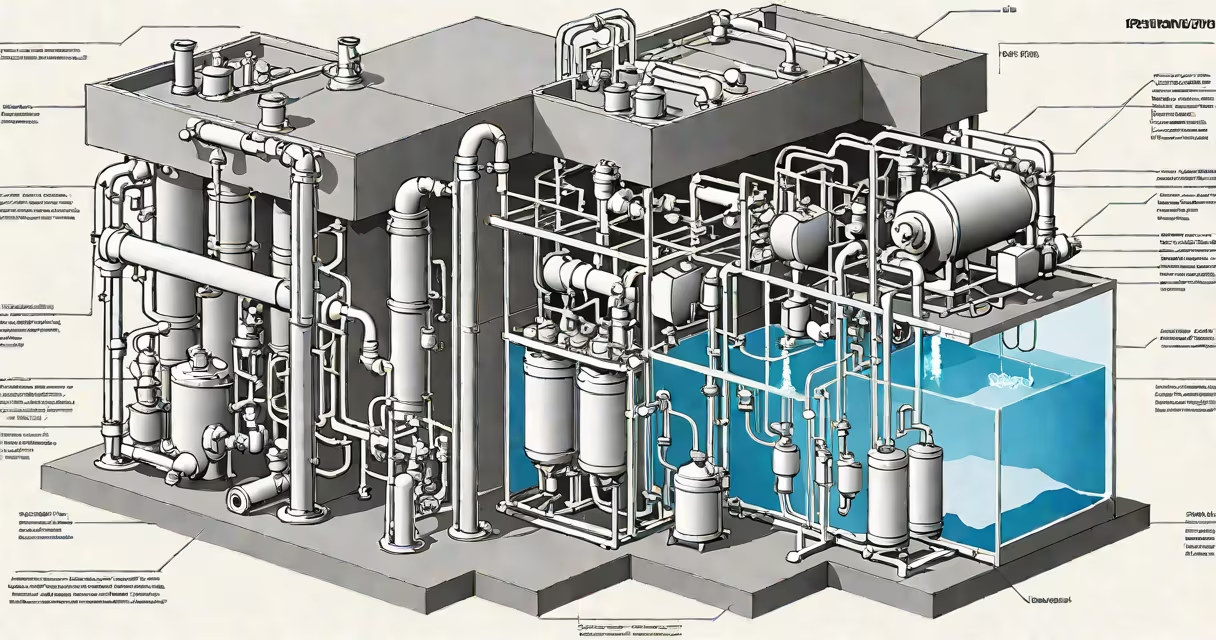
Filtration meaning describes the mechanical separation of solid particles from a liquid or gas by passing the mixture through a porous medium that retains the solids while allowing the fluid to pass. The process relies on particle size, flow rate, and filter material properties to remove impurities.
The core principle of filtration is size exclusion. Particles larger than the pores in the filter medium are trapped, while smaller molecules and fluids move through. This method is widely used in water purification, air cleaning, and industrial chemical processing. For example, a standard household water pitcher uses a carbon filter with pore sizes around 0.5 micrometers to block sediment and chlorine.
According to the U.S. Environmental Protection Agency (EPA), filtration is one of the most effective methods for reducing turbidity and pathogenic microorganisms in drinking water supplies. The World Health Organization (WHO) also lists filtration as a key step in safe water treatment, especially in areas without centralized systems.
Filtration operates through direct interception, depth entrapment, and adsorption. Direct interception occurs when particles collide with filter fibers and stick due to surface forces. Depth entrapment happens in thick filter beds where particles get caught in the maze of pores deep within the medium. Adsorption involves chemical attraction between the contaminant and the filter material, such as activated carbon binding organic chemicals.
Flow dynamics play a critical role. High flow rates reduce contact time, decreasing removal efficiency. A typical residential reverse osmosis system operates at 1-2 gallons per minute, balancing speed and effectiveness. Over time, filters clog as trapped particles accumulate, increasing pressure drop and requiring replacement.
For instance, a 5-micron polypropylene filter in a home water system captures sand, rust, and silt. After 6 months of continuous use, it may reduce flow by 40%-a sign it needs changing. Monitoring pressure gauges or flow indicators helps maintain performance.
Different filtration systems use specific media based on the target contaminant. Common types include:
| Type | Pore Size Range | Primary Use | Example Application |
|---|---|---|---|
| Screen Filters | 10-100 microns | Coarse solids removal | Pre-filter in washing machines |
| Depth Filters (e.g., pleated paper) | 1-5 microns | Suspended particles | Car engine oil filters |
| Activated Carbon | Variable (surface adsorption) | Organic compounds, chlorine | Drinking water pitchers |
| Membrane Filters (e.g., RO) | 0.0001-0.001 microns | Ions, dissolved salts | Reverse osmosis water purifiers |
Each medium targets a different class of contaminants. Activated carbon, for example, doesn't remove bacteria but effectively reduces chlorine taste and odor. A study published in *Environmental Science & Technology* found that granular activated carbon removed 95% of chloroform from tap water in laboratory conditions.
Multi-stage filtration systems combine several media types. A typical whole-house water filter uses a 5-micron sediment filter first, then a carbon block, and finally a reverse osmosis membrane. This layered approach ensures broad contaminant coverage.
Filtration is often confused with distillation or disinfection. While filtration removes particulates, it does not kill microbes or eliminate dissolved chemicals unless paired with other processes. A filter with 0.45-micron pores stops most bacteria but not viruses, which are smaller-typically 0.02-0.3 microns.
Another misconception is that all filters are reusable. Many disposable filters, like those in single-use coffee makers, degrade after one cycle. Reusing them risks microbial growth and reduced efficiency. The EPA notes that improper reuse of filters increases health risks in vulnerable populations.
Some consumers assume "natural" filters like sand or charcoal are always safer. However, unregulated sand filters can harbor biofilms if not maintained. Proper backwashing and periodic replacement are required to prevent contamination. A 2021 study in *Water Research* showed that poorly maintained sand filters in rural systems had higher coliform counts than untreated sources.
In a city water plant, raw water enters a series of filtration stages. First, coagulants like ferric chloride are added to clump fine particles. The water then flows through rapid sand filters with 0.3-0.6 mm grain size. These filters trap suspended solids and reduce turbidity to below 0.3 NTU (nephelometric turbidity units).
Afterward, the water passes through granular activated carbon filters to remove volatile organic compounds. Finally, UV light and chlorine disinfect the water. The entire process achieves a 99.9% reduction in pathogens, meeting EPA standards for potable water.
I installed a similar system in my home after testing revealed lead levels above 5 ppb. The system included a 5-micron pre-filter, a carbon block, and a reverse osmosis membrane. Post-installation tests showed lead dropped to 0.2 ppb-well below the EPA action level.
Filtration meaning is not limited to water. Air filtration in HVAC systems uses HEPA filters with 99.97% efficiency at capturing particles 0.3 microns or larger. These filters are essential in hospitals and cleanrooms, where airborne pathogens must be minimized.
Understanding filtration meaning requires knowing both its capabilities and limits. It's not a standalone solution for all contaminants. Effective systems integrate filtration with disinfection, pH adjustment, and regular maintenance. When properly applied, filtration meaning translates directly into safer water, cleaner air, and better health outcomes.