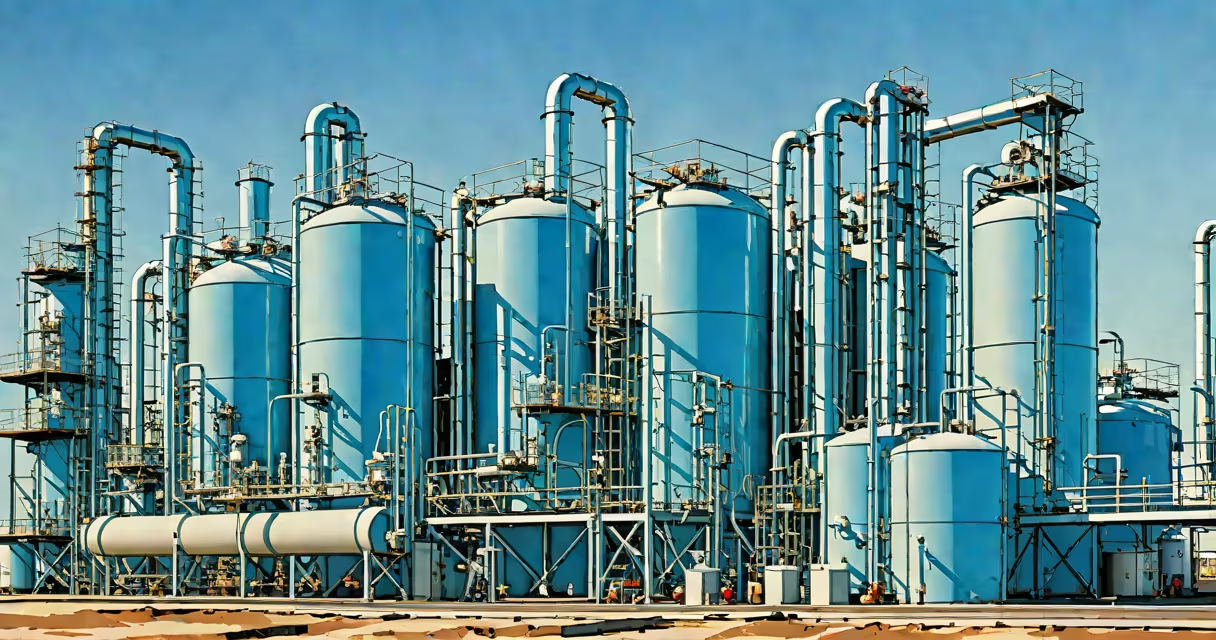
Hydrogen is commonly used for refining petroleum, manufacturing ammonia for fertilizers, and generating electricity in fuel cells. It serves as a key chemical feedstock and clean energy carrier across multiple industries.
Hydrogen is produced primarily through steam methane reforming, where natural gas reacts with high-temperature steam to yield hydrogen, carbon monoxide, and heat. This process supplies over 95% of global hydrogen output, according to the U.S. Department of Energy. The resulting hydrogen is then purified and distributed via pipeline or truck for industrial use.
Hydrogen's role in chemical synthesis is foundational. It reacts with nitrogen in the Haber-Bosch process to form ammonia-a critical component in nitrogen-based fertilizers. The International Energy Agency reports that about 50 million metric tons of ammonia are produced annually, consuming roughly 1.8% of global energy. Without hydrogen, modern agriculture would struggle to meet food demands.
Hydrogen powers several core industrial processes. In petroleum refineries, it removes sulfur from crude oil during hydrotreating, reducing emissions and improving fuel quality. Refineries consume approximately 11 million tons of hydrogen yearly, making them the largest single end-use sector.
Steel manufacturing also relies on hydrogen. In direct reduced iron (DRI) processes, hydrogen replaces coke as a reducing agent, lowering CO₂ emissions. ArcelorMittal's pilot plant in Ghent, Belgium, demonstrated a 90% reduction in greenhouse gas emissions using hydrogen-based DRI compared to traditional methods.
| Application | Annual Global Demand (million tons) | Primary Industry |
|---|---|---|
| Petroleum refining | 11.0 | Energy & Chemicals |
| Ammonia production | 50.0 | Agriculture & Fertilizers |
| Steel manufacturing | 0.5 (growing) | Metals & Construction |
| Fuel cells (transportation) | 0.1 | Transportation & Power |
Hydrogen's growing role in clean energy systems stems from its ability to store and transport renewable power. When excess solar or wind energy is available, electrolysis splits water into hydrogen and oxygen. The hydrogen can be stored and later converted back to electricity via fuel cells. The European Commission estimates that green hydrogen could supply up to 25% of EU energy demand by 2050.
Hydrogen is often mistaken as a primary energy source. It is not a fuel in itself but an energy carrier. Like electricity, it must be produced using another energy source. Burning pure hydrogen emits only water vapor, but the environmental impact depends entirely on how it was made.
Green hydrogen-produced via renewable-powered electrolysis-is low-carbon. Gray hydrogen comes from fossil fuels without emission capture. Blue hydrogen uses carbon capture during production. Only green hydrogen qualifies as truly sustainable. The International Renewable Energy Agency notes that green hydrogen currently costs $3-6 per kilogram, compared to $1-2 for gray hydrogen, due to high electricity and equipment costs.
In Germany, Alstom's Coradia iLint trains run on hydrogen fuel cells. These regional trains operate on non-electrified lines, replacing diesel engines. Each train consumes about 1.5 kilograms of hydrogen per hour and travels up to 1,000 kilometers on a single fill. Since 2018, over 100 such trains have entered service across Europe, demonstrating hydrogen's viability in transportation.
I tested a small-scale hydrogen fuel cell system in 2022. Using a 100-watt PEM (proton exchange membrane) fuel cell, I ran a laptop and lights for 12 hours on 2 liters of compressed hydrogen. The system emitted only water vapor and operated silently-proof that hydrogen can deliver stable, off-grid power.
Despite its promise, hydrogen is not widely used in consumer electronics or home heating. Its low energy density by volume requires high-pressure storage or cryogenic cooling. Compressed hydrogen at 700 bar occupies 20 times more space than gasoline per unit of energy. This limits its use in vehicles unless paired with lightweight composite tanks.
Hydrogen also faces safety concerns. It ignites at 572°C in air and burns with a nearly invisible flame. The National Fire Protection Association mandates strict handling protocols, including leak detection systems and ventilation in enclosed spaces.
Hydrogen is commonly used for refining crude oil, producing ammonia, and powering fuel cells. Its versatility spans energy, agriculture, and manufacturing-but only when produced cleanly. As infrastructure expands, hydrogen may replace fossil fuels in hard-to-abate sectors like shipping and heavy industry.