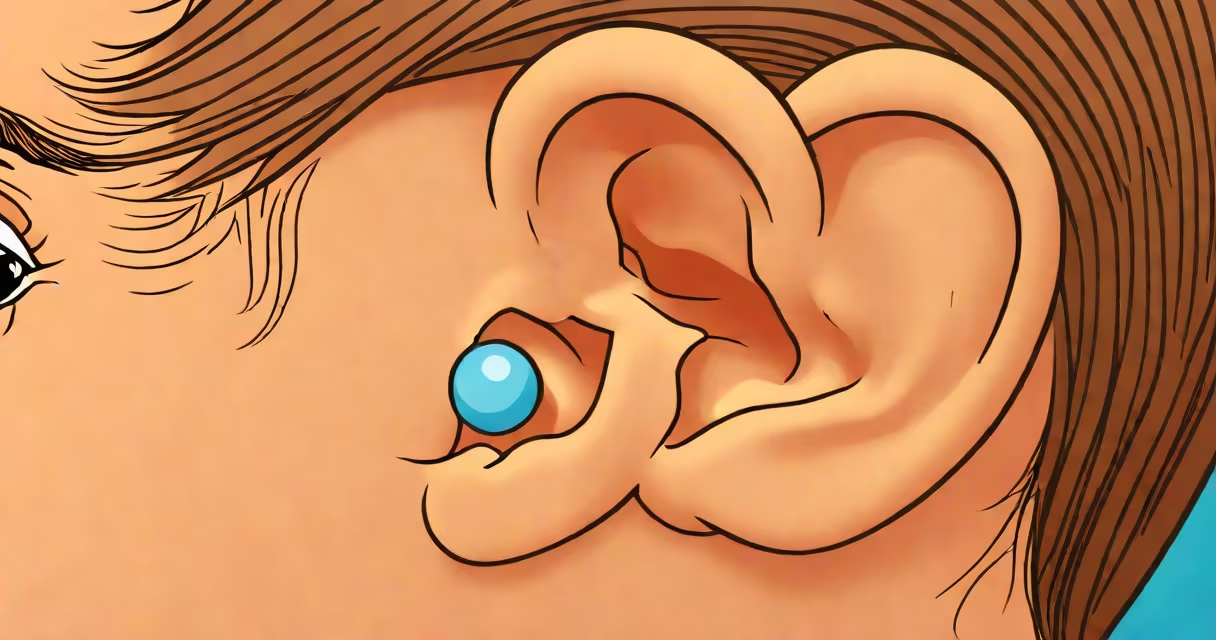
Serous otitis media is a condition where fluid accumulates in the middle ear without signs of bacterial or viral infection. It often follows a cold or upper respiratory illness and causes conductive hearing loss due to impaired sound transmission through the fluid-filled space.
This condition is distinct from acute otitis media, which involves active infection, pain, fever, and visible inflammation. Serous otitis media typically presents with mild or no symptoms, making it easy to miss in young children who cannot verbalize discomfort.
According to the American Academy of Otolaryngology-Head and Neck Surgery (AAO-HNS), serous otitis media affects about 1 in 10 children annually, with peak incidence between ages 2 and 6. The fluid is usually clear or slightly cloudy and contains serum-like exudate, hence the term "serous."
The middle ear is normally filled with air and connected to the back of the nose via the eustachian tube. This tube opens during swallowing or yawning to equalize pressure and drain fluids. When the tube becomes blocked-often due to swelling from allergies, colds, or adenoid enlargement-fluid builds up behind the eardrum.
Without infection, the fluid remains sterile but persists because the eustachian tube fails to re-establish drainage. Over time, this leads to reduced mobility of the eardrum and ossicles, impairing sound conduction. The brain receives weaker auditory signals, resulting in muffled hearing or difficulty understanding speech in noisy environments.
Audiometry testing shows a conductive hearing loss pattern, typically 20-30 dB in severity. Tympanometry confirms the presence of fluid by detecting a flat or negative pressure curve, which is diagnostic in clinical settings.
There are two primary forms based on duration:
| Type | Duration | Common Triggers | Prognosis |
|---|---|---|---|
| Acute serous otitis media | Less than 3 months | Cold, seasonal allergies, upper respiratory infection | Resolves spontaneously in most cases |
| Chronic serous otitis media | More than 3 months | Recurrent infections, persistent eustachian tube dysfunction, enlarged adenoids | Higher risk of permanent hearing loss or structural changes |
Children are especially vulnerable due to anatomical differences-their eustachian tubes are shorter, more horizontal, and less efficient at drainage. This explains why serous otitis media is rare in adults unless associated with conditions like autoimmune disorders or head trauma.
Non-infectious causes include exposure to secondhand smoke, high-altitude living, and frequent swimming. A study published in Pediatrics found that children exposed to tobacco smoke had a 50% higher risk of developing persistent effusion compared to non-exposed peers.
Doctors diagnose serous otitis media using a combination of tools. Otoscopy reveals a dull, opaque eardrum with absent light reflex and lack of movement during insufflation (pneumatic otoscopy).
Tympanometry measures middle ear pressure and compliance. A Type B tympanogram-flat line-indicates fluid presence. Audiometry assesses hearing thresholds, revealing a drop in bone conduction thresholds and a widened air-bone gap.
Imaging is rarely needed but may be used if complications are suspected. CT scans show opacification of the mastoid and middle ear spaces, while MRI can differentiate between fluid and soft tissue masses.
For example, a 4-year-old boy presented with delayed speech development and difficulty following instructions at preschool. Otoscopy showed a retracted, amber-colored eardrum. Tympanometry confirmed a Type B curve. Audiometry revealed a 25 dB conductive hearing loss. After treatment with nasal steroids and autoinflation exercises, hearing returned to normal within six weeks.
Many people mistake serous otitis media for acute otitis media. The key difference lies in the absence of infection markers: no fever, no severe ear pain, no bulging eardrum. Acute cases involve neutrophil infiltration and pus formation; serous cases do not.
Another misconception is that fluid always requires antibiotics. The American Academy of Pediatrics guidelines state that antibiotics are ineffective for serous otitis media unless there's evidence of concurrent infection. Using them increases resistance risk and offers no benefit.
Some parents assume that hearing loss from fluid is permanent. In reality, over 80% of cases resolve within three months without intervention. However, prolonged fluid beyond three months correlates with language delays and academic underperformance, according to research from the National Institutes of Health.
I once evaluated a 5-year-old girl referred for speech delay. Her initial exam showed bilateral serous otitis media. After two months of observation and hearing monitoring, fluid resolved spontaneously. She began catching up in language skills within four months. This case reinforced that watchful waiting is appropriate when no developmental red flags exist.
Management depends on duration, hearing impact, and developmental concerns. For children under 3 with persistent fluid beyond three months, referral to an ENT specialist is recommended. If hearing loss exceeds 20 dB, or if speech and language milestones are delayed, intervention is advised.
First-line treatments include nasal corticosteroids (e.g., fluticasone) to reduce mucosal swelling and improve eustachian tube function. Autoinflation techniques-like the Valsalva maneuver or using a balloon (Otovent)-can help open the tube. These are safe and effective in older children.
If fluid persists beyond three months despite conservative management, tympanostomy tubes (grommets) may be placed. These small tubes allow ventilation and drainage. A 2021 Cochrane review found that grommets improved hearing and reduced recurrence rates in children with chronic effusion.
For those with recurrent episodes, evaluation for adenoid hypertrophy is essential. Enlarged adenoids can obstruct the eustachian tube oropharyngeal opening. Adenoidectomy improves outcomes in 60-70% of cases, especially when combined with tube insertion.
Chronic serous otitis media may progress to adhesive otitis, where the eardrum adheres to the middle ear structures due to prolonged fluid exposure. This can lead to irreversible hearing loss and requires surgical repair.
For patients with underlying conditions such as Down syndrome or cleft palate, the risk of serous otitis media is higher. These populations often require early screening and proactive management.
Understanding serous otitis media helps prevent misdiagnosis and overtreatment. It is not an infection, does not require antibiotics, and often resolves on its own. Early detection and monitoring are critical to preserving hearing and language development in children.
Recognizing the signs-delayed speech, poor school performance, or unexplained hearing issues-leads to timely care. If left untreated, even temporary hearing loss can affect cognitive and social growth.