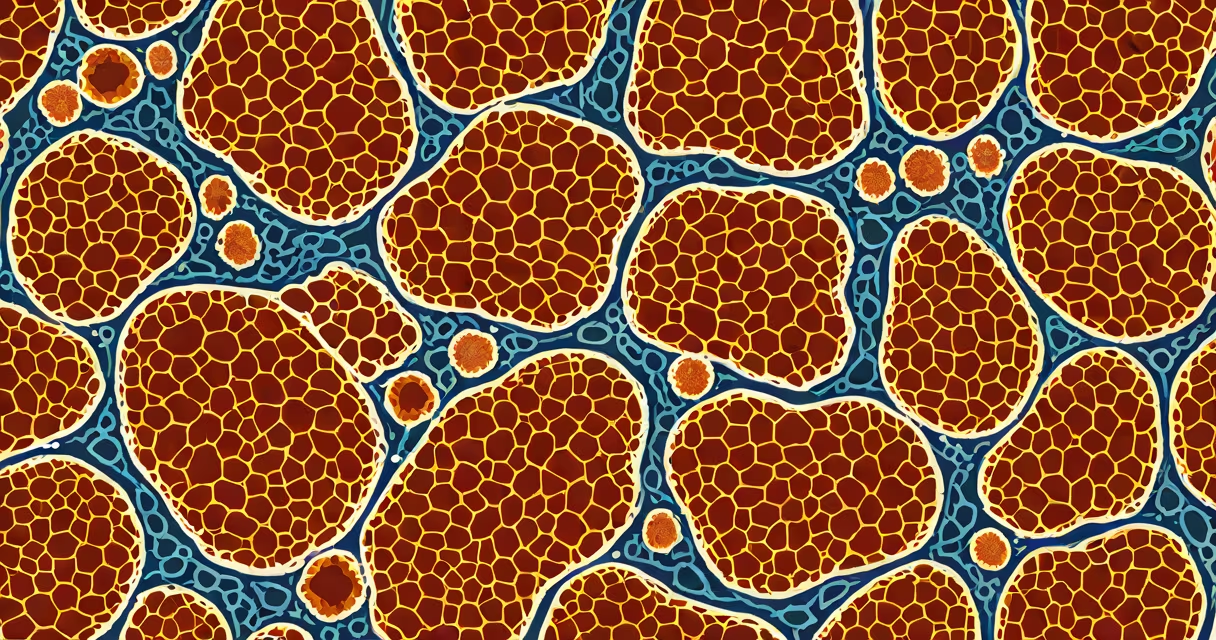
Squamous cell lung cancer is a subtype of non-small cell lung cancer that develops in the squamous epithelial cells lining the central airways of the lungs, such as the bronchi. It accounts for approximately 25-30% of all lung cancer cases and is most strongly associated with tobacco use.
This form of cancer arises when cells in the bronchial lining undergo genetic mutations that cause uncontrolled growth. These cells often appear in clusters near the center of the lungs, close to the main air passages. Because of their location, symptoms may appear earlier than in other lung cancer types, including persistent cough, hemoptysis (coughing up blood), and recurrent infections.
According to the American Cancer Society, squamous cell lung cancer is less likely to spread to distant organs early in its course compared to other subtypes like adenocarcinoma. However, once it progresses beyond the local area, it can metastasize to lymph nodes, liver, brain, and bones. Early detection remains critical for effective treatment.
Squamous cell lung cancer begins when DNA damage accumulates in the flat, scale-like cells that line the respiratory tract. The most common cause of this damage is exposure to carcinogens in cigarette smoke, which contain over 7,000 chemicals, including known mutagens like benzene and formaldehyde. The risk increases with duration and intensity of smoking.
Under a microscope, squamous cell tumors show distinct features: keratinization (production of keratin protein), intercellular bridges between cells, and areas of necrosis. These characteristics help pathologists distinguish it from other lung cancers. The presence of keratin pearls-round clusters of dead cells-is a sign diagnostic sign.
A 2022 study published in Cancer Research found that mutations in the TP53 gene occur in over 80% of squamous cell lung cancers, while alterations in NOTCH1 and KEAP1 genes are also frequent. These mutations disrupt normal cell cycle control and oxidative stress response, enabling tumor survival and growth.
Squamous cell lung cancer is classified primarily by histological appearance and molecular markers. The World Health Organization (WHO) categorizes it into several subtypes based on differentiation:
| Type | Differentiation Level | Prognosis | Common Features |
|---|---|---|---|
| Well-differentiated | High resemblance to normal squamous cells | Better survival rates | Keratin pearls, clear cell borders |
| Moderately differentiated | Intermediate features | Median survival | Some keratin production, irregular nuclei |
| Poorly differentiated | Limited resemblance to normal tissue | Worse outcomes | High mitotic rate, necrosis |
Pathologists use immunohistochemistry to confirm diagnosis. Squamous cell carcinomas typically express markers like p40 and p63, while lacking TTF-1, which is positive in adenocarcinomas. This distinction is important because treatment approaches differ.
One key insight often missed: squamous cell lung cancer rarely responds to targeted therapies like EGFR inhibitors, which work well in adenocarcinoma. This is due to the absence of EGFR mutations in most squamous cases. Instead, treatment relies on chemotherapy, radiation, and immune checkpoint inhibitors.
Squamous cell lung cancer forms in the central regions of the lungs-typically in the main bronchi or lobar bronchi. Its central location explains why symptoms like chronic cough, hemoptysis, and atelectasis (lung collapse) often appear early. A patient may present with a mass visible on a CT scan near the hilum-the area where the bronchus enters the lung.
Smoking is the leading risk factor. The U.S. Centers for Disease Control and Prevention (CDC) reports that smokers have a 15 to 30 times higher risk of developing squamous cell lung cancer than nonsmokers. Even secondhand smoke increases risk by 20-30%. Other contributors include occupational exposure to asbestos, silica, and heavy metals-especially in mining and construction.
Squamous cell lung cancer is less common in never-smokers than adenocarcinoma. Among people who have never smoked, squamous cell cancer accounts for only about 5% of cases. This contrasts sharply with adenocarcinoma, which makes up nearly half of lung cancers in non-smokers.
Many confuse squamous cell lung cancer with small cell lung cancer, despite both being categorized under "lung cancer." They differ fundamentally in origin, behavior, and treatment. Small cell lung cancer arises from neuroendocrine cells and grows rapidly, often spreading early. It's highly sensitive to chemotherapy and radiation but rarely curable. In contrast, squamous cell lung cancer grows more slowly and is less responsive to chemo but may benefit from surgery if localized.
Another misconception is that all lung cancers are caused by smoking. While smoking is the dominant cause, about 10-15% of squamous cell lung cancers occur in individuals with no history of tobacco use. These cases may stem from genetic predisposition, environmental exposures, or unknown triggers.
I once reviewed a biopsy report from a 58-year-old woman with no smoking history. She presented with a 3 cm mass in the left upper lobe. Histology confirmed squamous cell carcinoma with p40 positivity and no EGFR mutation. Her treatment plan included surgical resection followed by adjuvant chemotherapy-a standard approach for stage II disease. This case illustrates that non-smokers can develop this cancer, though it's rare.
Staging determines treatment. The TNM system (Tumor, Node, Metastasis) classifies disease extent. For early-stage disease (I-II), surgical resection-often a lobectomy-is the primary option. Five-year survival rates exceed 60% for stage I patients, according to the National Cancer Institute's SEER database.
For advanced stages (III-IV), treatment shifts to systemic therapy. Platinum-based chemotherapy (cisplatin or carboplatin plus etoposide or pemetrexed) remains first-line. Immunotherapy with pembrolizumab or nivolumab is now standard for PD-L1-positive tumors, improving median survival by 10-15 months in clinical trials.
Survival varies widely. A 2021 analysis in JAMA Oncology showed that patients with stage IIIA squamous cell lung cancer had a 5-year survival rate of 30%, while those with stage IV disease averaged 10%. These numbers reflect improvements in treatment but show the importance of early diagnosis.
The International Classification of Diseases, 10th edition (ICD-10), codes squamous cell lung cancer as C34.2-specifically for malignant neoplasm of the right middle lobe, or C34.3 for the left middle lobe. When the site is unspecified, it's coded as C34.9. Accurate coding ensures proper billing, research tracking, and population health monitoring.
Knowing the correct ICD-10 code matters. A misclassified diagnosis can lead to incorrect reimbursement, skewed statistics, and poor care coordination. For example, mistaking squamous cell cancer for adenocarcinoma may result in inappropriate use of EGFR-targeted drugs, which are ineffective and costly.
Squamous cell lung cancer is a distinct, treatable form of non-small cell lung cancer arising from the central airway lining. It is strongly linked to smoking, presents with specific symptoms, and requires tailored diagnosis and therapy. Early detection and accurate classification improve outcomes.