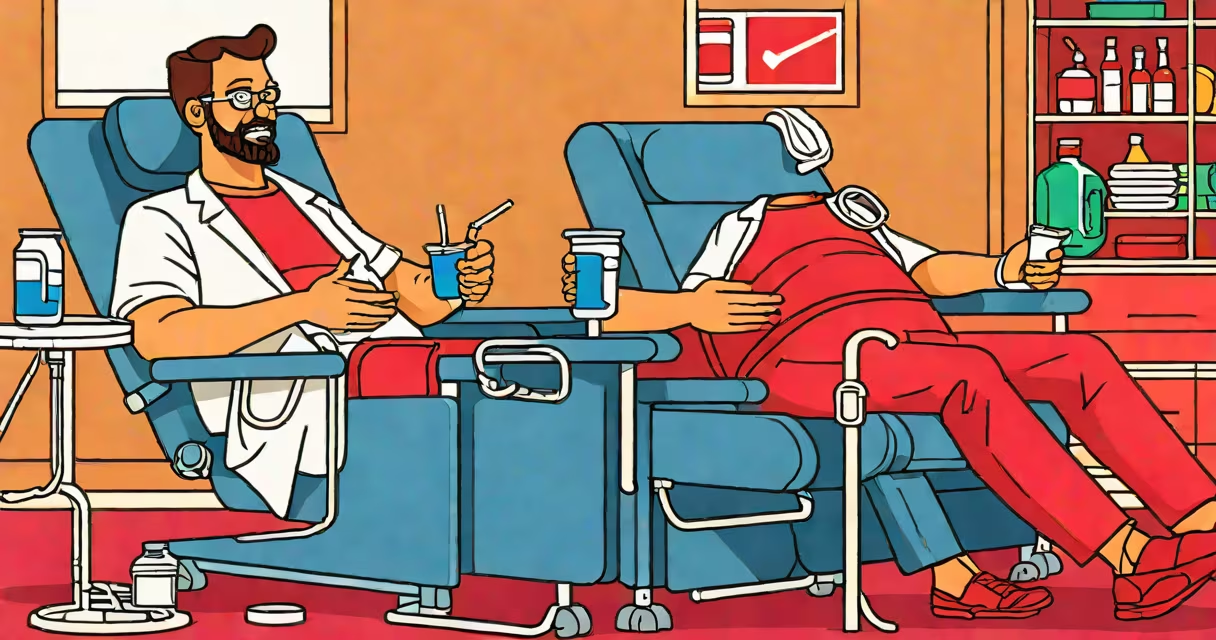
After giving blood, most people feel fine within minutes to hours, with common reactions including mild dizziness, fatigue, or a small bruise at the needle site. These effects usually resolve within 24 hours. The body replaces lost fluid within 24 hours and red blood cells within four weeks.
Blood donation involves removing about 470 milliliters (about one pint) of whole blood from a donor's arm. This amount represents roughly 10% of the average adult's total blood volume. The body begins replacing plasma immediately, with full volume restored in 24 to 48 hours. Red blood cell regeneration takes longer-around four weeks-due to iron and protein requirements.
The American Red Cross states that 99% of donors report no serious complications after donation. Mild side effects such as lightheadedness or nausea occur in less than 5% of cases. Most donors recover quickly with rest and hydration.
During donation, your blood pressure may drop slightly due to reduced circulating volume. This can cause temporary dizziness or faintness. You'll be monitored for five to ten minutes afterward to ensure stability. If you feel unwell during or right after the procedure, sit or lie down until symptoms pass.
Your body activates compensatory mechanisms: heart rate increases slightly, and blood vessels constrict to maintain circulation. These changes are normal and typically last only 10-15 minutes. Drinking fluids like water or juice during the recovery period helps restore blood volume faster.
A 2021 study published in Transfusion found that donors who consumed 500 mL of fluid post-donation had lower rates of orthostatic hypotension (dizziness upon standing) compared to those who didn't. The study concluded that hydration helps preventing immediate post-donation discomfort.
Most side effects are minor and short-lived. The most frequent include:
More than 90% of donors resume driving, working, and exercising within 24 hours. The American Association of Blood Banks (AABB) recommends avoiding heavy lifting (over 10 pounds) for 24 hours to prevent increased bruising or bleeding at the site.
One donor reported feeling unusually tired the next morning after donating on a Friday. They rested, drank electrolyte-rich beverages, and returned to work on Monday without issues. This aligns with clinical observations that fatigue is usually transient and resolves with rest.
Seek medical care if you experience:
These signs are rare but warrant evaluation. A 2019 review in British Journal of Haematology found that serious adverse events after blood donation occurred in fewer than 1 in 10,000 donations. The most common serious issue was syncope (fainting) leading to injury, often from falling during or shortly after donation.
Donors with known anemia, low hemoglobin levels, or a history of fainting are advised to inform staff beforehand. Pre-screening includes checking hemoglobin via a finger-prick test. Donors with levels below 12.5 g/dL for women or 13.0 g/dL for men are deferred to protect their health.
Hydration is critical. Drink at least 16 ounces of water or non-alcoholic beverage within the first hour after donation. Avoid alcohol for at least 24 hours-it can worsen dehydration and delay recovery.
Eat a balanced meal within 30 minutes of donation. Iron-rich foods like lean meat, spinach, or fortified cereals support red blood cell regeneration. The Red Cross recommends consuming a snack with protein and carbohydrates-such as a banana and peanut butter sandwich-to stabilize blood sugar.
Do not drive if you feel dizzy or weak. Wait until you're steady on your feet. If you must drive, wait at least 15 minutes and confirm you feel stable.
Some donors report mild nausea after donation. This is often linked to anxiety or low blood sugar. Eating a light snack and staying seated for a few minutes reduces risk. If nausea persists, contact the donation center.
Contrary to popular belief, donating blood does not weaken your immune system. White blood cells and antibodies remain unchanged. The body regenerates all components of blood within weeks.
Another myth: "I'll feel drained for days." While fatigue occurs in some, it's not typical. A 2020 survey of 1,200 donors found that 87% felt normal within six hours. Only 3% reported fatigue lasting more than 24 hours.
Some confuse post-donation symptoms with signs of infection. Bruising and soreness are expected. Redness, warmth, or pus at the site indicate infection-rare but possible. Report these to a healthcare provider.
Donors sometimes worry about blood loss affecting performance. Studies show no decline in cognitive function or physical endurance in healthy individuals after donation. A 2018 study in Journal of Clinical Medicine found no difference in reaction time or concentration between donors and non-donors in the 24-hour window.
| Timeframe | Expected Recovery |
|---|---|
| Immediately after | Rest in chair; monitor for dizziness. Drink fluids. |
| 1-2 hours | Most symptoms subside. Resume light activity. |
| 24 hours | Full blood volume restored. Return to normal routines. |
| 4 weeks | Red blood cells fully replaced. Iron stores replenished. |
Understanding what to expect after giving blood reduces anxiety and encourages repeat donation. Knowing the timeline and recognizing warning signs ensures safety and confidence. Most donors feel well within hours and continue contributing to life-saving efforts.