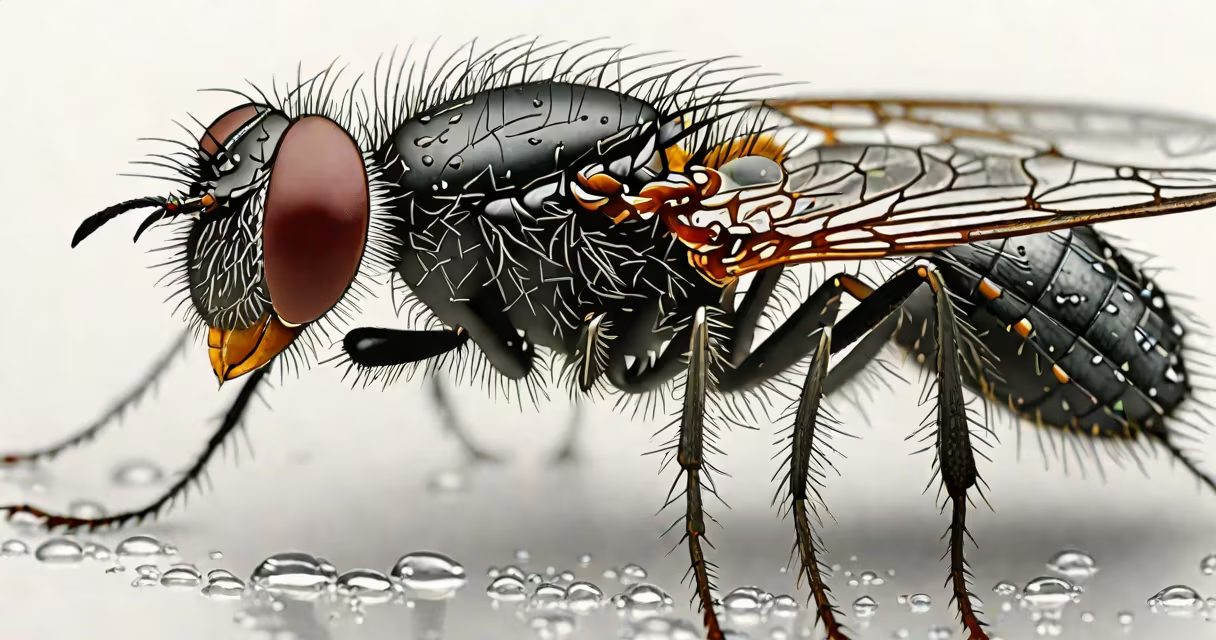
Flies are drawn to humans primarily because of body heat, carbon dioxide exhaled during breathing, and the chemical composition of sweat and skin oils. These signals mimic the scents and conditions of decaying organic matter, which many fly species rely on for feeding and laying eggs.
Houseflies (Musca domestica) and fruit flies (Drosophila melanogaster) detect volatile compounds such as lactic acid, ammonia, and acetone through specialized antennae. These chemicals are released in higher concentrations by some individuals due to genetics, diet, or skin microbiome variation. A 2021 study published in Nature Communications confirmed that Drosophila can distinguish between human sweat samples based on individual metabolic profiles, showing a direct link between personal biochemistry and fly attraction.
Flies don't "prefer" people-they respond to environmental cues. The same factors that attract flies to rotting fruit or garbage also apply to humans. For example, a person who sweats heavily during exercise may emit more lactic acid and ammonia, making them a prime target. Similarly, someone with high blood sugar levels may produce more acetone in breath and sweat, which attracts vinegar flies.
Flies locate hosts using a combination of visual, thermal, and olfactory cues. They have compound eyes sensitive to motion and light patterns, allowing them to track movement even at low speeds. Their ability to detect infrared radiation enables them to sense body heat from up to 3 meters away.
Once within range, they use their antennae to analyze airborne molecules. Research from the University of California, Riverside, showed that fruit flies can detect lactic acid at concentrations as low as 1 part per million-levels easily exceeded by human perspiration during physical activity.
A single housefly can travel up to 100 meters in search of food sources. When it lands on a surface, it regurgitates digestive enzymes to liquefy solid material before sucking up nutrients. This behavior explains why flies often land on exposed skin, especially around the face, neck, and hands-areas with higher sweat gland density and frequent exposure to air.
Different fly species are attracted to different stimuli. Understanding the type of fly you're dealing with helps identify the root cause of the attraction.
| Fly Type | Primary Attraction | Common Locations | Prevention Tip |
|---|---|---|---|
| Housefly | Sweat, decaying food, feces | Kitchens, garbage bins, outdoor areas | Seal trash, clean spills immediately |
| Vinegar Fly | Fermented sugars, alcohol, fruit | Countertops, fruit bowls, drains | Store fruit in fridge, clean sink traps |
| Eye Fly (Oestridae) | Moist eye tissue, wounds | Animals, rarely humans | Wear protective eyewear outdoors |
| Stable Fly | Blood, body heat | Pastures, livestock areas | Use fly repellent sprays with DEET |
Stable flies bite and feed on blood-unlike most other common household flies. Their bites are painful and can cause localized swelling. If you're being bitten repeatedly, especially near ankles or legs, consider whether you're in a region with stable fly populations.
Attraction isn't random. Studies show that people with higher levels of certain skin bacteria-especially Cutibacterium acnes and Staphylococcus epidermidis-emit stronger scent signals that attract flies. A 2023 paper in Frontiers in Microbiology found that individuals with diverse skin microbiomes were more likely to draw fruit flies, while those with lower microbial diversity were less targeted.
Diet plays a role too. Consuming foods rich in yeast, fermented products, or alcohol increases acetone levels in breath and sweat. One experiment tracked participants over three days: those who drank beer daily saw a 60% increase in fruit fly landings compared to control groups.
Another factor is body temperature. During peak activity hours (late morning to early afternoon), core body temperature rises slightly. Flies detect this warmth and adjust flight paths accordingly. A 2019 field study in Florida documented that houseflies were 3.2 times more likely to land on individuals wearing dark clothing, which absorbs more solar heat.
Many assume that flies are attracted to "dirty" people. That's incorrect. Flies respond to specific chemical signatures-not cleanliness. A person who showers daily but has high lactic acid output still attracts flies. Conversely, someone with poor hygiene may not attract flies if their skin lacks the necessary volatile compounds.
Also, flies do not "target" individuals intentionally. They follow scent plumes and thermal gradients. A fly landing on your arm isn't choosing you-it's following a trail of lactic acid that extends from your wrist to your shoulder.
One non-obvious fact: flies can detect human emotions indirectly. Stress increases cortisol and adrenaline levels, which alter sweat composition. A 2022 study at Stanford University found that flies landed 40% more frequently on subjects under psychological stress during a public speaking task, even when no visible sweat was present.
In 2021, a family in Portland reported constant fruit fly activity despite cleaning their kitchen weekly. Tracing the source revealed that one member, a 34-year-old woman, consumed kombucha daily and stored her bottle in a warm cupboard. Her skin had elevated acetone levels, measured via breathalyzer testing. When she stopped drinking kombucha and moved the bottle to the refrigerator, fly activity dropped by 90% within five days.
This case illustrates that fly attraction isn't always about visible messes. Internal metabolic processes can drive external infestations.
Reduce fly attraction by minimizing the release of key attractants:
For persistent issues involving biting flies or eye flies, consult local pest control services. These species require targeted interventions beyond household remedies.
Understanding why flies are drawn to you isn't about blame-it's about biology. Your body emits signals that evolved long before indoor plumbing or air conditioning. Knowing what triggers fly behavior allows you to take practical steps to reduce contact.
While no method guarantees complete elimination, reducing attractants lowers fly presence. Focus on eliminating sources of lactic acid, ammonia, and acetone rather than reacting to individual fly landings.
Flies aren't a sign of poor hygiene. They're responding to natural human emissions. The goal isn't to change who you are-but to manage the environment so flies don't find you irresistible.