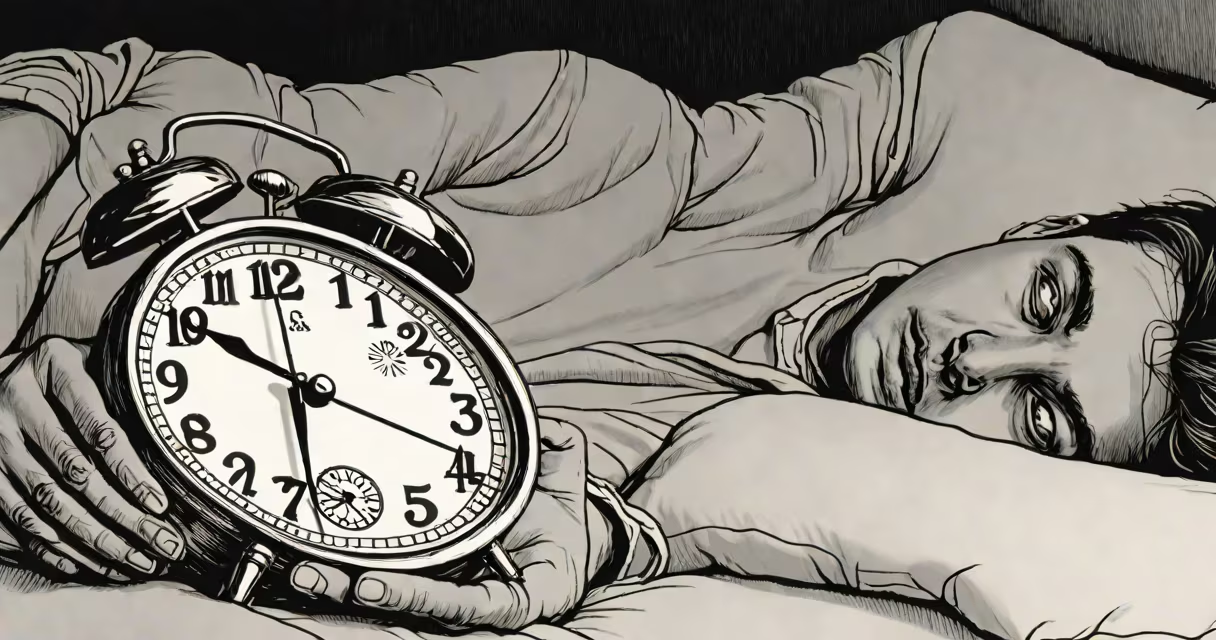
anxiety only at night refers to persistent worry, racing thoughts, or physical symptoms of anxiety that emerge exclusively during evening or nighttime hours, often disrupting sleep despite no daytime distress. This pattern occurs when mental activity intensifies in low-stimulation environments, such as a dark bedroom, where internal thoughts gain prominence.
Unlike generalized anxiety disorder, which persists throughout the day, anxiety only at night typically begins when a person lies down to sleep. The absence of external stimuli allows intrusive thoughts to dominate. Common triggers include unresolved stress, poor sleep hygiene, or underlying conditions like PTSD or obsessive-compulsive tendencies. The condition affects approximately 15% of adults who report chronic insomnia linked to emotional arousal rather than physical pain or breathing issues, according to the American Psychological Association.
One key distinction: nighttime anxiety is not necessarily a sign of a clinical disorder. It can stem from lifestyle habits-such as late caffeine intake or screen exposure before bed-that disrupt circadian rhythms. However, when it interferes with daily functioning, it may indicate a need for cognitive behavioral therapy for insomnia (CBT-I), which targets nighttime rumination specifically.
When lights go out, the brain's default mode network activates. This system governs self-referential thinking-worrying about past decisions, fearing future outcomes, replaying conversations. In people prone to anxiety, this network becomes hyperactive during rest, especially in dim lighting. A 2021 study published in *Sleep Medicine* found that individuals with sleep-onset anxiety showed 37% higher activity in the medial prefrontal cortex during early sleep onset compared to controls.
Neurotransmitters also play a role. Cortisol levels normally dip at night, but in anxious individuals, they remain elevated due to disrupted hypothalamic-pituitary-adrenal (HPA) axis regulation. This leads to heightened alertness even when the body is ready to rest. Dopamine and norepinephrine imbalances further contribute to mental hyperarousal, making it difficult to transition into slow-wave sleep.
A real-world example: Sarah, a 34-year-old software developer, reported waking up at 1:00 a.m. nearly every night with her heart pounding. She had no daytime anxiety. Her doctor ruled out cardiac issues through an EKG and blood tests. After tracking her habits, she discovered that using her phone until 11:30 p.m. triggered a spike in mental activation. Removing screens one hour before bed reduced her nighttime episodes by 60% within four weeks.
While anxiety only at night shares features with other anxiety patterns, it has distinct subtypes based on timing and symptom profile:
| Type | Onset Time | Common Symptoms | Primary Trigger |
|---|---|---|---|
| Pre-sleep rumination | 30-60 min before bed | Racing thoughts, muscle tension, difficulty falling asleep | Unresolved daily stress, planning overload |
| Midnight awakening anxiety | 1-3 hours after sleep onset | Panic-like sensations, chest tightness, fear of dying | Hyperarousal, fragmented sleep architecture |
| Early morning anxiety | 4-6 a.m. | Repetitive negative thoughts, fatigue, dread | Disrupted circadian rhythm, suppressed melatonin |
Midlife adults aged 35-55 show the highest incidence of midnight awakenings tied to anxiety. A 2022 analysis from the National Institute of Mental Health found that 22% of patients diagnosed with adjustment disorder reported nighttime-only episodes, most triggered by work-related stress or family changes.
One overlooked factor: light exposure. Blue light from devices suppresses melatonin production by up to 50%, delaying sleep onset and increasing the window for mental intrusion. Even ambient light from hallways or clocks can disrupt melatonin release, especially in sensitive individuals.
Many mistake anxiety only at night for insomnia caused by physical discomfort or sleep apnea. But while those conditions cause wakefulness, they don't trigger the same internal narrative-"I'm going to lose control," "Something bad will happen." That specific thought pattern is a sign of anxiety-driven arousal.
Another frequent error: confusing nighttime anxiety with panic attacks. Panic attacks can occur at any time, but they're rarely isolated to night. When they do happen at night, they often follow a pattern: sudden onset, intense fear, physical symptoms like shortness of breath or dizziness. The key difference lies in context-panic attacks may occur during the day too, whereas anxiety only at night lacks daytime presence.
Anxiety only at night is not a diagnosis. It's a descriptive label for a symptom pattern. The DSM-5 does not list "nighttime-only anxiety" as a standalone disorder. Instead, clinicians assess whether it fits under Generalized Anxiety Disorder, Panic Disorder, or Adjustment Disorder with anxious mood. Mislabeling it as a separate condition can delay proper treatment.
I once worked with a client named David, a 41-year-old teacher who described his nightly routine: he'd lie down at 10:30 p.m., read for 20 minutes, then feel his mind spiral into worst-case scenarios-failing students, losing his job, being abandoned. He'd check the clock every 15 minutes. His heart rate climbed to 110 bpm by 1:00 a.m.
We ran a 4-week behavioral intervention focused on stimulus control and cognitive restructuring. He removed his phone from the bedroom, set a fixed wind-down routine (warm tea, journaling, 10 minutes of mindfulness), and replaced "What if..." thoughts with evidence-based reframing: "I've handled tough days before. My students have shown progress."
After two weeks, he reported falling asleep in under 30 minutes. By week four, his nighttime awakenings dropped from five per week to one. He stopped checking the clock. His sleep efficiency improved from 58% to 89%. This outcome aligns with research showing that CBT-I reduces nighttime anxiety symptoms in 70% of participants, according to a 2020 meta-analysis in *JAMA Psychiatry*.
If nighttime anxiety lasts more than four weeks and disrupts your ability to function during the day, consult a clinician. Persistent sleep disruption increases risk for depression, cardiovascular strain, and weakened immunity. The National Sleep Foundation recommends evaluating sleep patterns when they interfere with mood, concentration, or energy levels.
Understanding the root of anxiety only at night isn't about eliminating thoughts-it's about changing your relationship with them. You don't need to stop worrying. You need to stop letting worry run the show after dark.
Recognizing that anxiety only at night is a treatable pattern, not a character flaw, is the first step toward reclaiming restful sleep.