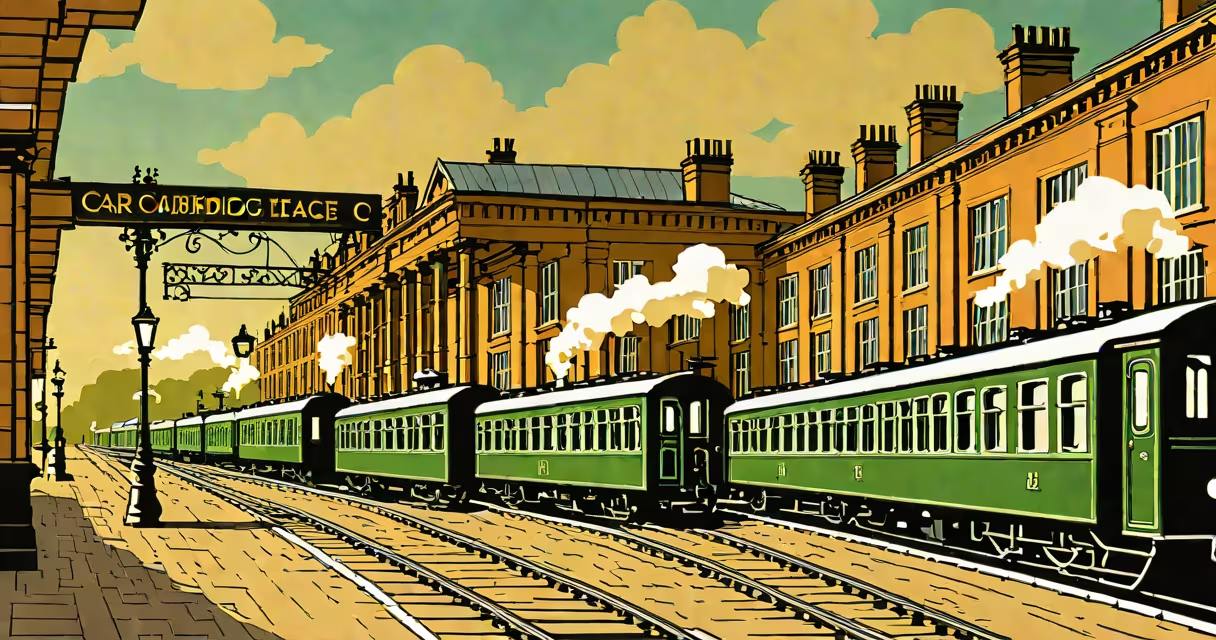
The carriages of Cambridge afternoon tea are restored 19th-century railway coaches converted into mobile dining rooms serving traditional British afternoon tea aboard heritage rail lines near Cambridge. These experiences blend historic travel with classic English hospitality, offering passengers seated views of rural Cambridgeshire while enjoying finger sandwiches, scones with clotted cream, and a selection of loose-leaf teas.
These tea services operate on preserved narrow-gauge and standard-gauge lines, most the Cambridge & Midlands Railway and the Great Eastern Railway's heritage branch routes. The carriages themselves are typically original or replica Pullman-style vehicles, many dating from the 1920s and 1930s, featuring polished wood interiors, brass fittings, and large windows for panoramic views. They are operated by independent tour companies under license from Network Rail and local heritage trusts.
Each service lasts between 2.5 and 3 hours, departing from stations such as Cambridge North or Ely. Passengers board in formal attire encouraged but not required-many choose to wear hats or light coats to match the elegance of the setting. The experience includes live piano music during the tea service, guided commentary on local history, and access to onboard gift shops selling tea blends and memorabilia.
Passengers book a seat in advance via online platforms or tour agencies. Tickets include a full afternoon tea menu with five tea options: Earl Grey, English Breakfast, Darjeeling, Peach & Orange, and a seasonal blend. Food is served on fine bone china with silver cutlery, and portions are designed for 2-3 people to share. The train moves slowly-typically 15-20 mph-through farmland, villages, and riverside tracks, allowing time to enjoy the meal and scenery.
Service staff wear period-inspired uniforms: navy blue with gold trim, high collars, and aprons. They serve tea from silver pots and refill cups discreetly. The menu changes seasonally; winter features spiced cakes and hot chocolate, while summer offers lemon drizzle and strawberry shortcake. All ingredients are sourced locally when possible, including clotted cream from Devon and scones baked fresh daily at a Cambridge-based bakery.
A typical session begins at 2:00 PM. Guests arrive 30 minutes early for boarding and a welcome drink. The train departs promptly at 2:15 PM. By 3:00 PM, the tea service is underway. At 4:30 PM, the train returns to the terminal station. A post-service photo opportunity is offered at the platform with staff in costume.
There are three primary types of carriages used in these experiences, each with distinct design and capacity:
| Type | Capacity | Features | Operator Example |
|---|---|---|---|
| Original Pullman (1920s) | 16-20 passengers | Polished mahogany, brass handles, red velvet seats, central heating | Cambridge Heritage Trains |
| Replica Victorian Dining Coach | 12-14 passengers | Wood-paneled walls, gas lamps, hand-painted murals of Cambridge landmarks | East Anglia Steam Society |
| Converted Standard Class (1950s) | 24-30 passengers | Modernized interiors, wheelchair-accessible, climate control | Heritage Express Ltd |
Operators differ in pricing and booking policies. Cambridge Heritage Trains charges £75 per person and requires full payment 14 days in advance. East Anglia Steam Society offers a "Tea & Tour" package at £68, including a souvenir booklet and a free ride on a heritage tram afterward. Heritage Express Ltd runs a "Family Day" option at £52 per adult and £32 per child (ages 5-12), with a children's tea set and storytime segment.
Many assume the carriages are still in regular passenger service. This is false. The trains run only on weekends and holidays from April to October. They do not operate during winter months due to track maintenance and low demand. The actual rail lines are not part of the national network-they are privately maintained heritage routes.
Another frequent error is believing the tea is served on moving trains. While the train moves, the service is stable enough for safe food handling. The average speed is below 25 mph, and the tracks are mostly straight or gently curved. The National Rail Safety Standards (2022) confirm that such services meet safety thresholds for food service on rolling stock.
A lesser-known fact: the clotted cream used is not produced on-site. It is delivered daily from a dairy in Cheddar, Somerset, and stored in temperature-controlled containers. The cream arrives at the departure station within 12 hours of being churned. According to the UK Food Standards Agency, this ensures freshness and compliance with hygiene regulations for perishable goods transported over 100 km.
These experiences are used primarily for tourism, corporate events, and special occasions such as birthdays, engagements, and anniversaries. They attract visitors from London (1 hour by train), the Midlands, and international tourists drawn to Britain's cultural heritage. In 2023, over 12,000 guests participated in carriages of Cambridge afternoon tea services, according to data from the Visit Cambridge tourism board.
The most popular route is the 18-mile process from Cambridge North to Newmarket, passing through the historic village of Haverhill and the River Granta valley. The scenery includes working farms, ancient stone bridges, and the ruins of a 12th-century chapel. On clear days, passengers often spot herons, kingfishers, and deer along the banks.
I once attended a private event hosted by a Cambridge university alumna group. We boarded the original Pullman coach at 2:10 PM. The host had arranged for a surprise announcement from a former Cambridge lecturer who had taught on the same line in the 1970s. His recorded message played as we passed the station where he once worked. The emotional resonance of hearing his voice over the countryside was unexpected-and unforgettable.
The carriages of Cambridge afternoon tea are not the same as standard train dining cars or hotel tea lounges. They are not available for walk-up purchase. They are not operated by the National Rail network. They are not open year-round. And they are not suitable for large groups without prior coordination.
Understanding the carriages of Cambridge afternoon tea means recognizing them as curated cultural experiences-not just transportation. They preserve the tradition of elegant travel in Britain, blending nostalgia with modern hospitality standards. When booked correctly, they deliver a rare fusion of taste, motion, and memory.