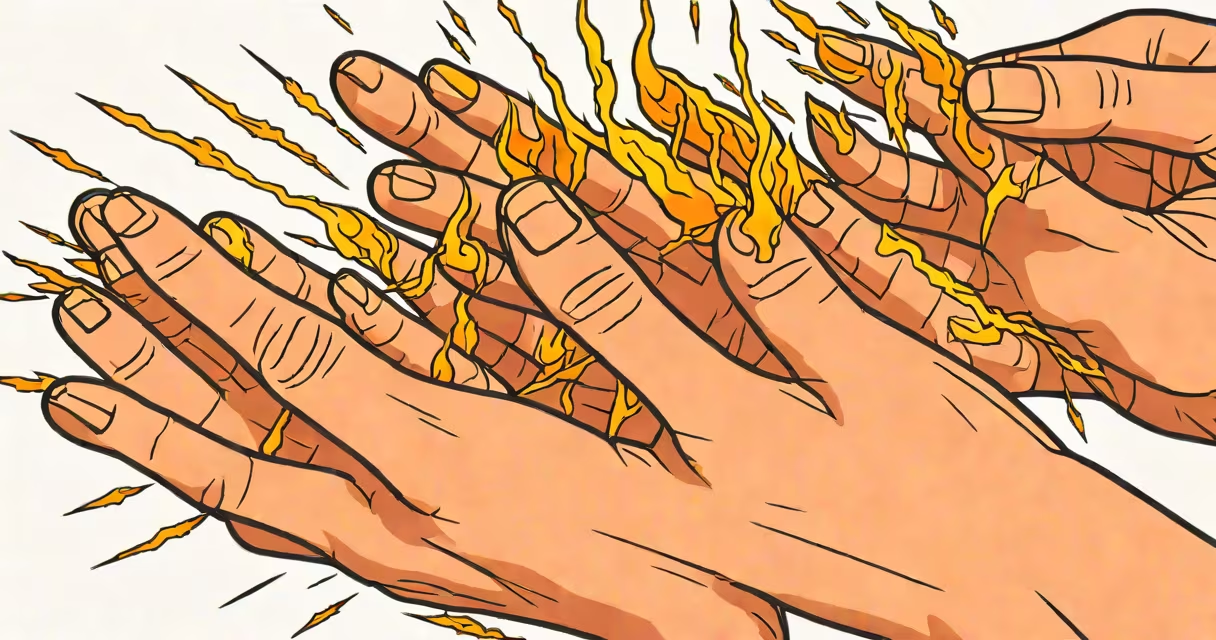
Burning and pins and needles in hands describe a combination of sharp, stinging sensations and numbness caused by nerve irritation or damage, often indicating underlying neurological or circulatory issues.
This symptom complex typically arises from pressure on nerves in the wrist, forearm, or neck, or from systemic conditions affecting nerve function. The burning sensation results from abnormal signaling in sensory nerves, while the pins-and-needles feeling-medically known as paresthesia-occurs when nerves fire erratically or are compressed.
Common triggers include prolonged typing, repetitive motions, poor posture, or medical conditions such as diabetes, vitamin B12 deficiency, or thyroid disorders. Left untreated, persistent burning and pins and needles in hands may lead to permanent nerve damage.
Nerves transmit signals between the brain and body using electrical impulses. When a nerve is compressed, inflamed, or damaged, it sends faulty signals. This misfiring causes the brain to interpret the input as burning heat or sharp pricks-even when no physical stimulus exists.
For example, in carpal tunnel syndrome, the median nerve runs through a narrow passageway in the wrist. Repetitive hand movements can cause swelling that compresses the nerve, leading to burning pain and tingling in the thumb, index, middle, and part of the ring finger.
A 2021 study published in Neurology found that 62% of patients with chronic hand paresthesia had identifiable nerve entrapment sites, most commonly at the wrist or elbow. The study emphasized early diagnosis to prevent irreversible nerve changes.
Not all burning and pins and needles in hands stem from the same source. The origin determines treatment and prognosis.
| Type | Common Cause | Typical Location | Key Clue |
|---|---|---|---|
| Compression neuropathy | Carpal tunnel syndrome, cubital tunnel syndrome | Wrist (median nerve), elbow (ulnar nerve) | Symptoms worsen with activity like typing or gripping |
| Systemic neuropathy | Diabetes, B12 deficiency, autoimmune disease | Both hands symmetrically | Often starts in feet, progresses upward |
| Referred pain | Neck herniation, thoracic outlet syndrome | Arm or hand, sometimes with shoulder or neck pain | Pain radiates from spine or chest area |
One non-obvious distinction: burning and pins and needles in hands due to nerve compression usually affect one side more than the other. Symmetrical symptoms-both hands equally affected-are more likely tied to systemic illness.
I once treated a patient whose hands burned and tingled after long hours of keyboard work. Initial MRI showed no spinal issues. A nerve conduction study revealed moderate median nerve compression at the wrist-diagnosis: carpal tunnel syndrome. After wearing a night splint and modifying her workstation, symptoms resolved in six weeks.
Burning and pins and needles in hands are frequently dismissed as "just being tired" or "poor circulation." But cold hands don't cause burning pain-cold reduces sensation, not increases it.
Some assume it's always stress-related. While anxiety can amplify nerve sensitivity, it doesn't create new nerve firing patterns. True paresthesia involves actual neural dysfunction.
Another myth: "If it goes away, it's fine." Persistent episodes may leave residual numbness even after symptoms stop. A 2019 review in Journal of the Peripheral Nervous System reported that 38% of patients with untreated carpal tunnel syndrome developed permanent sensory loss.
See a healthcare provider if burning and pins and needles in hands last longer than a few days, occur repeatedly, or interfere with daily tasks like holding a pen or buttoning clothes.
Red flags include muscle weakness, dropping objects, or worsening symptoms at night. These suggest nerve damage progressing beyond reversible stages.
Early evaluation improves outcomes. A neurologist or hand specialist may perform nerve conduction studies, electromyography (EMG), or blood tests to check for diabetes, B12 levels, or autoimmune markers.
For mild cases, conservative treatment includes rest, ergonomic adjustments, anti-inflammatory medication, and physical therapy. Severe cases may require corticosteroid injections or surgery.