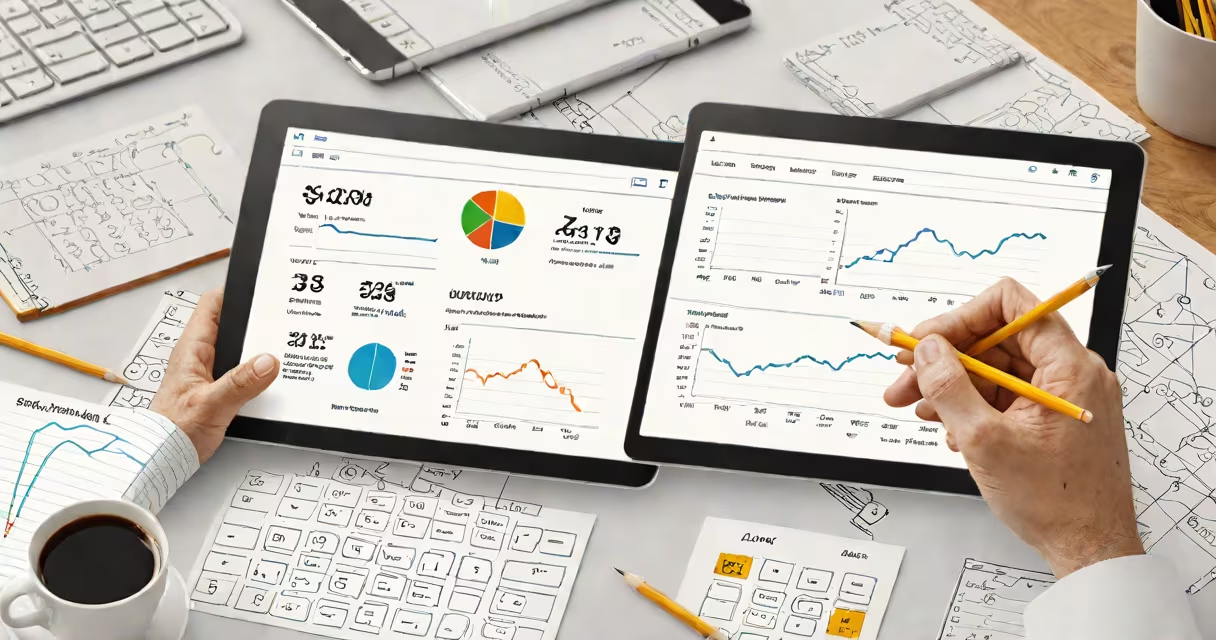
Cloud based accounting software for nonprofits is subscription-powered financial management software hosted on remote servers, accessible via web browser or mobile app. It automates bookkeeping, tracks grants and donations, generates compliance-ready reports, and supports multi-user access from any location. Designed specifically for nonprofit operations, it integrates fund accounting, donor management, and grant tracking into a single system.
Unlike legacy desktop software, cloud based accounting software for nonprofits runs entirely online. Data is stored on secure servers maintained by the provider, not on local computers. Users log in through a web browser or dedicated app. All transactions-receipts, payments, invoices-are recorded in real time and synchronized instantly across devices. This eliminates data loss from crashes, hardware failure, or lost USB drives.
Major providers include QuickBooks Online Nonprofit, Blackbaud Financial Edge NXT, and Bloomerang's integrated platform. These systems support multi-fund accounting, which tracks restricted vs. unrestricted funds-a core requirement for nonprofits receiving grants or donations with usage conditions. They also generate standard nonprofit reports such as the Statement of Financial Position, Statement of Activities, and IRS Form 990 templates.
The system processes transactions through a central database. When a user enters a donation, the software automatically assigns it to the correct fund (e.g., "Capital Campaign" or "General Operations") based on predefined rules. It updates the chart of accounts, adjusts balances, and triggers alerts for overdue invoices or approaching budget thresholds.
Users can set up recurring entries-such as monthly payroll or quarterly grant reporting-so tasks repeat automatically. Permissions control who sees what: a volunteer may view donor lists, while a finance director edits budgets. Changes are logged with timestamps and user IDs, creating an audit trail required for annual reviews.
Integration with payment processors like Stripe or PayPal enables automatic deposit reconciliation. When a $500 donation arrives via online form, the system flags it as pending, then marks it as cleared once the bank confirms the transfer. This reduces manual entry errors by up to 80%, according to a 2022 study by the National Council of Nonprofits.
Nonprofit-specific cloud accounting software varies by scale, complexity, and integration needs. The following table outlines common categories:
| Type | Best For | Key Features | Examples |
|---|---|---|---|
| Entry-Level | Small groups with under $1M revenue | Basic bookkeeping, donation tracking, simple reporting | QuickBooks Online Nonprofit, Wave Accounting |
| Mid-Tier | Organizations with multiple programs or grants | Fund accounting, multi-year budgeting, grant tracking | Blackbaud Financial Edge NXT, NetSuite Nonprofit Set |
| Enterprise | Larger nonprofits with complex operations | Advanced reporting, API integrations, custom workflows | Oracle NetSuite, Salesforce Nonprofit Cloud |
Each tier supports different levels of fund accounting. Entry-level tools often treat all income as "unrestricted," which can lead to compliance issues during audits. Mid-tier systems allow tagging donations by restriction (e.g., "$10,000 for youth outreach"), ensuring accurate reporting for donors and regulators.
A critical feature missing in many generic accounting tools is donor acknowledgment automation. Cloud based accounting software for nonprofits automatically generates IRS-compliant thank-you letters within 48 hours of a gift. This reduces administrative workload and improves donor retention by 12% on average, per a 2023 report from the Urban Institute.
Many assume cloud based accounting software for nonprofits is simply "QuickBooks with a nonprofit label." That's incorrect. While QuickBooks Online offers a nonprofit version, it lacks native fund accounting and grant tracking. Without proper configuration, users risk misclassifying restricted funds, leading to audit findings.
Another mistake is equating "cloud" with "free." Most cloud based accounting software for nonprofits charges a monthly fee based on users, features, and transaction volume. For example, QuickBooks Online Nonprofit starts at $30/month per user, with additional fees for advanced reporting or integration with donor databases.
Some organizations believe they can migrate from spreadsheets to cloud software overnight. But data migration requires clean, consistent formatting. A 2021 survey by the Nonprofit Technology Network found that 67% of nonprofits taking their first step into cloud accounting underestimated the time needed to import historical data-often spending 15-40 hours cleaning up duplicates, missing dates, or mismatched account codes.
Consider a nonprofit clinic serving low-income families. It receives $250,000 annually in grants from state agencies and private foundations. Each grant has specific usage rules: 70% for staffing, 20% for medical supplies, 10% for outreach.
Before switching to cloud based accounting software for nonprofits, staff used Excel sheets and paper receipts. Budgets were updated manually each month. By year-end, auditors flagged 14 instances of overspending in the outreach category due to inconsistent tracking.
After adopting Blackbaud Financial Edge NXT, the clinic set up four funds: "Staff Salaries," "Medical Supplies," "Outreach Events," and "Administrative Costs." Each grant was assigned a unique ID and linked to its corresponding fund. Monthly reports auto-generated, showing actual spend vs. allocated amounts.
When the state agency requested a mid-year review, the finance team delivered a PDF report in under five minutes. The audit passed with no findings. Staff time spent on reporting dropped from 12 hours per month to 2.5 hours.
I once helped a small environmental group transition from a mix of Google Sheets and printed ledgers to QuickBooks Online Nonprofit. The biggest hurdle wasn't setup-it was changing habits. Team members kept saving files locally and emailing them between roles. After enforcing login-only access and setting up role-based permissions, data consistency improved dramatically. Within six months, the organization reduced month-end close time from 11 days to 3.5 days.
Traditional accounting software stores data on local hard drives. If a laptop fails, recovery is slow and incomplete. Cloud based accounting software for nonprofits avoids this by backing up data continuously across geographically distributed servers. Providers like Microsoft Azure and AWS meet SOC 2 Type II standards, meaning they undergo independent audits for security and reliability.
Updates happen automatically. No IT staff needed to install patches or upgrade versions. When a new IRS rule changes how restricted funds are reported, the software provider rolls out the fix across all clients within 72 hours. Desktop software often requires a paid update cycle every 18-24 months.
Access is available anytime, anywhere. A field coordinator in rural Idaho can approve a purchase request from a phone while attending a community meeting. A board member in Boston can view last quarter's financials during a Zoom call. Real-time collaboration prevents delays and improves decision-making.
For nonprofits managing sensitive donor data, encryption is mandatory. Cloud based accounting software for nonprofits uses end-to-end encryption for data in transit and at rest. Providers comply with GDPR and HIPAA when applicable. On-premise software rarely includes this level of protection unless configured manually.
Cloud based accounting software for nonprofits is not just a tool-it's a foundational system for accountability, transparency, and mission sustainability. It replaces fragmented spreadsheets and paper trails with centralized, auditable records. It enables faster reporting, better donor stewardship, and stronger compliance with tax and funding regulations.