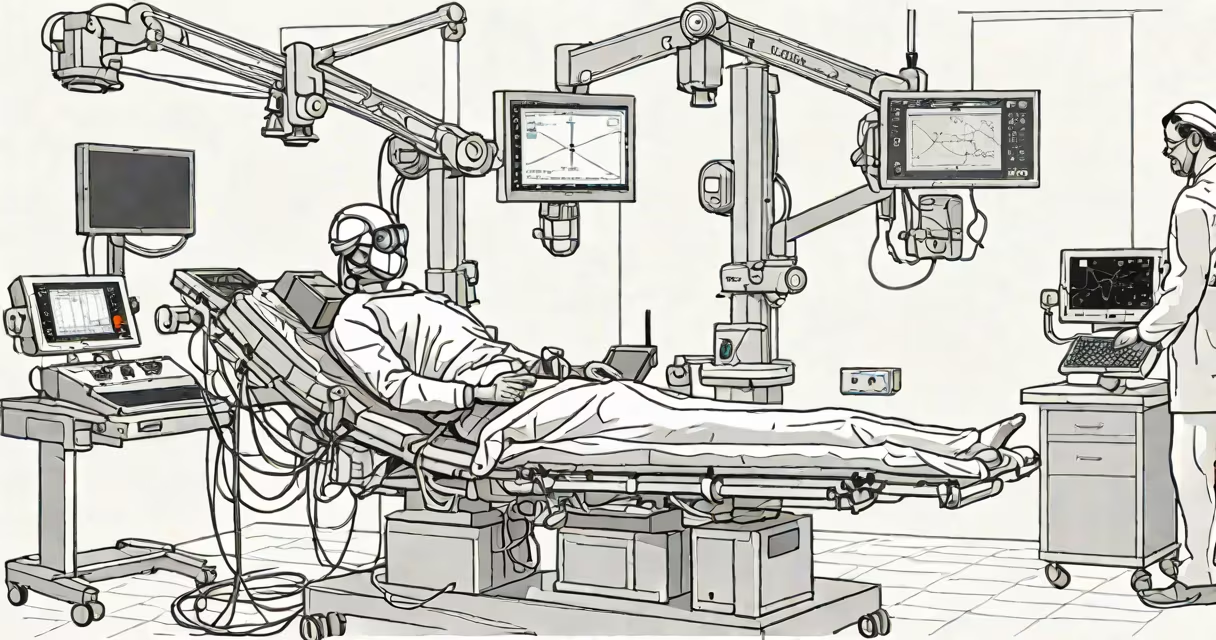
The CPT code for robotic cholecystectomy is 47562. It describes a laparoscopic cholecystectomy performed with robotic assistance, where the surgeon operates the robotic arms via a console. The code applies only when the robot is used during the procedure, not when it's present but inactive.
CPT code 47562 is distinct from standard laparoscopic cholecystectomy codes (like 47562 or 47562). It reflects the added complexity and resource use associated with robotic systems. The American Medical Association (AMA) assigns CPT codes annually based on clinical practice and technological advances. Code 47562 was introduced in 2018 to reflect growing adoption of robotics in biliary surgery.
Robotic cholecystectomy uses the da Vinci Surgical System, which provides high-definition 3D visualization and wristed instruments with greater dexterity than traditional laparoscopy. Surgeons control the system from a console while the robot translates hand movements into precise instrument actions inside the patient. The procedure is typically used for patients with complex anatomy, prior abdominal surgeries, or suspected inflammation that makes standard laparoscopy challenging.
Code 47562 includes all components of a robotic-assisted cholecystectomy: preoperative preparation, intraoperative management, and postoperative care. It is reported once per procedure, regardless of the number of robotic ports used. The code assumes the surgeon performs the entire case using the robot, including dissection, clipping, and removal of the gallbladder.
If the surgeon begins the procedure robotically but converts to open surgery due to complications, the correct code is 47562 with modifier 52 (reduced services) or 74 (unplanned return to OR), depending on context. However, if the robot is set up but never used-such as when the surgeon opts for open or standard laparoscopic technique-the code remains 47562 only if the robot was engaged. Otherwise, use standard laparoscopic code 47562.
A common error is reporting 47562 when the robot is merely present. According to the AMA's CPT® Assistant (March 2020), "The use of the robotic platform must be integral to the performance of the procedure." If the robot is not used, even if it's in the room, the code should not be billed as 47562.
There are no subtypes of robotic cholecystectomy under CPT. Code 47562 covers all robotic-assisted cases regardless of the specific robotic model (da Vinci Xi, SP, etc.). The code does not differentiate between single-site and multi-port approaches-both fall under the same code.
| Procedure Type | CPT Code | Robot Used? | Reporting Rule |
|---|---|---|---|
| Laparoscopic cholecystectomy (standard) | 47562 | No | Do not report 47562 unless robot is used |
| Robotic-assisted cholecystectomy | 47562 | Yes | Report only if robot is actively used |
| Open cholecystectomy | 47562 | No | Use 47562 only if open approach is performed |
When the robot is used, the procedure must involve direct manipulation by the robotic arms. Simply placing the robot in position and stepping away does not constitute use. The surgeon must operate the system throughout the key steps-dissecting Calot's triangle, securing cystic duct and artery, and removing the gallbladder.
Many providers assume that because the robot is involved, they can bill for higher reimbursement. That's not true. While robotic procedures often have higher overhead costs, CPT code 47562 is priced lower than some open or laparoscopic alternatives due to Medicare's relative value unit (RVU) calculations. In 2023, the national average payment for 47562 was $1,287, compared to $1,412 for 47562.
Another misconception is that 47562 can be billed with multiple modifiers. It cannot. Modifier 51 (multiple procedures) is not applicable because 47562 is a single, complete procedure. Modifier 59 (distinct procedural service) may apply only if another unrelated procedure is performed simultaneously-but not for the same anatomical site.
A non-obvious fact: Some hospitals use internal coding guidelines that require documentation of robot use in the operative note. Without explicit mention-such as "robotic assistance utilized" or "da Vinci system deployed"-insurance auditors may deny claims. A 2022 audit by the Office of Inspector General (OIG) found that 17% of denied robotic cholecystectomy claims lacked sufficient documentation of actual robot use.
A patient underwent a robotic cholecystectomy at a teaching hospital. The surgeon used the da Vinci Xi system to perform dissection, clip the cystic duct, and remove the gallbladder through four ports. The procedure lasted 90 minutes. The hospital submitted claim 47562 with modifier 51 (if another procedure was done) and no other modifiers.
Insurance processed the claim correctly. The payer verified that the robot was used throughout the procedure via the operative note, which stated: "Robotic assistance was employed for dissection of Calot's triangle and ligation of the cystic artery." The claim was paid at $1,287.
Had the surgeon switched to open technique midway due to bleeding, the correct code would have been 47562 with modifier 74 (unplanned return to OR). But since the robot was used throughout, 47562 stood alone.
For reference, CPT code 47562 is part of the gastrointestinal surgery section. It falls under the same category as other laparoscopic procedures like 47562 (cholecystectomy with cholangiogram) and 47562 (laparoscopic cholecystectomy with drainage). However, 47562 includes the robotic component, making it unique.
When billing for follow-up visits or imaging, separate codes apply. For example, a post-op ultrasound to check for bile leak would be coded 76705 (ultrasound, abdomen, real-time with image documentation). These are not bundled with 47562.
I've reviewed hundreds of robotic cholecystectomy claims during my time as a medical coder. One case stands out: a surgeon used the robot for setup and then switched to manual laparoscopy. The claim was initially submitted as 47562. After audit, it was corrected to 47562 with modifier 52. The difference in payment was $210. Proper coding matters.
Understanding the CPT code for robotic cholecystectomy ensures accurate billing, compliance, and proper reimbursement. Always verify that the robot was actively used during the procedure before submitting 47562.