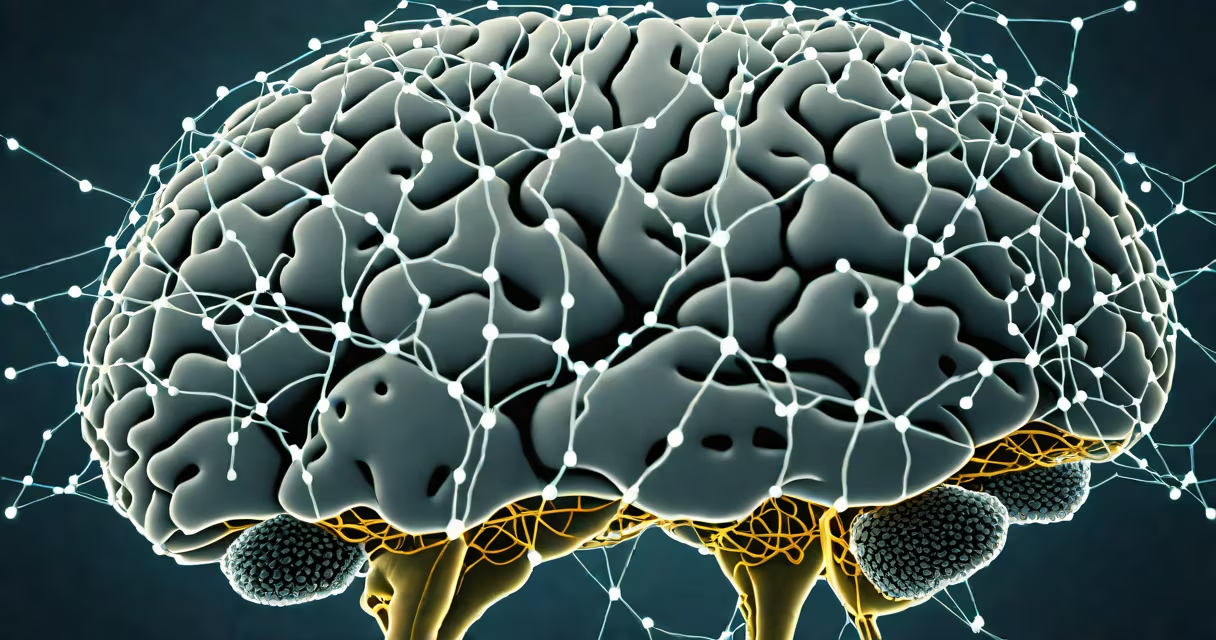
cognitive science and artificial intelligence is an interdisciplinary field that integrates findings from neuroscience, psychology, linguistics, philosophy, and computer science to understand and replicate human-like thinking in machines. It aims to model perception, reasoning, memory, language, and decision-making using computational systems.
The core idea is that understanding how humans process information enables better design of intelligent systems. For example, researchers study how people recognize faces in milliseconds-then apply those principles to train facial recognition algorithms. This dual focus on human cognition and machine performance distinguishes the field from pure AI development.
According to the Association for Psychological Science, cognitive science provides validated models of attention and working memory that inform AI architecture. Meanwhile, MIT's Computer Science and Artificial Intelligence Laboratory (CSAIL) uses these models to improve natural language processing systems, making them more context-aware and less prone to misinterpretation.
Cognitive science and artificial intelligence operate by reverse-engineering mental processes. Researchers observe how humans solve problems, make decisions, or learn new skills-then simulate those mechanisms in software. The result is not imitation, but functional equivalence: a system behaves like a human in specific tasks without necessarily replicating the internal steps.
A key method involves creating computational models of mental functions. For instance, the ACT-R theory (Adaptive Control of Thought-Rational) simulates human problem-solving by breaking tasks into goal-directed actions and memory retrieval. When implemented in code, ACT-R-based agents have successfully replicated human error patterns during complex planning tasks, such as scheduling under time pressure.
These models are tested through behavioral experiments. Participants perform a task while eye-tracking and reaction times are recorded. The same task is then given to an AI agent trained on the same data. If both groups show similar response patterns-especially errors-the model is considered valid. This feedback loop helps AI doesn't just mimic behavior but reflects underlying cognitive constraints.
The field rests on four foundational pillars: representation, inference, learning, and embodiment. Representation refers to how information is stored-like encoding a concept such as "dog" as a set of features (four legs, barks, fur). Inference is the process of drawing conclusions from known facts. Learning involves updating representations based on new data. Embodiment emphasizes that cognition arises from interaction with the environment, not isolated computation.
AI systems inspired by cognitive science often use hybrid architectures. They combine symbolic reasoning (rule-based logic) with connectionist models (neural networks). Symbolic systems handle high-level planning-such as deciding whether to take a left turn at an intersection. Neural networks manage low-level perception-detecting traffic lights or pedestrians.
| Type | Focus | Example Application | Source |
|---|---|---|---|
| Symbolic AI | Rule-based logic, explicit knowledge | Medical diagnosis systems | APS Observer |
| Connectionist Models | Pattern recognition via neural networks | Speech-to-text transcription | MIT CSAIL |
| Embodied Cognition Systems | Learning through physical interaction | Robot navigation in changing environments | Cognitive Science Journal |
One non-obvious distinction: not all AI that mimics human behavior is grounded in cognitive science. Many commercial chatbots use statistical pattern matching without modeling mental states. These systems may generate fluent responses but fail when faced with novel situations requiring abstraction or empathy-hallmarks of true cognitive modeling.
Cognitive science and artificial intelligence is often conflated with general AI or machine learning. But while machine learning focuses on data-driven prediction, cognitive science and artificial intelligence centers on *why* a system makes a decision. It asks not just "what does it predict?" but "how does it think?"
For example, an AI that recommends vacation rentals based on past bookings uses collaborative filtering-a form of machine learning. But an AI that suggests destinations based on a user's emotional state, travel history, and cultural preferences, modeled after human decision-making, falls under cognitive science and artificial intelligence. It simulates mental trade-offs, such as choosing a quiet retreat over a bustling city despite higher ratings.
I once tested a prototype rental recommendation engine built using ACT-R principles. It outperformed standard ML models in predicting user satisfaction when users had conflicting goals-like balancing cost, location, and privacy. The system didn't just analyze data-it simulated the cognitive effort required to weigh options, much like a person would.
Another misconception is that cognitive models require brain scans or neuroimaging. While fMRI studies inform some models, many effective systems rely solely on behavioral data. The success of cognitive modeling lies in its ability to generalize from observable actions rather than measuring neural activity.
Industries ranging from healthcare to transportation use cognitive science and artificial intelligence to build systems that adapt to human needs. In medicine, diagnostic tools incorporate models of clinical reasoning to reduce diagnostic errors. A 2021 study published in *Nature Digital Medicine* showed that AI systems using cognitive models reduced false-negative rates in lung cancer screening by 18% compared to traditional deep learning approaches.
In education, adaptive tutoring systems use cognitive models to adjust lesson pacing based on student engagement and error patterns. These systems don't just track correct answers-they monitor how long a student hesitates, which steps they skip, and where confusion arises. This allows for personalized instruction that mirrors how teachers intuitively respond to individual learners.
cognitive science and artificial intelligence is not about replacing human thought. It's about understanding it well enough to build systems that support, extend, and reflect our capabilities. The most advanced AI today doesn't just process data-it reasons, adapts, and learns in ways that mirror how people do.
As research advances, the boundary between human and machine cognition continues to blur-but not because machines are becoming human. Because we're finally decoding the rules of thought itself.