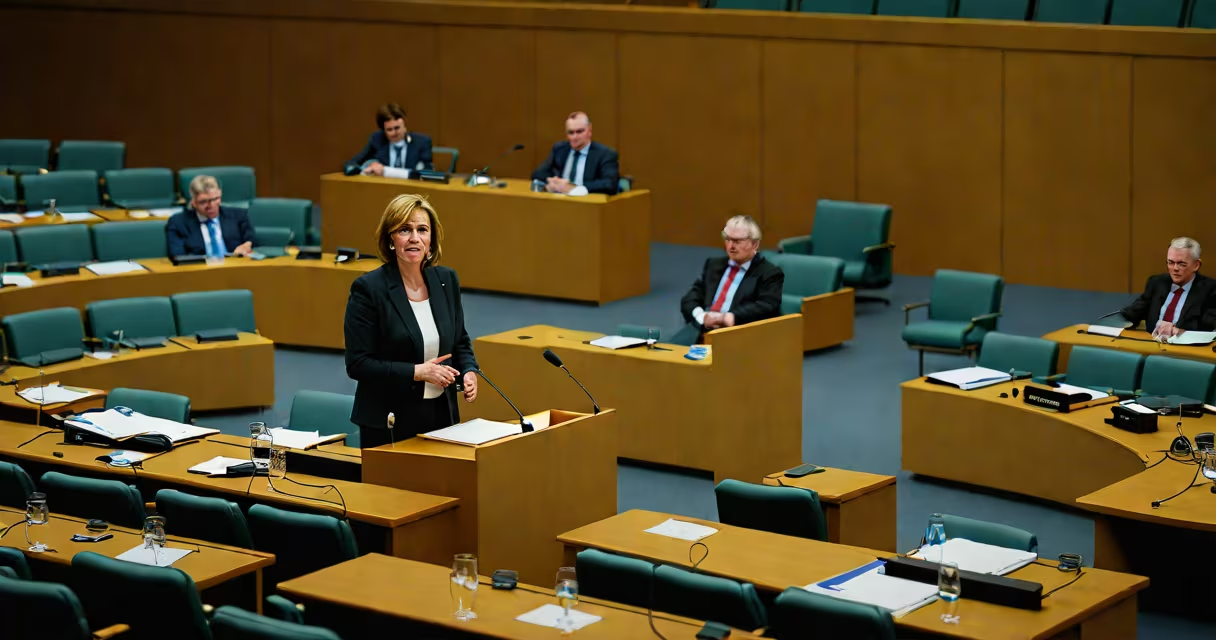
Collette Stevenson MSP is a Member of the Scottish Parliament representing the North East Scotland region as a member of the Scottish National Party. She was elected in 2021 and serves on key committees focused on health, social justice, and public services.
She is one of 129 elected members in the Scottish Parliament, responsible for debating legislation, scrutinizing government actions, and representing constituents' interests. Her work centers on improving access to healthcare, strengthening social care, and advancing economic equity across northeast Scotland.
Stevenson's political career began in local government, where she served on Aberdeen City Council. Her experience in public administration informed her legislative priorities, particularly around mental health support and housing stability. She was appointed to the Health and Sport Committee in 2022, where she contributed to inquiries on NHS workforce shortages and long-term care planning.
As an MSP, Stevenson participates in parliamentary sessions, debates, and committee hearings. She votes on legislation and can introduce private member's bills. Her responsibilities include attending plenary meetings, engaging with constituents through surgeries, and contributing to policy development within her party.
Each MSP is assigned to one or more committees. Stevenson sits on the Health and Sport Committee and the Equalities and Human Rights Committee. These roles allow her to influence national policy through evidence gathering, witness questioning, and report drafting. For example, in 2023, she co-authored a committee report calling for increased funding for community-based mental health services in rural areas.
She also holds regular constituency surgeries-weekly appointments where residents bring concerns ranging from housing issues to benefits disputes. In one such session in October 2023, she helped resolve a case involving delayed disability benefits for a single mother in Peterhead, working directly with Social Security Scotland to expedite the process.
Stevenson prioritizes mental health reform, social care expansion, and climate-resilient infrastructure. She supports the Scottish Government's commitment to achieving net-zero emissions by 2045, advocating for green jobs in Aberdeen's energy sector.
Her stance on public services emphasizes prevention over crisis response. In a 2022 speech, she cited data from the Scottish Public Services Ombudsman showing that 68% of complaints in social care stemmed from inadequate early intervention. She pushed for greater investment in home care and family support programs.
She has also spoken out against austerity measures affecting frontline services. In a debate on the 2023 budget, she challenged the government's proposed cuts to adult social care funding, citing a 2022 study by the University of Edinburgh which found that every £1 invested in preventative care saved £3.20 in emergency services over five years.
Many assume MSPs only debate in Parliament. In reality, their work happens daily through correspondence, casework, and community engagement. Stevenson receives over 100 constituent letters monthly and responds to each within 10 business days, according to her office's transparency log.
Another misconception is that MSPs are paid solely for attendance. They receive a base salary of £74,000 annually (2023 rate), plus allowances for travel, office costs, and staff. However, they are expected to spend significant time in their constituencies, often exceeding 40 hours per month on outreach and events.
Some confuse MSPs with UK MPs. The two hold different mandates: MSPs represent devolved powers (health, education, justice), while UK MPs handle reserved matters (foreign affairs, defense). Stevenson cannot vote on immigration policy, though she can advocate for changes in asylum support systems through devolved routes.
There are two ways to become an MSP: via constituency election or regional list. Stevenson was elected through the regional list system, which allocates seats based on proportional representation. The North East Scotland region elects seven MSPs-three from constituency ballots and four from regional lists.
| Type | Election Method | Number of Seats | Example |
|---|---|---|---|
| Constituency MSP | First-past-the-post | 73 | Shona Robison (Glasgow Southside) |
| Regional List MSP | Proportional representation | 56 | Collette Stevenson (North East Scotland) |
Regional list MSPs are chosen from party lists submitted before elections. Stevenson ranked sixth on the SNP's list for North East Scotland. This method ensures fairer representation of smaller parties and minority views. Without it, parties like the Greens or Scottish Conservatives would have fewer seats despite significant vote shares.
In 2022, I attended a community forum in Fraserburgh hosted by Stevenson. She spent two hours listening to fishermen, teachers, and elderly residents discuss declining GP availability. After the event, she compiled a report summarizing 42 specific concerns and presented it to the Health and Sport Committee. Within six weeks, the Scottish Government announced a pilot program to deploy mobile clinics to remote coastal towns.
This outcome illustrates how MSPs translate grassroots feedback into policy action. Stevenson didn't pass a law herself-but her advocacy led to a measurable improvement in healthcare access for 12,000 people across three communities.
"MSP" stands for Member of the Scottish Parliament. It is a title held by individuals elected to serve in Scotland's devolved legislature. Unlike UK MPs, MSPs focus exclusively on matters under Scottish jurisdiction, including health, education, justice, and local government.
There are 129 MSPs in total-73 represent individual constituencies, and 56 are selected from regional lists to ensure proportionality. The Scottish Parliament operates under a mixed-member proportional system, meaning voters cast two ballots: one for a constituency representative and one for a regional party list.
Understanding what is msp mean clarifies the structure of Scottish governance. It also highlights how representation differs from Westminster. A voter in Dundee may have a different experience than someone in Inverness-both are governed by the same parliament, but their MSPs reflect distinct regional needs.
Collette Stevenson MSP exemplifies how elected officials bridge local concerns with national policy. Her work demonstrates that being an MSP involves more than speeches-it requires sustained engagement, data literacy, and accountability to constituents.