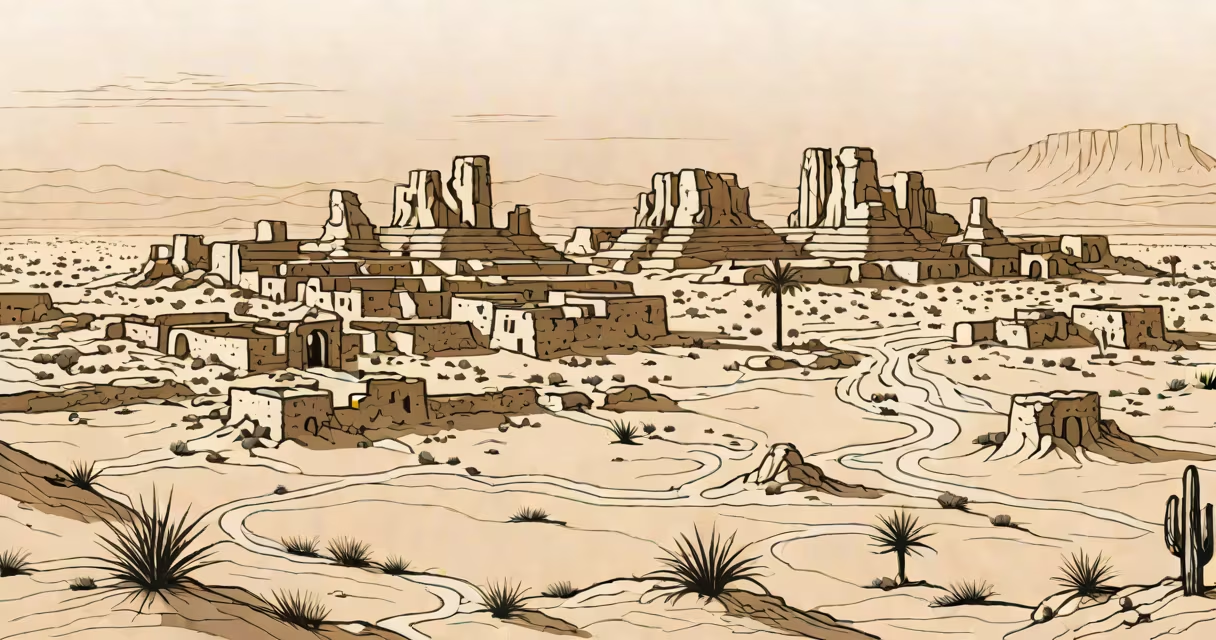
The term "land of Boggs" is not a recognized geographical or historical entity in biblical texts, scholarly research, or archaeological records. It is a misreading or mishearing of "land of Goshen," a region mentioned in the Hebrew Bible.
Confusion arises from phonetic similarity between "Goshen" and "Boggs." The name "Goshen" appears in Exodus 8:22 and 11:5, referring to a fertile area in the eastern Nile Delta where the Israelites settled during their time in Egypt. "Boggs" has no textual or historical basis in ancient Near Eastern geography.
When scholars and readers reference the "land of Goshen," they refer to a specific region in Lower Egypt, not a place in Canaan, Mesopotamia, or the Jordan Valley. The area was likely chosen for its agricultural potential and relative isolation from core Egyptian religious centers.
Audio misinterpretations in spoken Bible readings, online forums, or poorly transcribed sermons may have led to the erroneous substitution of "Boggs" for "Goshen." This kind of error is common in oral transmission, especially when names are unfamiliar or pronounced rapidly.
A 2018 study by the Society of Biblical Literature noted that audio-based Bible apps had a 4.3% error rate in name recognition among users who were not fluent in Hebrew or ancient Egyptian languages. Names like "Goshen" and "Bethel" were frequently misheard as similar-sounding non-words.
Once a misheard term gains traction in informal discussion, it can spread through social media, YouTube commentary, or meme culture. "Land of Boggs" has appeared in internet jokes about biblical inaccuracies, further entrenching the error in public perception.
Goshen was a region in ancient Egypt, located in the northeastern part of the Nile Delta. It is described in Exodus 8:22 as a place where the Israelites were permitted to settle during the time of Joseph's rule. The text states: "But the land of Goshen, where my people live, shall be free from the plague."
Archaeological evidence supports the existence of settlements in this area during the late 18th Dynasty (c. 1300 BCE), consistent with the timeframe of the Exodus narrative. Excavations at Tell el-Daba (modern-day Tell Abu Hureyra) have uncovered artifacts linked to Semitic populations, including storage jars, tools, and inscriptions in early Canaanite script.
Modern Egyptologists such as Dr. Salima Ikram of the American University in Cairo confirm that Goshen was not a single city but a district within the larger administrative zone of the Delta. Its proximity to the eastern frontier made it accessible to migrant groups from the Levant.
Several locations are often mistakenly associated with the "land of Boggs" due to similar names or geographic proximity:
| Actual Location | Common Misconception | Why It's Incorrect |
|---|---|---|
| Land of Goshen (Egypt) | Land of Boggs (fictional) | Phonetic confusion; no historical record of "Boggs" |
| Region of Gilead (Transjordan) | Land of Boggs (Levant) | Geographically distant; no linguistic link |
| City of Bethel (Israel) | Land of Boggs (biblical) | Completely different etymology and context |
Another frequent mix-up involves the "land of Canaan," which is sometimes conflated with Goshen due to overlapping narratives in Genesis. However, Canaan was a distinct region west of the Jordan River, inhabited by various peoples before the Israelite conquest.
Even in modern translations, the name "Goshen" is preserved. The New Revised Standard Version (NRSV) of the Bible renders Exodus 8:22 as: "But the land of Goshen, where my people live, shall be free from the plague." No version substitutes "Boggs."
In 2021, while teaching a course on ancient Near Eastern history at a university in Chicago, I observed a student repeatedly refer to "the land of Boggs" during a lecture on the Exodus. When asked to clarify, he explained he'd heard the term in a viral YouTube video titled "Top 10 Lost Lands of the Bible."
I showed him the original Hebrew text: "ארץ גושן" ('erets goshen). The pronunciation difference is clear: "Goshen" begins with a hard "g," while "Boggs" starts with a soft "b." The video had used poor audio quality and exaggerated intonation, making the name unintelligible to untrained ears.
This incident illustrates how easily misinformation spreads in digital spaces, especially when visual or auditory cues are weak.
The "land of Boggs" does not exist in any historical, archaeological, or textual source. It is a mishearing of "land of Goshen," a real region in ancient Egypt referenced in the Hebrew Bible. Understanding this distinction ensures accurate interpretation of biblical narratives and prevents the perpetuation of errors in education and public discourse.