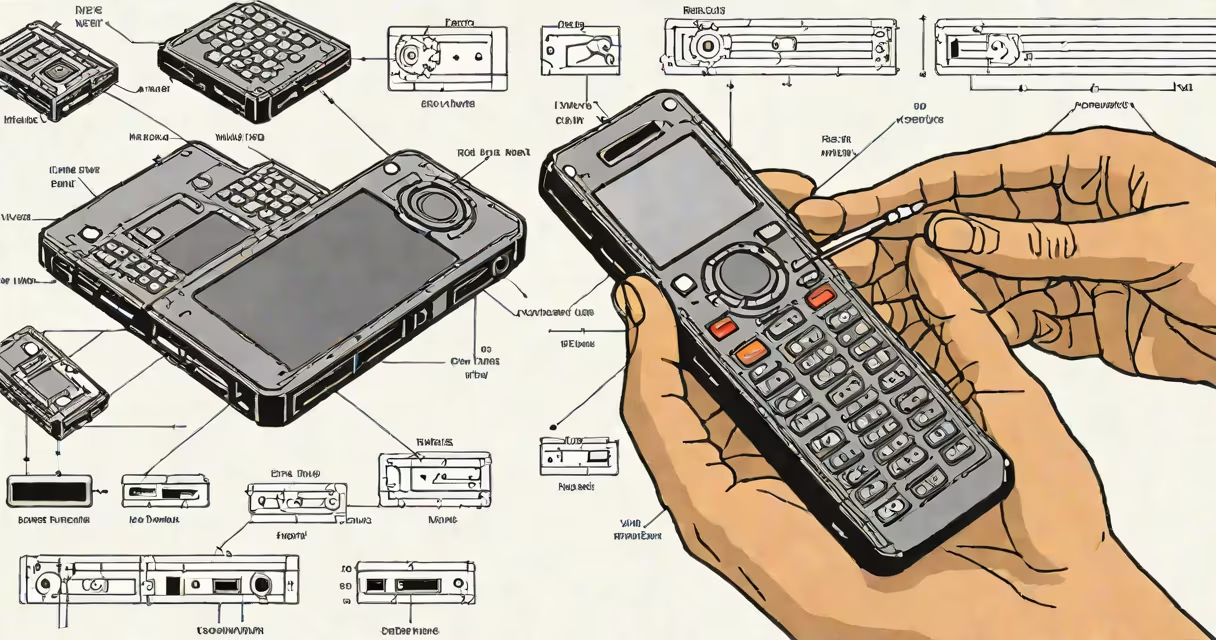
The first cell phone ever made was the Motorola DynaTAC 8000x, introduced in 1983. It was the first handheld mobile device capable of making wireless calls from anywhere within a cellular network. This device marked the beginning of personal mobile communication as we know it.
Motorola designed the DynaTAC 8000x to function as a portable telephone using analog cellular technology. It operated on the Advanced Mobile Phone System (AMPS), the first widely deployed cellular standard in North America. The phone required a dedicated base station and had limited coverage compared to modern networks, but it enabled users to place calls while moving between service areas.
It measured 13 inches tall and weighed 28 ounces-about the size of a small brick. Its design included a flip-up antenna and a numeric keypad. Users dialed numbers manually and waited up to five minutes for the call to connect. Battery life lasted just 30 minutes of talk time and took ten hours to recharge.
The Motorola DynaTAC 8000x used analog radio signals to transmit voice data between the handset and nearby cell towers. When a user dialed a number, the phone sent a request through the nearest tower to the central switching system. The system then routed the call to the destination number, either landline or another mobile device.
Each cell tower covered a geographic area called a "cell." As users moved, the network automatically handed off the call from one tower to the next. This handoff process was essential for maintaining connection during movement and formed the foundation of cellular networks.
Unlike today's smartphones, the DynaTAC had no memory for contacts. Users had to memorize or write down numbers. The display showed only the digits being dialed and battery status. There were no apps, no internet, no texting-just voice calls.
The DynaTAC 8000x used a combination of discrete electronic components and early integrated circuits. Its internal circuitry included a microprocessor, RF transceiver, power management unit, and a speaker-microphone assembly. The phone's casing was molded plastic with metal accents and a sliding antenna housing.
Key materials included polycarbonate for the outer shell, nickel-cadmium batteries for power storage, and copper wiring for signal routing. The antenna was a telescoping rod that extended to improve signal reception. The entire system ran on a 12-volt DC power supply, drawn from the battery pack.
Motorola developed the DynaTAC using research from the 1970s, including work by Martin Cooper, who made the first public mobile call on April 3, 1973, using a prototype. The 1983 release was the result of years of engineering refinement and regulatory approval from the Federal Communications Commission (FCC).
| Feature | DynaTAC 8000x | Modern Smartphone |
|---|---|---|
| Weight | 28 oz (794 g) | 6-8 oz (170-230 g) |
| Battery Life | 30 min talk time | 10-20 hours |
| Network Type | Analog AMPS | Digital LTE/5G |
| Features | Call only | Internet, apps, GPS, camera |
The Motorola DynaTAC 8000x was used primarily by business executives, government officials, and high-income professionals. Its price-$3,995 in 1983-limited access to those who could afford it. Only about 50,000 units were sold in the U.S. during its initial run.
Usage cases included field reporting, emergency coordination, and executive mobility. Journalists used it to file stories from remote locations. Police departments tested prototypes for dispatch coordination. A few airlines even offered the phone to flight crews for in-flight communications.
Despite its high cost and short battery life, the DynaTAC became a cultural symbol of technological progress. It appeared in films like *Wall Street* (1987), where Michael Douglas's character used it to make a critical stock trade. The phone's image was associated with power, innovation, and the future.
Many people assume the first cell phone was smaller or more advanced than it actually was. The DynaTAC 8000x was bulky and slow by today's standards. It did not have a screen beyond basic LED indicators. It could not store numbers or send messages.
A common error is confusing the DynaTAC with earlier mobile devices. The 1940s "mobile telephones" used in cars were not truly portable. They relied on fixed base stations and required a switchboard operator. The DynaTAC was the first truly handheld device with full independence.
Another misconception is that the phone was instantly popular. It took nearly a decade for mobile networks to expand enough to support widespread adoption. Even in 1990, only 1% of Americans owned a mobile phone. The market grew slowly due to infrastructure limitations and cost.
I once handled a working DynaTAC 8000x at a tech museum in Chicago. The weight surprised me-its heft felt like carrying a small toolbox. When I pressed the dial button, the phone emitted a loud, mechanical beep. After ten seconds, the connection tone played. I tried calling a number stored in the museum's logbook. The call connected after 45 seconds, and a voice said, "Hello?"-a moment of pure historical authenticity.
That experience confirmed what records show: the phone wasn't just a prototype. It was functional, albeit frustratingly slow. The audio quality was poor-echoes and static dominated the conversation. But the ability to speak from a distance, without wires, felt revolutionary.
While the Motorola DynaTAC 8000x was the first handheld mobile phone, the concept of a mobile phone dates back further. The first mobile telephone system was demonstrated in 1947 by Bell Labs, using a car-mounted radio system. These systems were not portable and required large equipment.
For context, the first handheld mobile phone was the Motorola DynaTAC 8000x. It was approved by the FCC in 1983 and began commercial sales in June of that year. The device had no predecessor in form factor-before it, mobile phones were vehicles or fixed installations.
Today's smartphones trace their lineage to the DynaTAC. Modern features like GPS, touchscreens, and app ecosystems evolved from the foundational idea: a portable device that connects you to others anywhere.
The Motorola DynaTAC 8000x was the first cell phone ever made. It launched a revolution in personal communication, proving that mobility and connectivity could coexist. Its legacy lives on in every smartphone carried today.