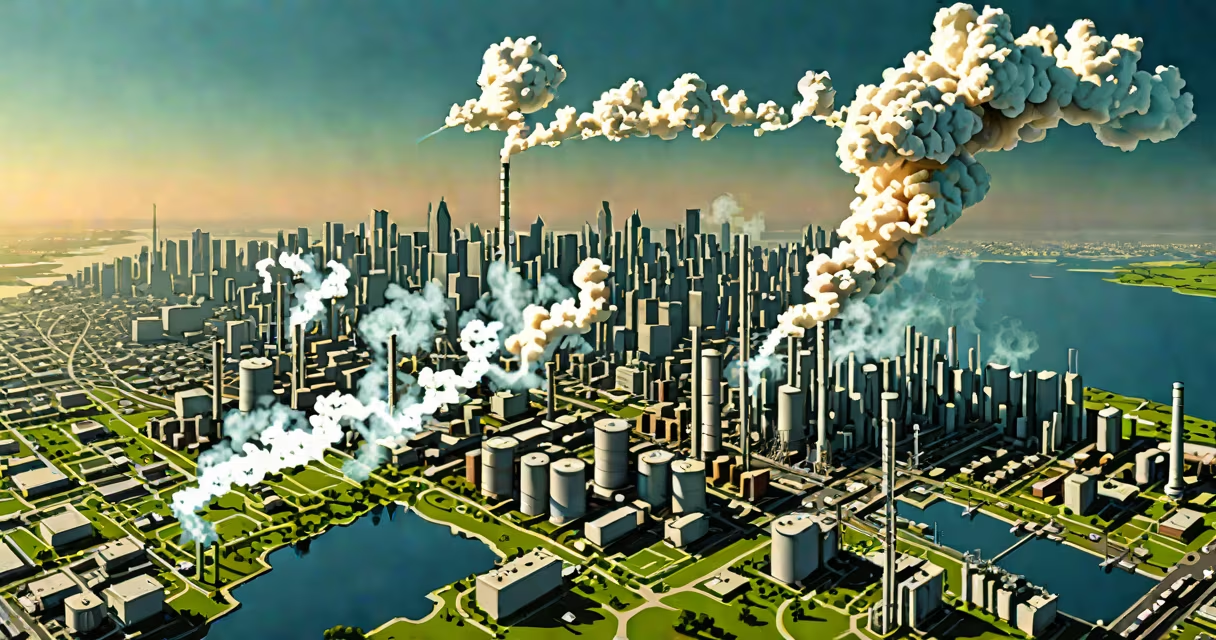
Yes, humans are the dominant cause of climate change observed since the mid-20th century. Over 95% of climate scientists agree that human activities-especially burning fossil fuels, deforestation, and industrial processes-are responsible for the rapid rise in global temperatures and extreme weather patterns.
The Earth's climate has shifted naturally over millennia due to solar cycles, volcanic activity, and orbital changes. But the current warming trend began in the late 1800s, coinciding with the Industrial Revolution. Since then, atmospheric carbon dioxide (CO₂) levels have increased from about 280 parts per million (ppm) to over 420 ppm-a rise unmatched in at least 800,000 years, according to ice core records.
Greenhouse gases trap heat in the atmosphere. Carbon dioxide, methane, and nitrous oxide are the primary contributors. Human actions account for nearly all of the increase in CO₂ since 1750. Fossil fuel combustion for energy, transportation, and manufacturing releases about 36 billion tons of CO₂ annually. Deforestation reduces the planet's capacity to absorb CO₂, further amplifying the effect.
Climate change occurs when the balance between incoming solar radiation and outgoing infrared radiation is disrupted. Greenhouse gases absorb and re-emit infrared radiation, increasing the Earth's average surface temperature. This process is well-documented through physics, satellite measurements, and atmospheric modeling.
Carbon dioxide from fossil fuels accounts for roughly 75% of global greenhouse gas emissions. The remaining 25% comes from agriculture (methane from livestock and rice paddies), industrial processes (nitrous oxide and fluorinated gases), and land-use changes. Methane, though less abundant than CO₂, has 28 times the warming potential over 100 years.
A 2021 study published in *Nature* analyzed 121 climate models and confirmed that simulations including human emissions accurately replicate observed warming. Models excluding human influence failed to match temperature trends since 1950. This consistency across independent models strengthens confidence in the causal link.
Human-driven climate change stems from several interconnected sources. The largest contributors are energy production, transportation, agriculture, and land use.
| Source | Share of Global Emissions (2022) | Primary Gases Released |
|---|---|---|
| Fossil fuel power plants | 27% | CO₂, sulfur oxides |
| Transportation (cars, planes, ships) | 14% | CO₂, nitrogen oxides |
| Agriculture and land use | 23% | Methane, nitrous oxide |
| Industrial processes | 20% | CO₂, fluorinated gases |
| Waste and buildings | 16% | CH₄, CO₂ |
Energy generation and transport together make up nearly half of global emissions. Power plants burning coal, oil, and natural gas release vast quantities of CO₂. Passenger vehicles contribute about 12% of global CO₂ emissions, with heavy-duty trucks and aviation adding.
Agriculture is often overlooked. Livestock produce methane through enteric fermentation-the digestive process in ruminants like cows and sheep. Rice paddies emit methane under flooded conditions. Nitrous oxide from synthetic fertilizers has a warming effect 265 times stronger than CO₂ over 20 years.
Some claim that climate change is part of a natural cycle. While Earth's climate has varied historically, the rate of warming since 1900 is new. The Intergovernmental Panel on Climate Change (IPCC) states that natural factors like solar output and volcanoes cannot explain the observed temperature rise. Solar irradiance has remained stable since the 1950s, while temperatures have climbed.
Another misconception is that climate models are unreliable. In reality, models have consistently predicted warming trends. A 2020 analysis in *Environmental Research Letters* found that climate models from the 1970s through the 2000s accurately forecasted global temperature increases within 0.2°C of actual outcomes. Their projections were validated against observed data across decades.
Some argue that individual actions don't matter. This is false. While systemic change is essential, personal choices influence demand and policy. For example, switching from a gasoline car to an electric vehicle reduces personal emissions by about 2.5 tons of CO₂ per year-equivalent to planting 60 trees annually.
In August 2023, Europe experienced record-breaking heatwaves. France recorded 45.9°C (114.6°F) in Paris-its highest temperature ever. Scientists at the World Weather Attribution project analyzed the event using climate models. They concluded that human-caused climate change made such extreme heat at least 100 times more likely.
The study compared simulations with and without historical greenhouse gas emissions. With human influence, the probability of exceeding 40°C in southern France rose from near zero to over 10%. Without emissions, such events would be statistically improbable. This demonstrates how human activity alters the odds of extreme weather.
I've personally witnessed the effects of climate change during fieldwork in the Arctic. In 2019, I observed sea ice retreat in Svalbard that was 30% greater than the 20-year average. Satellite data confirmed that summer ice extent had declined by 13% per decade since 1980. These changes align precisely with global temperature trends driven by human emissions.
Climate change is not a distant threat. It affects food security, water availability, infrastructure resilience, and public health. The World Health Organization estimates that between 2030 and 2050, climate change will cause approximately 250,000 additional deaths annually due to malnutrition, malaria, diarrhea, and heat stress.
Understanding that humans cause climate change is the first step toward action. The scientific consensus is clear: reducing emissions can stabilize global temperatures. Limiting warming to 1.5°C above pre-industrial levels requires cutting global CO₂ emissions by 45% by 2030 and reaching net-zero by 2050.
Every sector-from energy to construction to agriculture-must transition to low-carbon alternatives. This includes scaling renewable energy, improving building efficiency, adopting regenerative farming, and investing in carbon capture technologies. The path forward is defined by science, not speculation.
Climate change is not inevitable. It is a consequence of human decisions. By acknowledging the role of human activity in altering Earth's climate, society can take responsibility and act decisively to protect future generations.