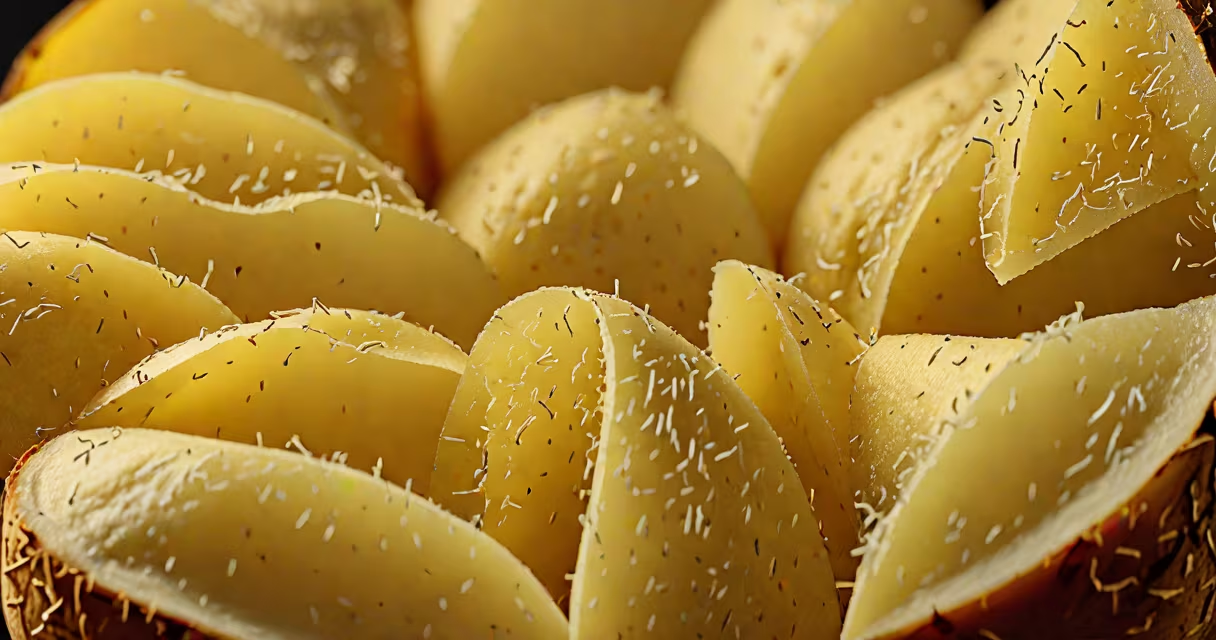
Starch is a complex carbohydrate formed from repeating units of glucose molecules linked together in long chains. It serves as the primary energy storage molecule in plants, accumulating in roots, tubers, and seeds. This structure allows plants to store energy efficiently and release it when needed.
Starch consists of two distinct polysaccharides: amylose and amylopectin. Amylose makes up about 20-30% of most starches and forms linear chains of glucose connected by α(1→4) glycosidic bonds. These chains twist into tight helices, which gives them a tendency to form gels when heated in water. Amylopectin accounts for 70-80% and features branched structures with α(1→6) linkages every 24-30 glucose units. The branching increases solubility and allows rapid enzymatic breakdown during digestion.
Plants synthesize starch from photosynthetic products. During daylight, chloroplasts convert carbon dioxide and sunlight into glucose. Excess glucose is converted into starch via enzymes like ADP-glucose pyrophosphorylase and starch synthase. This process occurs mainly in plastids within cells. When energy is required, enzymes such as amylase break down starch back into glucose for cellular respiration.
| Component | Structure | Proportion in Starch | Function |
|---|---|---|---|
| Amylose | Linear chain of glucose; α(1→4) bonds | 20-30% | Forms gel-like textures when cooked; contributes to retrogradation in stored foods |
| Amylopectin | Branched chain; α(1→4) and α(1→6) bonds | 70-80% | Enables quick energy release; improves solubility and paste viscosity |
Starch is not a single compound but a family of related molecules whose properties depend on source and processing. Corn starch contains ~25% amylose; waxy corn starch contains nearly 100% amylopectin. Potato starch has high amylose content and forms stable gels. Rice starch has low amylose and produces sticky, cohesive pastes. These differences affect performance in cooking, industrial applications, and human metabolism.
Common misconceptions include equating starch with sugar or assuming all starches behave identically. Starch is not sweet because its glucose units are bound together. Unlike sucrose, it cannot be absorbed directly by the small intestine. It must be broken down by salivary and pancreatic amylase. This delayed absorption affects blood glucose response - resistant starches pass through the gut undigested and act like fiber.
One non-obvious fact: some starches resist digestion entirely. Resistant starch (RS) is classified into four types. RS3 forms when cooked starch cools, allowing recrystallization into indigestible structures. A study published in Food Chemistry found that cooled boiled potatoes contain up to 15% resistant starch, reducing glycemic impact by 30% compared to hot potatoes. This phenomenon is exploited in functional foods and low-glycemic diets.
For example, when making mashed potatoes, boiling them at 100°C converts starch granules into a gel. Cooling them overnight causes amylose to realign into crystalline regions. These regions resist amylase action, meaning they reach the large intestine intact. There, gut bacteria ferment them into short-chain fatty acids like butyrate, which support colon health. This transformation illustrates how physical processing alters chemical function.
Starch is used widely in food, paper, textiles, and bioplastics. In food, it thickens sauces, stabilizes emulsions, and improves texture. Industrial uses include sizing paper for printing and coating fabrics. Biodegradable plastics derived from starch are replacing petroleum-based packaging in some markets. According to the USDA, global starch production exceeded 140 million metric tons in 2022, with corn being the dominant source.
Starch is often confused with cellulose, another glucose polymer. Both are made of glucose, but cellulose uses β(1→4) bonds, forming rigid fibers in plant cell walls. Humans lack the enzyme to break β-linkages, so cellulose passes through the digestive tract unchanged. Starch, with α-linkages, is digestible. This structural difference determines biological function and nutritional value.
I once tested the gelatinization of rice flour in a kitchen experiment. Heating 50 grams of raw rice flour with 100 mL water to 95°C caused immediate thickening. After cooling, the mixture formed a firm gel. When I added iodine solution, it turned dark blue - a classic test for starch presence. The color change confirmed that the linear amylose chains had trapped iodine molecules in their helical grooves. This visual result demonstrated how molecular structure translates into observable behavior.
Understanding what is starch made of reveals its role beyond nutrition. Its dual nature - energy storage in plants and functional material in human systems - stems from the precise arrangement of glucose units. The balance between amylose and amylopectin dictates how it behaves under heat, shear, and enzymatic attack. This knowledge guides choices in food science, agriculture, and product development.