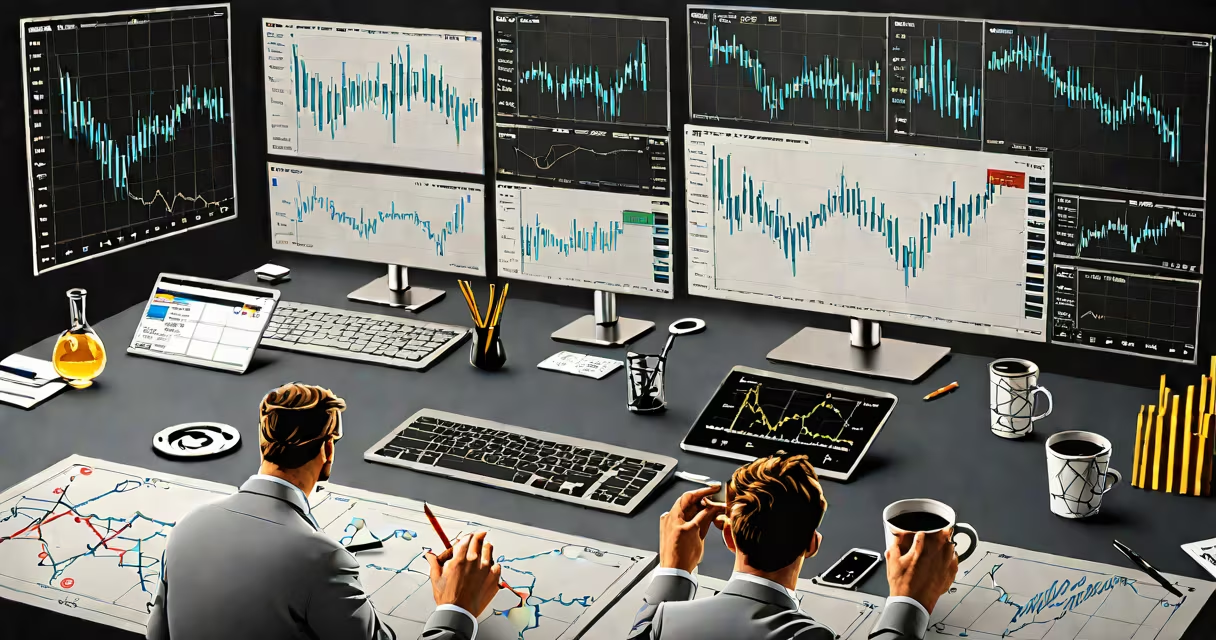
A forex online course is a structured educational program that teaches individuals how to trade foreign exchange currencies using digital platforms. These courses cover market mechanics, chart reading, strategy development, and risk control, typically delivered via video lessons, quizzes, and simulated trading environments.
Forex trading involves buying and selling currency pairs based on price movements driven by economic data, central bank policies, and global events. A well-designed online course breaks down complex concepts like use, margin, pip values, and bid-ask spreads into digestible modules. Students learn to interpret candlestick patterns, apply moving averages, and set stop-loss orders-all within a simulated trading environment before risking real capital.
According to the Federal Reserve, over 60% of daily forex volume comes from institutional traders, but retail participants account for nearly 15% of turnover. This shows that individual traders have meaningful influence in the market. An effective forex online course prepares learners to participate in this changing space by building both analytical skills and emotional discipline.
Most courses begin with foundational topics such as how currency pairs are quoted (e.g., EUR/USD = 1.0850), what determines exchange rates, and how geopolitical shifts affect prices. Learners then progress to technical tools like support/resistance levels, Fibonacci retracements, and oscillator indicators such as RSI and MACD.
Advanced modules focus on developing a personalized trading plan. This includes defining entry and exit criteria, position sizing based on account size, and maintaining a trading journal. Courses often integrate paper trading accounts-virtual platforms that mimic live markets-to test strategies without financial risk.
For example, a student studying a 12-week course might spend Week 3 analyzing historical USD/CAD movements during U.S. Federal Open Market Committee meetings. They'd identify recurring patterns in volatility spikes and apply those insights to a mock trade setup. By Week 8, they'd be backtesting a breakout strategy using 1-hour charts and assessing win rate and drawdown metrics.
Not all forex online courses are equal. They vary by depth, teaching method, and level of hands-on practice. The table below outlines common categories:
| Type | Focus | Duration | Best For |
|---|---|---|---|
| Beginner Foundations | Market basics, terminology, demo trading | 2-4 weeks | Newcomers with no prior exposure |
| Intermediate Strategy | Technical analysis, trend identification, trade management | 6-10 weeks | Those who've traded briefly and want consistency |
| Advanced Systems | Algorithmic trading, multi-timeframe analysis, risk modeling | 12+ weeks | Traders aiming for systematic edge |
Some courses offer certification upon completion. The Commodity Futures Trading Commission notes that certified programs tend to have higher curriculum standards and greater accountability. Look for courses that provide access to ongoing webinars, community forums, and mentorship opportunities.
Many people assume a forex online course guarantees profits. That's false. The CFTC reports that 70% of retail forex traders lose money within their first year. A good course doesn't promise returns-it builds decision-making frameworks. Success comes from consistent application, not magic formulas.
Another misunderstanding is equating course length with quality. A 40-hour course may seem complete, but if it lacks practical exercises or real-time data analysis, it offers limited value. Conversely, a 10-hour course with weekly live trading sessions and feedback loops can deliver deeper insight.
I once enrolled in a free "masterclass" promising "daily income from forex." After two days, I realized it relied solely on chart patterns without context about interest rate differentials or central bank interventions. I switched to a structured course with weekly assignments and peer review. Within six weeks, my understanding of market structure improved.
Traders use these courses to build confidence before entering live markets. Many brokers, including Interactive Brokers and Saxo Bank, offer free introductory modules. However, dedicated courses go further-they teach how to manage psychological biases like fear of missing out (FOMO) and revenge trading after losses.
For example, a trader in Texas might take a course focused on U.S. dollar strength during Federal Reserve policy cycles. They'd study how changes in the Fed funds rate impact USD/JPY and use historical data to simulate trades. This targeted learning reduces reliance on guesswork.
These courses also serve professionals transitioning into finance. A former retail manager in Chicago completed a 16-week course and now runs a small discretionary trading account with consistent monthly returns. He credits the course's emphasis on journaling and loss recovery protocols for his stability.
When comparing options, consider whether the course integrates real-time data feeds, supports multiple charting platforms (like TradingView or MetaTrader 4), and includes assessments. Avoid programs that rely heavily on testimonials without performance data.
A forex online course is not a shortcut to wealth. It's a training ground for disciplined, informed participation in one of the world's largest financial markets. With clear objectives, measurable progress, and continuous feedback, learners gain tools to make better decisions-not faster ones.
Understanding how to read market structure, manage risk, and maintain emotional control separates successful traders from those who exit early. A well-built forex online course delivers that foundation through repetition, simulation, and direct feedback.