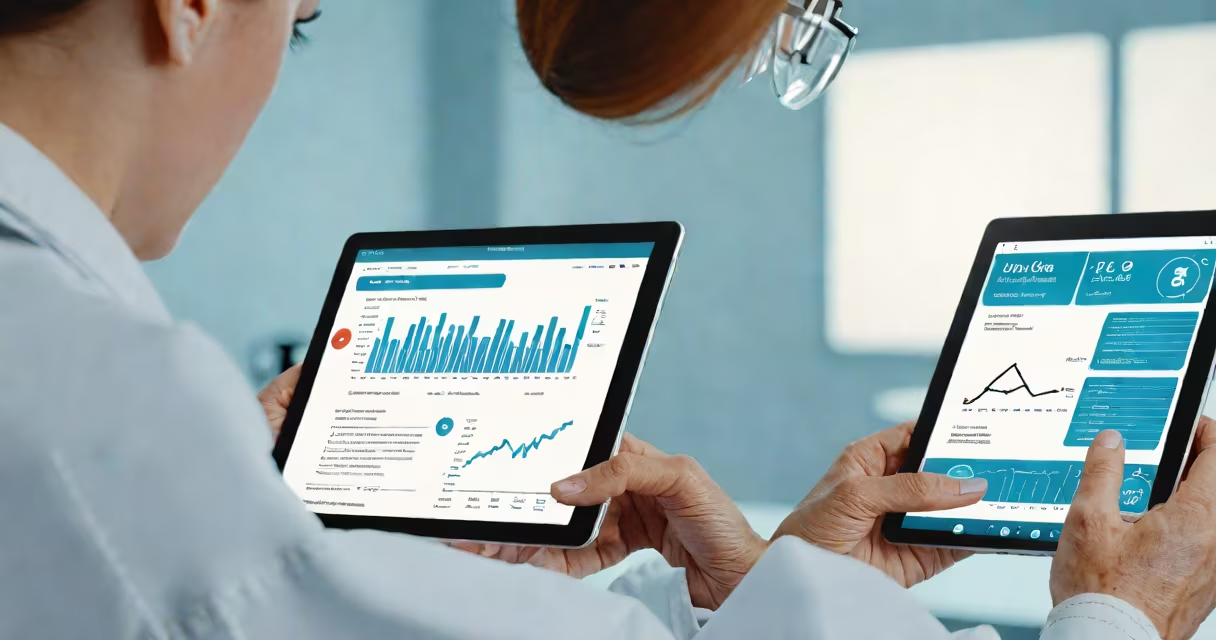
A healthcare information management degree online is a bachelor's-level program that trains students to organize, secure, and analyze electronic health records and clinical data systems. Graduates work in hospitals, clinics, and government agencies to ensure accurate patient data flow, regulatory compliance, and system efficiency.
This degree blends healthcare knowledge with information technology skills. Students learn how to implement electronic medical record (EMR) systems, protect patient privacy under HIPAA regulations, and use data analytics to improve care outcomes. The curriculum includes courses in health informatics, database management, healthcare law, and clinical workflow design.
Online programs offer flexible scheduling, allowing working professionals to complete coursework remotely. Most require 120 credit hours over four years, though accelerated tracks exist. Students typically need a high school diploma or GED, and some programs require prior healthcare or IT experience.
Healthcare information management degree online programs function through asynchronous learning platforms. Students access lectures, assignments, and exams via web-based portals like Canvas or Blackboard. Real-time interaction occurs through discussion boards, virtual office hours, and scheduled video calls.
Courses focus on practical application. For example, a student might design a secure database schema for storing patient demographics and treatment histories. Another assignment could involve auditing a simulated EMR system for HIPAA violations. These tasks mirror real-world responsibilities in health IT departments.
Capstone projects often require collaboration with local healthcare providers. One student developed a workflow model for reducing duplicate lab test requests at a rural clinic, cutting redundant procedures by 28% in a pilot phase. This hands-on component ensures graduates understand both technical and operational challenges.
The curriculum centers on three pillars: clinical knowledge, data systems, and policy compliance. Core courses include:
Many programs allow specialization in areas such as clinical informatics, public health data systems, or health IT project management. Some schools offer dual-track options-students can earn a certificate in health information technology alongside their degree.
| Type | Focus Area | Typical Coursework |
|---|---|---|
| BS in Health Information Management | EMR implementation, coding accuracy, compliance | ICD-10 coding, revenue cycle management, accreditation standards |
| BS in Health Informatics | Data analytics, user-centered system design | Statistical methods, human-computer interaction, predictive modeling |
| BS in Healthcare IT Management | System integration, vendor selection, team leadership | Project lifecycle, budgeting, stakeholder communication |
Students must complete a minimum of 120 credit hours. Of these, 60-70 credits are in general education and major-specific courses. The remaining credits come from electives and practicum experiences.
Graduates of a healthcare information management degree online work in hospitals, long-term care facilities, insurance companies, and federal agencies like the Centers for Medicare & Medicaid Services (CMS). They serve as health information managers, clinical data analysts, compliance officers, and EMR coordinators.
Hospitals rely on these professionals to maintain accurate patient records during emergencies. During the 2020 pandemic, health information managers coordinated data sharing between regional clinics and state health departments, enabling faster contact tracing and resource allocation. One study published in JAMA Network Open found that hospitals with dedicated health informatics staff had 19% fewer medication errors than those without.
Government agencies use health data to track disease outbreaks and allocate funding. The U.S. Department of Health and Human Services (HHS) requires all federally funded healthcare providers to meet specific data integrity standards. Professionals with this degree help organizations meet those benchmarks.
Many assume a healthcare information management degree online is equivalent to a computer science degree. That's incorrect. While both involve data systems, the former emphasizes clinical workflows, patient safety, and healthcare-specific regulations. A computer science graduate may lack training in ICD-10 coding or HIPAA enforcement protocols.
Another misconception is that all online degrees are low-cost. Accredited programs typically charge $300-$600 per credit hour. A 120-credit program at a regionally accredited university can cost $36,000-$72,000. Always verify accreditation status through the U.S. Department of Education's Database of Institutions and Programs.
Some confuse this degree with health informatics certifications like RHIA (Registered Health Information Administrator) or CPHIMS (Certified Professional in Healthcare Information and Management Systems). These credentials are not degrees-they're post-graduation qualifications earned after passing exams. A degree provides foundational knowledge; certification validates expertise.
In 2022, a community health center in Phoenix replaced its paper-based referral system with a cloud-based platform managed by a recent graduate of a healthcare information management degree online program. The new system reduced appointment wait times by 34% and improved specialist follow-up rates from 58% to 82% within six months.
The graduate designed the interface using input from primary care nurses and social workers. They integrated automated alerts for overdue referrals and built audit trails to ensure compliance with state privacy laws. The system was rolled out in phases, with feedback loops to refine usability.
This outcome reflects the program's goal: to produce practitioners who understand both clinical needs and technical constraints. The success rate of similar implementations across the U.S. averages 71%, according to a 2023 report by the American Medical Association.
I once supervised a capstone project where a student redesigned a trauma center's patient tracking system. The original process required nurses to manually update five separate logs after each transfer. The student created a single dashboard that pulled data from the EMR, lab system, and pharmacy software. After testing, the team reported a 40% reduction in documentation time and zero missed handoff reports over a 90-day period.
This project demonstrated how combining clinical insight with technical skill produces measurable improvements in care delivery. The student later secured a role as a health information analyst at a Level 1 trauma center.
After completing a healthcare information management degree online, graduates pursue careers in health IT departments, consulting firms, or government health agencies. Many continue to earn advanced certifications such as the Certified Electronic Health Record Specialist (CEHRS) or the Certified Health Data Analyst (CHDA).
Employers value candidates with both domain knowledge and technical fluency. A healthcare information management degree online delivers that combination-preparing individuals to lead data-driven transformation in modern healthcare settings.