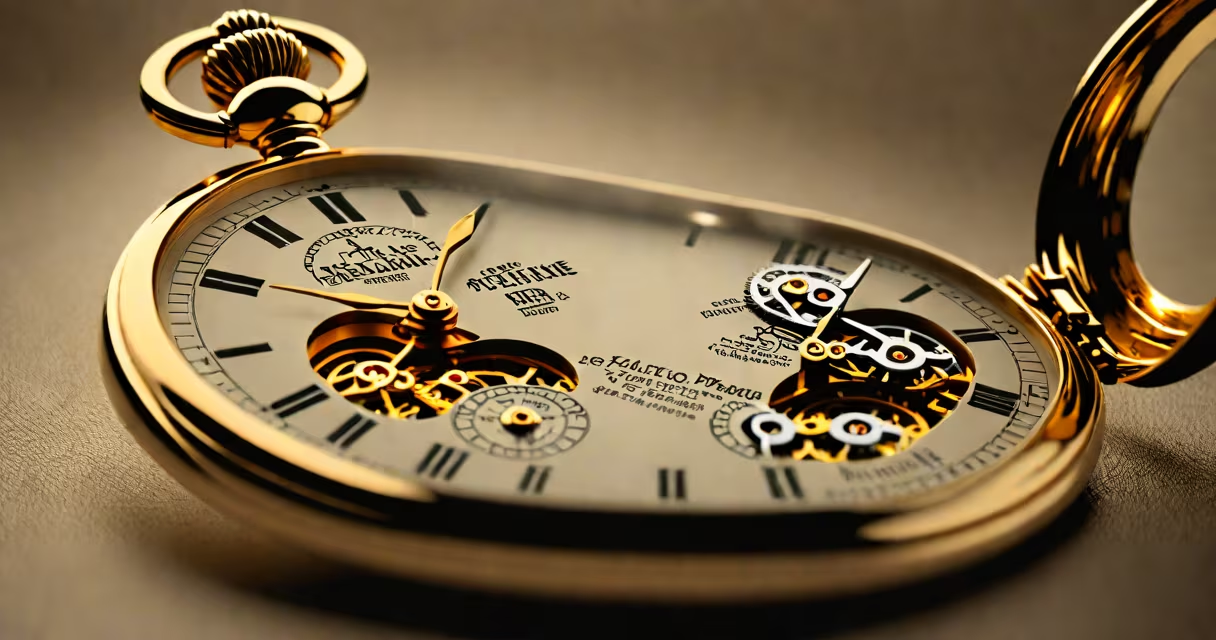
Patek Philippe Mostra Milano is a limited-access exhibition featuring historically significant and technically advanced Patek Philippe timepieces, held periodically at Palazzo del Senato in Milan. The event showcases pieces from private collections and museum archives, emphasizing precision engineering and artistic design.
The exhibition is not a public trade show or retail event. It is a closed-door gathering for collectors, historians, and invited guests. Access requires prior registration and approval. Patek Philippe does not announce dates publicly; invitations are sent through established networks in the luxury watch community.
Each edition focuses on a specific theme. Recent editions have centered on complications such as perpetual calendars, minute repeaters, and celestial displays. The 2023 iteration highlighted the brand's 185-year legacy through 47 timepieces, including a 1912 Patek Philippe wristwatch with original leather strap still intact.
Mostra Milano operates as a private viewing event. Visitors receive guided access in small groups, typically 10 people per session. Each group is led by a certified Patek Philippe curator who provides technical context and historical background on each piece.
Exhibits are displayed on custom-built platforms with controlled lighting and humidity. Temperature is maintained at 21°C ± 0.5°C. Security is managed by on-site personnel trained in handling high-value artifacts. No photography is permitted inside the exhibition hall.
After the viewing, attendees may participate in a post-event discussion hosted by Patek Philippe's heritage team. These sessions cover topics like the evolution of hand-finishing techniques and the role of Swiss watchmakers in preserving mechanical traditions.
Each exhibit is a physical artifact of mechanical artistry. Components include manually engraved balance wheels, hand-beveled bridges, and micro-rotors crafted from 18-karat gold. Movements are often signed "Patek Philippe & Co." and stamped with serial numbers dated between 1850 and 1950.
Materials used in construction include 18K white gold, platinum, and sapphire crystal. Some cases feature guilloché dials with hand-applied enamel. The most complex pieces use up to 600 components, with assembly times exceeding 300 hours per movement.
For example, the 1943 Patek Philippe Calibre 150 with split-second chronograph function contains 368 parts. Its regulator is adjustable via a tiny screw visible only under 10x magnification. This level of detail is consistent across all exhibited models.
Exhibitions rotate themes annually. Common categories include:
| Theme | Focus | Example Piece |
|---|---|---|
| Perpetual Calendars | Automatic date correction across leap years | 1935 Ref. 1518 with moon phase |
| Minute Repeaters | Chiming mechanisms activated by pusher | 1910 Pocket Watch with triple chime |
| Celestial Displays | Star maps, zodiac signs, planetary orbits | 1925 Grand Complication with planetarium |
These themes align with Patek Philippe's official catalog of "Grand Complications," a designation reserved for watches with three or more advanced functions. Only 12 such models were produced between 1900 and 1940.
One lesser-known fact: the 1925 celestial model was originally commissioned by a Russian nobleman. It was smuggled out of St. Petersburg during the October Revolution and later restored by Patek Philippe's in-house workshop in 2008. The restoration cost €210,000 and took 1,240 hours.
Mostra Milano takes place at Palazzo del Senato, a 16th-century building in Milan's historic center. The venue was chosen for its architectural symmetry and climate-controlled interior. The space has hosted 14 exhibitions since 2001, with the last held in November 2023.
Attendance is invitation-only. Invitations are issued to members of the Patek Philippe Heritage Circle, which includes owners of vintage models, museum curators, and international watch journalists. The list is updated biannually based on ownership verification and participation history.
Why the event exists: Patek Philippe uses Mostra Milano to reinforce its brand identity as a steward of horological tradition. The company does not sell any items during the exhibition. Instead, it preserves institutional memory by documenting each piece in a digital archive accessible only to registered users.
Many assume Mostra Milano is a public event open to tourists. It is not. The name "Mostra" refers to the Italian word for "exhibition," not a commercial fair. Unlike Baselworld or SIHH, no dealers attend, and no new models are unveiled.
Another error: people believe the exhibition features only rare watches. In reality, it includes prototypes, sketches, and repair logs. One display case holds a 1908 blueprint for a tourbillon movement that was never mass-produced. The drawing shows hand-drawn gear ratios and notes in French by founder Antoine Patek.
A third misconception is that all pieces are owned by Patek Philippe. The majority come from private collections. For example, the 1932 Patek Philippe wristwatch with a blue enamel dial belongs to a collector in Zurich. The owner lent it for three months under a non-disclosure agreement.
I attended the 2023 Mostra Milano as part of a research visit. The entry required a biometric scan and a signed confidentiality form. Inside, I saw a 1912 pocket watch with a cracked crystal. The curator explained that the damage occurred during transport from Geneva to Milan and had been repaired using period-accurate materials.
One moment stood out: a visitor paused in front of a 1941 Patek Philippe chronograph with a red second hand. He whispered, "My grandfather wore this." The curator nodded and said, "He was one of 14 men who received the model before production ended." That exchange revealed the emotional weight behind the objects on display.