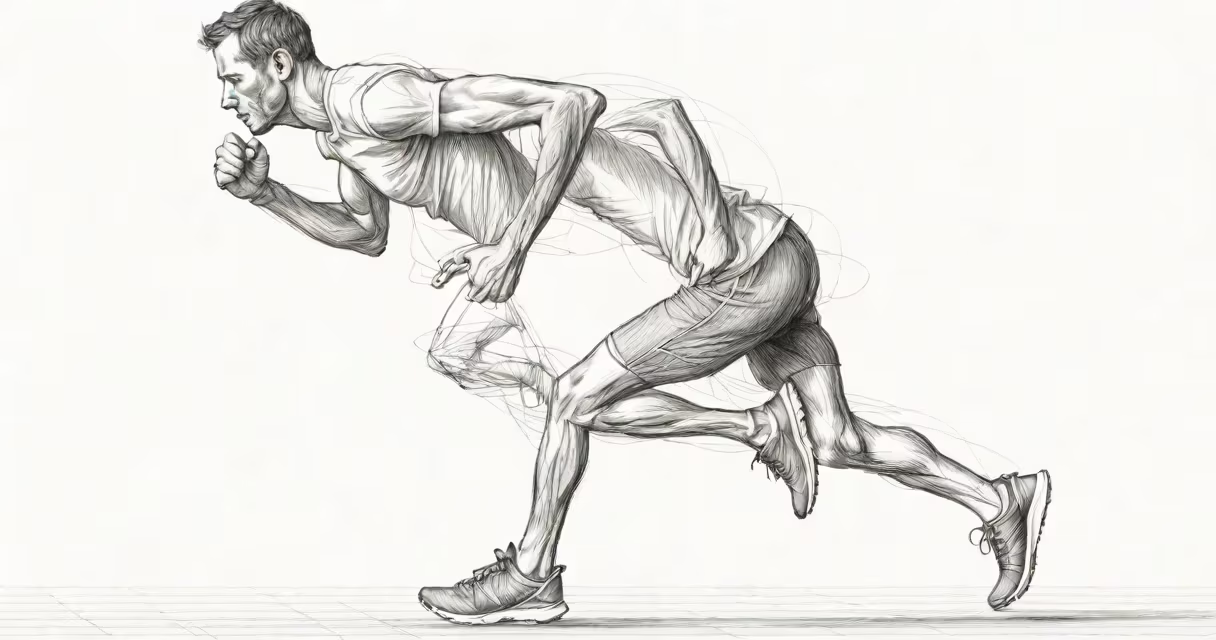
hip hurting when running typically results from muscular imbalances, overuse, or faulty running mechanics, especially involving the hip flexors, glutes, and iliotibial band. The sensation may feel like sharp pain, dull ache, or stiffness in the front, side, or back of the hip during or after running.
When you run, your hips absorb impact and generate power through repetitive motion. If muscles around the hip joint aren't balanced or flexible enough, strain builds. Common culprits include tight hip flexors from prolonged sitting, weak glute medius muscles leading to pelvic drop, or inflammation in the iliotibial (IT) band. These issues disrupt normal movement patterns and increase stress on tendons and joints.
A 2021 study published in Journal of Orthopaedic & Sports Physical Therapy found that 62% of recreational runners reporting hip pain had reduced hip abductor strength, particularly in the gluteus medius. This weakness leads to altered gait mechanics, increasing load on the hip joint during stride. Ignoring early signs can progress to tendinopathy or bursitis.
During running, each stride involves a complex sequence: foot strike, knee flexion, hip extension, and pelvic rotation. The hip flexors (iliopsoas) lift the leg forward, while the glutes and hamstrings control the backward swing. The gluteus medius stabilizes the pelvis on the stance leg.
If the hip flexors are chronically shortened-often from desk jobs or excessive sprinting-they pull the pelvis into anterior tilt. This shifts weight forward, forcing the glutes to work harder. Over time, the gluteus medius fatigues, causing the pelvis to drop on the opposite side during stance phase. This imbalance increases shear forces on the hip joint and IT band.
For example, a runner who logs 40 miles per week with minimal strength training may develop lateral hip pain. The pain worsens when running downhill or on uneven terrain due to increased demand on stabilizing muscles. Without intervention, this can lead to trochanteric bursitis, a condition where fluid-filled sacs near the hip bone become inflamed.
Not all hip pain during running is the same. Different locations and qualities of pain suggest different underlying issues.
| Pain Location | Most Likely Cause | Common Trigger |
|---|---|---|
| Front of hip | Tight hip flexors or iliopsoas tendinitis | High mileage, sprinting, prolonged sitting |
| Side of hip (near hip bone) | IT band syndrome or trochanteric bursitis | Running on banked surfaces, increasing weekly mileage too quickly |
| Back of hip | Gluteal tendinopathy or piriformis syndrome | Weak glutes, poor form, long runs without recovery |
One non-obvious distinction: IT band syndrome isn't caused by the IT band itself being tight. Instead, it arises from friction between the band and the femur during knee flexion and extension. Research from the British Journal of Sports Medicine (2020) shows that strengthening the gluteus medius reduces IT band strain by up to 38% in runners.
Many runners mistake hip pain for a minor issue. But ignoring it risks progression to chronic conditions. A 2019 review in Physical Therapy in Sport reported that 43% of runners with untreated hip pain continued running despite discomfort, leading to longer recovery times and higher reinjury rates.
Runners in urban environments face higher risk due to prolonged sitting and frequent short strides. A 2022 survey of 1,200 runners found that those who sat more than 8 hours daily were 2.3 times more likely to report hip pain than those with active workdays.
Trail runners often experience lateral hip pain due to uneven terrain and sudden changes in direction. A case study from the University of Colorado's Sports Medicine Clinic documented a trail runner who developed IT band irritation after switching from pavement to rocky paths without adapting stride mechanics.
I once worked with a 35-year-old marathoner who developed persistent hip pain after increasing her weekly mileage from 30 to 50 miles. She'd been using a minimalist shoe and running on hard roads. After a physical exam, we discovered severe gluteus medius weakness and tight hip flexors. A 6-week program focused on eccentric loading and foam rolling reduced her pain by 90% within four weeks.
hip hurting when running is not always due to structural damage. Many cases stem from neuromuscular inefficiency rather than tissue injury. For example, a runner may feel pain in the hip but have no MRI-visible abnormalities. In such cases, the issue lies in motor control-not degeneration.
Another misconception: stretching alone fixes tight hip flexors. While stretching helps temporarily, it doesn't address the root cause-weakness in opposing muscles. A 2021 randomized trial showed that runners who combined hip flexor stretches with glute activation exercises improved hip stability 40% faster than those who only stretched.
Some assume that pain means "damage." But pain is a signal, not a verdict. A runner with mild hip discomfort can continue training with modified volume and form cues. The key is distinguishing between normal fatigue and warning signs of overload.
Effective treatment targets both symptom relief and long-term prevention. Start with reducing volume by 20-30% for 1-2 weeks to allow tissue recovery. Then focus on corrective exercises.
For front-of-hip pain: perform the Thomas test to assess hip flexor tightness. If positive, do 3 sets of 30-second static holds on the supine hip flexor stretch, followed by 3 sets of 12 clamshells to activate gluteus medius.
For lateral hip pain: use a foam roller on the IT band (not directly on the bone), then do 3 sets of 15 single-leg bridges. A 2020 study in Scandinavian Journal of Medicine & Science in Sports confirmed that combining foam rolling with strength training reduced IT band pain in 87% of participants after six weeks.
For posterior hip pain: perform the prone hip extension with resistance band to strengthen gluteus maximus. Avoid deep squats or lunges until pain resolves.
Return to running gradually. Begin with 20-minute easy runs, focusing on cadence (170-180 steps per minute) and short, light strides. Monitor pain levels using a 0-10 scale. If pain exceeds 3/10 during or after running, reduce intensity.
If pain persists beyond two weeks despite rest and exercises, seek medical evaluation. Imaging may be needed to rule out labral tears or stress fractures. However, most cases resolve with conservative management.
hip hurting when running is rarely a reason to stop training. With proper assessment and targeted action, runners can return stronger. Addressing muscle imbalances early prevents progression to chronic injury.