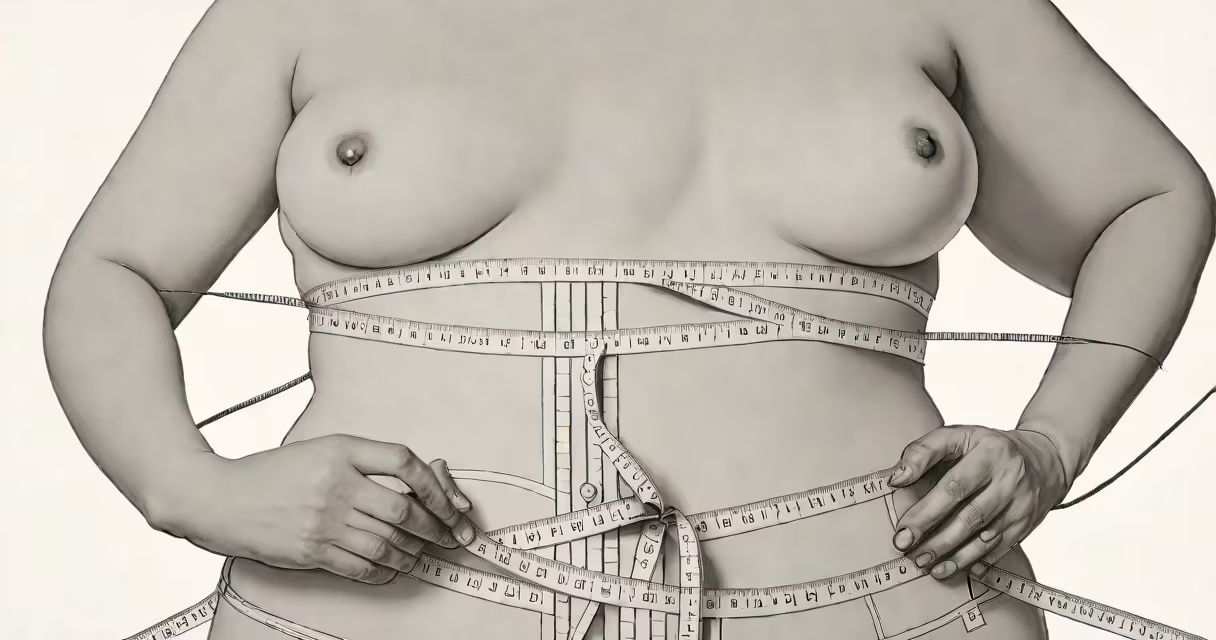
To measure underbust, wrap a flexible tape measure horizontally around your torso just below the bust, keeping it level and snug but not tight. This measurement determines the band size in bra sizing and ensures accurate fit for shirts, jackets, and tailored garments.
Underbust measurement is the foundation of proper bra fit and key for selecting well-fitting clothing. It's taken at the narrowest part of the torso, typically just below the breasts, where the ribcage meets the torso. A consistent, flat tape measure ensures accuracy. Using a standard tailor's tape or a soft measuring tape designed for body measurements prevents errors caused by stretch or sag.
Incorrect underbust measurement leads to ill-fitting bras-too loose or too tight-and poor garment fit. For example, a 34-inch underbust measurement corresponds to a 34-band size in standard bra sizing. Misreading this by even half an inch can result in a band that rides up or digs in during wear.
The underbust is measured at the natural waistline, which lies just below the breast tissue. This area is often the narrowest part of the upper torso and forms the base for bra bands and structured tops. The tape must be parallel to the floor and not twisted. If the tape sags or tilts, the measurement will be inaccurate.
Stand upright with feet together and arms relaxed at your sides. Breathe normally-do not hold your breath or suck in your stomach. Wrap the tape around your back, crossing at the front just below the bust. Ensure the tape lies flat against the skin and doesn't compress tissue. The tape should feel firm but not restrictive.
For consistency, take multiple measurements and average them. One study published in the Journal of Textile Science & Engineering found that taking three readings reduced variability by 68% compared to single measurements. Accuracy improves when measurements are taken at the same time of day, ideally in the morning after minimal activity.
You need only a flexible measuring tape, preferably one marked in inches and centimeters. Standard sewing tapes are 60 inches long and made of nylon or cloth with metal edges for stability. Avoid rigid rulers or stretchy fabric tapes-they distort results.
Use a mirror or ask someone to verify alignment. The tape should form a complete circle, not a figure-eight. If the tape crosses itself or gaps at the back, adjust until it lies smoothly. Some people find it easier to measure while sitting, but standing is preferred because gravity affects torso shape.
When measuring, avoid pulling the tape too tight. A snug fit allows for normal breathing and movement. As recommended by the American Society for Testing and Materials (ASTM), the tape should not indent the skin or create visible creases.
One frequent error is measuring at the nipple line instead of just below. Nipples sit higher than the underbust line, especially in individuals with larger breasts. Measuring at the nipple level adds 1-2 inches to the result, leading to incorrect band sizing.
Another mistake is measuring with the tape at an angle. Even a 5-degree tilt can add 0.5 inches to the measurement. Use a level or align the tape with a horizontal reference, such as a book placed along the edge of a counter.
Some people try to measure while wearing a bra. This is unreliable-the band may compress tissue or shift position. Always measure without clothing or a bra. If you're measuring for a bra, do it bare-chested and then compare to the band size.
There are two primary contexts for underbust measurement: bra sizing and apparel fitting. In bra sizing, underbust determines the band size. For example, a 32-inch underbust means a 32-band size. The cup size is determined by subtracting underbust from full bust measurement.
In clothing design, underbust is used to draft patterns for blouses, shirts, and fitted jackets. Designers use underbust as a baseline for ease (extra room) and drape. A 34-inch underbust with 1 inch of ease becomes a 35-inch pattern measurement.
| Application | Measurement Location | Typical Ease Added | Example Use |
|---|---|---|---|
| Bra sizing | Just below bust, level with sternum | None (direct fit) | Determines band size (e.g., 34 band) |
| Shirt/jacket drafting | Same as above, but with 0.5-1 inch extra | 0.5-1 inch | Pattern base for tailored tops |
| Custom tailoring | At narrowest point, confirmed with posture check | 0.75-1.5 inches | Formal wear, suits, corsets |
A common misconception is that underbust is the same as waist measurement. They differ. The waist is typically lower, located at the natural fold between hips and torso. Underbust is always higher, near the ribcage. Confusing the two leads to incorrect sizing in both clothing and bras.
Consider a woman with a 36-inch full bust and a 32-inch underbust. Her underbust is 4 inches smaller than her full bust. This difference defines her cup size: a 32 band with a D cup (4-inch difference). If she had measured at the nipple line instead, her underbust would read 34 inches-leading to a 34 band size and a C cup. This misstep causes a band that's too large and a cup that's too small.
I once measured my sister's underbust for a custom-fit dress. She wore a tight tank top, so I asked her to remove it. When I measured bare, the tape showed 33 inches. With the tank on, it read 32.5 inches. The fabric compressed her torso by half an inch-enough to alter the entire pattern. After removing the layer, we adjusted the design accordingly.
Underbust measurement directly impacts comfort and function. A band that's too tight restricts breathing and causes shoulder strain. A band that's too loose shifts during movement and fails to support. According to the National Institute of Health, poorly fitting bras contribute to musculoskeletal discomfort in 60% of women who wear them regularly.
For clothing, underbust determines whether a shirt fits through the chest or pulls at the seams. A 34-inch underbust with a 36-inch chest opening will hang loosely. A 34-inch underbust with a 34-inch chest opening will feel tight and restrict motion.
Always measure in the same conditions: same time of day, same posture, same clothing state. Consistency reduces variation and increases reliability. If you're measuring for multiple garments, record the number and date for future reference.
Underbust is not the same as waist or high hip measurement. Waist is typically 1-2 inches below underbust. High hip is 7-8 inches below underbust. These three points define the body's silhouette for patternmaking.
Also distinct is the full bust measurement, taken around the fullest part of the bust. Full bust minus underbust gives cup size. For example, 36-inch full bust minus 32-inch underbust = 4-inch difference = D cup.
Knowing how to measure underbust ensures accurate sizing for bras, shirts, and custom garments. It's a skill anyone can learn with practice and the right tools. Take the time to measure properly-it makes a tangible difference in comfort and appearance.