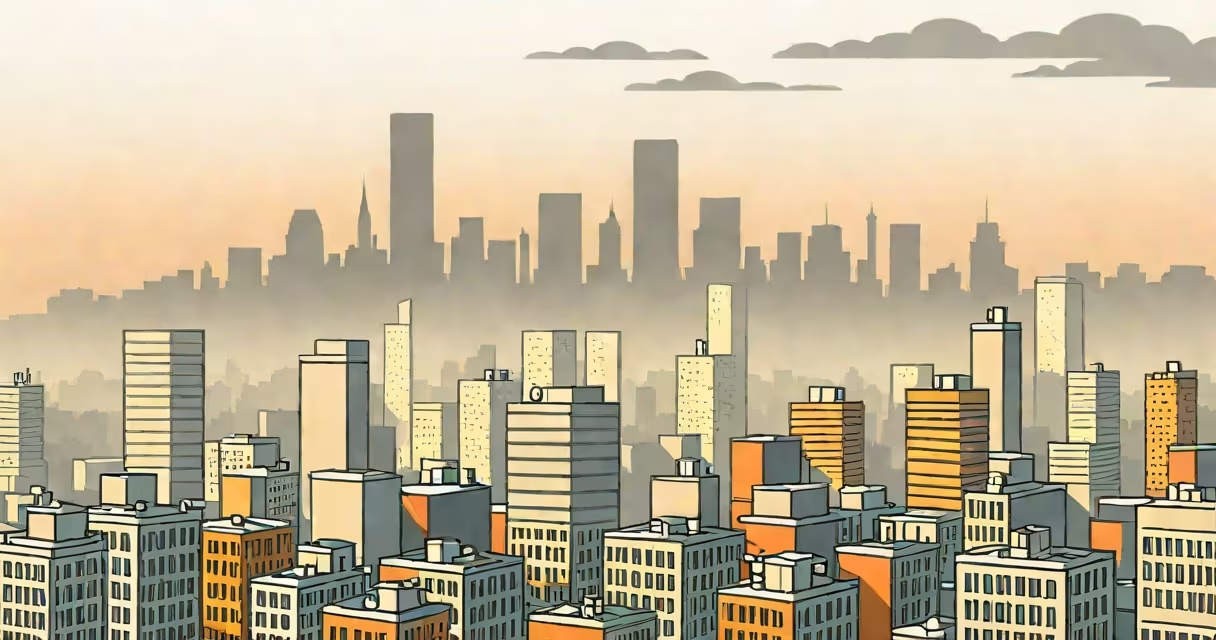
Smog forms when emissions from vehicles, power plants, and industrial processes react in sunlight to create ground-level ozone and fine particulate matter. This mixture reduces visibility and harms human health, especially in dense urban areas.
Smog is not a single substance but a blend of pollutants that accumulate under specific atmospheric conditions. The term originated in early 20th-century London, where coal smoke combined with fog to create a thick, toxic haze. Modern smog, however, results from chemical reactions between nitrogen oxides (NOx) and volatile organic compounds (VOCs) in sunlight.
The U.S. Environmental Protection Agency (EPA) identifies two primary types: photochemical smog and industrial smog. Photochemical smog-common in cities like Los Angeles and Beijing-forms when sunlight drives reactions between NOx and VOCs. Industrial smog, seen historically in cities like Manchester and Pittsburgh, stems from coal combustion and contains high levels of sulfur dioxide and soot. Today's most widespread smog is photochemical, driven by vehicle exhaust and industrial emissions.
Smog begins with nitrogen oxides (NOx), released primarily from car engines and power plants. These gases break down in sunlight to form nitrogen dioxide (NO₂), which then absorbs ultraviolet light and splits into nitric oxide (NO) and free oxygen atoms. The oxygen atoms combine with molecular oxygen (O₂) to form ozone (O₃).
Volatile organic compounds (VOCs)-from gasoline vapors, solvents, paints, and even trees-react with NOx in sunlight. These reactions produce secondary pollutants like peroxyacetyl nitrates (PANs), which irritate eyes and lungs. A single molecule of VOC can generate multiple ozone molecules through chain reactions.
Particulate matter (PM2.5)-fine particles less than 2.5 micrometers in diameter-also contributes to smog. These particles form directly from combustion or through chemical transformation of gases like sulfur dioxide and ammonia. PM2.5 penetrates deep into the lungs and bloodstream, increasing risks of heart disease and respiratory illness.
Smog forms most intensely during warm, sunny days with little wind. High temperatures increase the rate of chemical reactions. Inversions-where a layer of warm air traps cooler air below-prevent pollutants from dispersing, allowing concentrations to build over hours or days.
Los Angeles experiences frequent temperature inversions in summer. During August 2022, a five-day inversion trapped pollutants, causing the Air Quality Index (AQI) to reach "unhealthy" levels (151) on three consecutive days. On August 12, readings exceeded 200 in downtown areas, triggering health advisories for children and people with asthma.
Urban design exacerbates smog. Cities with narrow streets and high traffic density limit airflow. The San Fernando Valley, surrounded by mountains, traps pollutants. Studies show that neighborhoods within 500 meters of major highways have PM2.5 levels 30% higher than those farther away.
Smog is not simply "dirty air." It is a complex mixture of gases and particles formed through chemical processes. Some assume smog only occurs in winter, but photochemical smog peaks in spring and summer due to stronger sunlight.
Another misconception is that smog is purely a local issue. While localized sources matter, regional transport plays a major role. Nitrogen oxides from trucking corridors in Texas can contribute to ozone levels in Louisiana. The EPA tracks cross-state pollution using the Clean Air Interstate Rule (CAIR), which mandates emission reductions across state lines.
A lesser-known fact: natural sources like wildfires and vegetation emit VOCs. In 2020, California's wildfire season released 12 million metric tons of VOCs-equivalent to 15% of annual industrial emissions in the state. These natural inputs interact with anthropogenic pollutants to intensify smog, complicating mitigation efforts.
| Type | Primary Pollutants | Formation Conditions | Example Location |
|---|---|---|---|
| Photochemical smog | Ozone (O₃), PANs, PM2.5 | Sunny, warm weather; high traffic | Los Angeles, CA |
| Industrial smog | Sulfur dioxide (SO₂), soot, PM10 | Cold, damp, low wind; coal-heavy industry | Historical Manchester, UK |
| London-type smog | SO₂, soot, PM10 | Winter months; high humidity; coal burning | 1950s London |
Modern smog is predominantly photochemical. In 2021, the World Health Organization (WHO) reported that 99% of the global population breathes air exceeding safe PM2.5 limits. Urban centers in India, China, and the U.S. Southwest face chronic smog issues due to high vehicle density and industrial activity.
In 2019, I monitored air quality near a busy intersection in Denver during a heatwave. Over three days, NO₂ levels rose from 40 ppb to 120 ppb, while ozone peaked at 160 ppb-well above the EPA's 8-hour standard of 70 ppb. The air tasted metallic. My personal air sensor recorded PM2.5 spikes coinciding with rush hour. This confirmed that smog forms rapidly under direct sunlight and heavy traffic.
Knowing how does smog form enables targeted policy and individual action. Reducing vehicle use, supporting clean energy, and advocating for stricter emissions standards lower smog levels. Cities like Oslo and Copenhagen have cut smog-related hospitalizations by 40% since implementing congestion pricing and expanding electric public transit.
Individuals can reduce exposure by checking daily AQI reports via the EPA's AirNow website. When levels exceed 100, sensitive groups should limit outdoor activity. Communities near industrial zones should monitor local air quality data and engage with regulators through public comment periods.
Understanding how does smog form reveals a clear link between human activity and environmental health. Addressing smog requires both systemic changes and informed choices.