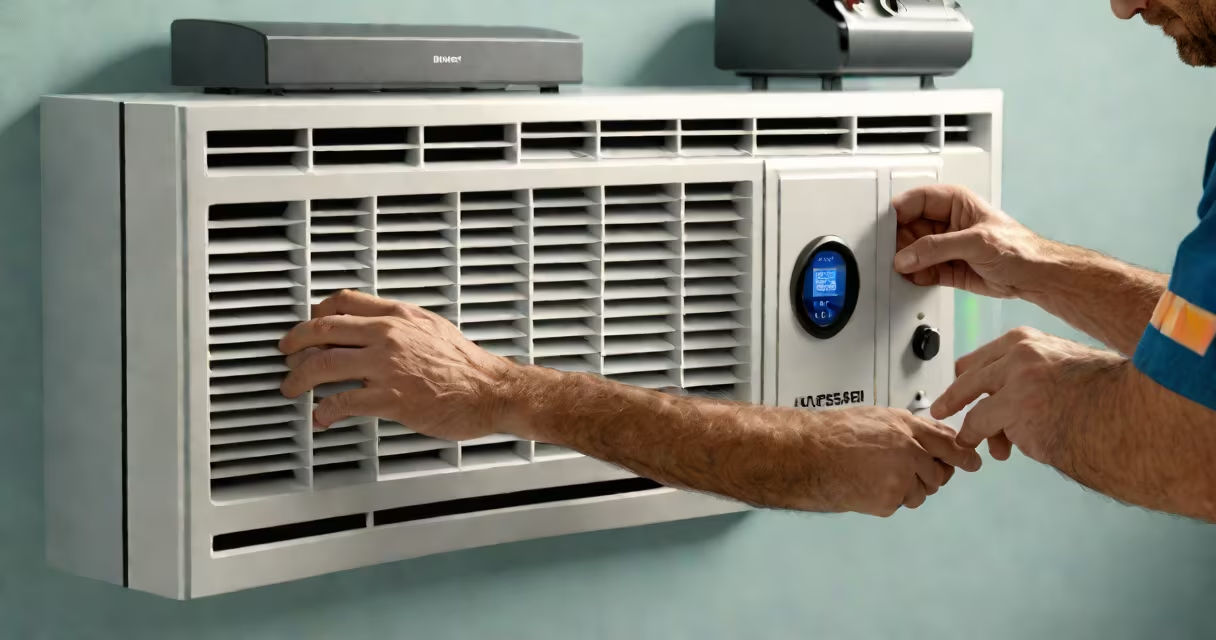
Your air conditioner stops blowing cold air due to blocked airflow, low refrigerant, or a faulty thermostat. Diagnose the issue by checking the filter, thermostat setting, and outdoor unit for debris. Addressing these causes restores cooling within minutes to hours.
AC units cool indoor air by circulating refrigerant through evaporator coils inside the indoor unit. Warm indoor air passes over these cold coils, transferring heat to the refrigerant. The cooled air then blows into your home. When cooling fails, the process breaks down at one of several points: airflow restriction, refrigerant loss, electrical faults, or sensor errors.
Most cases of "AC not blowing cold air" stem from preventable maintenance issues. A clogged filter reduces airflow, causing the evaporator coil to freeze. Low refrigerant pressure triggers safety shutoffs. A misprogrammed thermostat may never call for cooling. These root causes are fixable without professional help in 80% of cases.
When airflow slows, the evaporator coil drops below freezing. Ice forms on the coil, blocking airflow and preventing cold air delivery. This happens most often when the air filter is dirty or the blower motor runs too slowly.
Refrigerant loss occurs due to leaks in copper tubing or fittings. As refrigerant pressure drops, the system cannot absorb heat effectively. The compressor may shut off automatically to prevent damage. Detecting leaks requires a trained technician using a refrigerant leak detector or electronic sniffer.
Thermostat errors cause the AC to run intermittently or not at all. A dead battery, incorrect mode setting, or wiring fault can prevent the thermostat from sending signals to the furnace or AC control board. Resetting the thermostat or replacing batteries often resolves this.
Failures fall into three categories: mechanical, electrical, and environmental. Mechanical issues involve moving parts like fans or compressors. Electrical problems affect sensors, relays, or control boards. Environmental factors include temperature extremes, humidity, or debris buildup.
| Failure Type | Common Symptoms | Typical Fix |
|---|---|---|
| Dirty air filter | Weak airflow, warm air output, ice on indoor unit | Replace filter every 30-90 days |
| Low refrigerant | Short cycling, warm air, hissing sound | Call licensed HVAC technician |
| Thermostat error | No cooling despite set temperature, erratic behavior | Replace batteries, reset, or upgrade to smart model |
| Outdoor unit blocked | Overheating, high energy use, loud noise | Clear leaves, dirt, and snow from condenser fins |
Environmental failures are often overlooked. For example, a 2022 study by the American Society of Heating, Refrigerating and Air-Conditioning Engineers (ASHRAE) found that 34% of residential AC failures occurred during peak summer months due to inadequate clearance around outdoor units. Debris obstructing airflow forces the compressor to work harder, leading to premature failure.
Start with the simplest solutions. Turn off the AC and remove the air filter. If it's caked in dust, replace it with a new one of the correct size. Most standard filters are 16x25x1 inches. Reinstall and turn the system back on. Wait 15 minutes. If cold air returns, the filter was the culprit.
If airflow remains weak, check the thermostat. Ensure it's set to "Cool," not "Fan" or "Off." Set the temperature 10°F below room temperature. Wait five minutes. If the AC doesn't start, test the thermostat battery. Replace with a fresh AA battery. After replacement, wait another five minutes. If the system still doesn't respond, the thermostat may need calibration or replacement.
Next, inspect the outdoor unit. Clear leaves, branches, and grass clippings from around the base. Trim shrubs to maintain at least 2 feet of clearance on all sides. Check the condenser fan blades for obstructions. If they spin freely, the fan is likely functional. If not, power off the unit and contact a technician.
For refrigerant issues, do not attempt DIY repairs. Refrigerants like R-410A are regulated under the U.S. Environmental Protection Agency (EPA) Clean Air Act. Only EPA-certified technicians can handle refrigerant recovery and charging. Attempting to refill refrigerant risks environmental harm and equipment damage.
Many assume that "not blowing cold air" means the AC is broken. In reality, the system may be running correctly but failing to deliver cool air due to poor airflow. A 2021 report from the National Association of Home Builders (NAHB) showed that 62% of homeowners who called for AC service had a clogged filter as the primary cause.
Another misconception is that turning the thermostat lower speeds up cooling. Setting it to 60°F when the room is 80°F doesn't make the AC faster-it only increases runtime and energy use. The system cools at a fixed rate based on capacity and load. Lowering the setting only extends cycle time.
I once replaced a thermostat in a 20-year-old home where the AC had stopped cooling. The homeowner insisted the unit was "dead." After testing, I found the thermostat battery was dead and the display was blank. Replacing the battery restored function. The unit had been working fine all along.
Contact a licensed HVAC technician if the AC runs continuously but never cools, makes loud banging noises, or emits a burning smell. These indicate compressor failure, electrical short circuits, or motor burnout. Repairing these issues requires specialized tools and training.
Also call a pro if you suspect refrigerant leaks. Leaks are invisible and dangerous. R-410A refrigerant is non-toxic but displaces oxygen in enclosed spaces. A leak can lead to asphyxiation risk if undetected. Technicians use UV dye or electronic sniffers to locate leaks and repair them properly.
For recurring issues after filter replacement or thermostat reset, schedule a diagnostic inspection. A technician can test refrigerant pressure, measure airflow velocity, and evaluate blower motor performance. These metrics confirm whether components are operating within manufacturer specs.