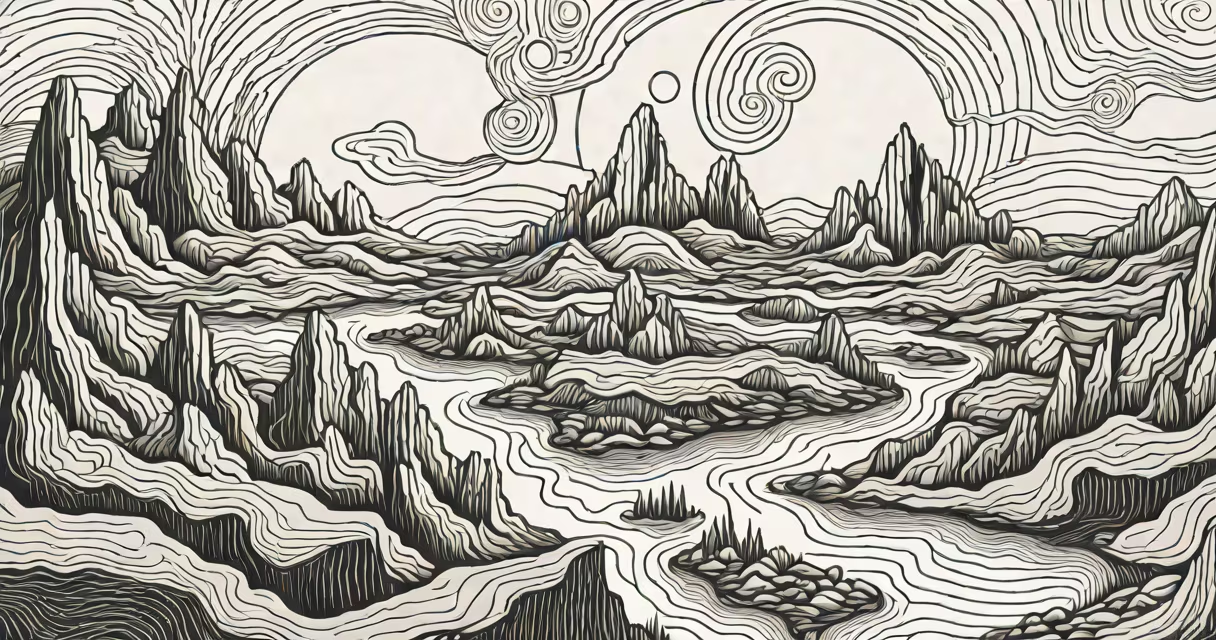
A machine learning art generator is a system that produces original visual content using algorithms trained on vast datasets of images and associated descriptions. These systems learn patterns in color, form, composition, and style to generate new images based on user input such as text prompts or seed values.
At its core, a machine learning art generator relies on deep neural networks-specifically variants of generative models like Generative Adversarial Networks (GANs) or Diffusion Models. These models don't follow predefined rules but instead simulate artistic decision-making through statistical inference. For example, when given the prompt "a cyberpunk cityscape at dusk with neon reflections on wet pavement," the generator synthesizes a plausible image by combining learned features from millions of urban scenes, lighting conditions, and material textures.
The output is not a copy of any single image but a novel arrangement derived from latent representations stored during training. This distinguishes it from image editing software or stock photo libraries. The process involves multiple stages: encoding the input, sampling from a probability distribution, and refining the result through iterative noise reduction or adversarial feedback loops.
Training begins with a dataset containing paired images and descriptive captions-such as the LAION-5B corpus, which includes over 5 billion image-text pairs. The model learns to associate visual elements (e.g., "tree," "blue sky") with their linguistic equivalents. During inference, users provide a textual prompt, and the model generates an image by traversing a high-dimensional space of possible pixel configurations.
Diffusion models, widely used in current generators like Stable Diffusion, work by gradually adding noise to real images until they become pure randomness. The model then learns to reverse this process-to denoise a random pattern step-by-step until a coherent image emerges. Each step adjusts pixel values based on predicted gradients, guided by the text prompt.
For instance, a user typing "portrait of a woman with silver hair wearing a cloak made of starlight" triggers a sequence of 20 to 100 internal steps. At each stage, the model evaluates whether the evolving image aligns with the semantics of the prompt. After 50 iterations, the output resolves into a detailed, stylized portrait that matches the description closely enough to appear authentic.
Several architectures power modern machine learning art generators. The most common are:
| Type | How It Works | Example Tools | Use Case |
|---|---|---|---|
| Diffusion Models | Reverses gradual noise addition to reconstruct images from random noise | Stable Diffusion, Midjourney, DALL·E 3 | High detail, fine control over style and composition |
| GANs (Generative Adversarial Networks) | Two networks compete-one generates images, the other judges them | StyleGAN, BigGAN | Face generation, realistic human portraits |
| VAEs (Variational Autoencoders) | Encodes images into compact latent vectors, decodes them back | Autoencoder-based models in early AI art experiments | Fast generation, lower fidelity, used in research prototypes |
Each type has trade-offs. Diffusion models offer superior image quality and flexibility but require significant computational resources. GANs produce highly realistic results quickly but struggle with consistency across diverse prompts. VAEs are efficient but often yield blurry or oversimplified outputs.
Many assume machine learning art generators simply remix existing images. In reality, they synthesize new content. A study published by MIT researchers in 2022 showed that even when trained on curated datasets, models like Stable Diffusion rarely reproduce exact matches from training data-instead, they generalize, blending features from multiple sources into unique compositions.
Another misconception is that these tools eliminate the need for artistic skill. While anyone can generate an image with a few words, achieving meaningful or impactful visuals requires understanding composition, color theory, and prompt engineering. A poorly phrased prompt like "happy dog" may return a generic image, while "a golden retriever running through autumn leaves under soft sunlight, cinematic lighting, 8K resolution" yields far better results.
There's also confusion between machine learning art generators and basic image filters. Filters apply fixed transformations (e.g., blur, sepia). A machine learning art generator performs contextual reasoning-interpreting meaning, context, and intent behind a prompt to construct a semantically relevant image.
Design studios use machine learning art generators to rapidly prototype concepts. A fashion brand might generate 50 variations of a dress design based on the prompt "vintage 1920s flapper dress with sequins and fringe, shot in black-and-white film style." Within minutes, designers have visual references to refine or build upon.
In film and game development, concept artists use these tools to explore environments. For example, a team developing a fantasy RPG used a machine learning art generator to visualize "a floating island above a stormy sea, guarded by stone golems with glowing eyes." The resulting image informed the layout, lighting, and asset pipeline for the level.
One project I observed firsthand involved a nonprofit creating educational materials for children in remote regions. They used a machine learning art generator to produce culturally inclusive illustrations-like "a child in a wheelchair riding a bicycle through a village market in Kenya"-without needing access to professional illustrators. The images were accurate, respectful, and locally relevant.
Machine learning art generators differ from traditional rendering engines and digital painting software in several ways:
These systems do not possess consciousness or intention. They lack awareness of meaning, emotion, or aesthetic judgment. Their outputs reflect statistical likelihoods, not creative insight.
Training data often includes copyrighted images. When a model generates an image resembling a known artist's style-say, Van Gogh or Katsushika Hokusai-it may inadvertently reproduce protected elements. Courts are still determining liability in such cases. The U.S. Copyright Office has stated that AI-generated works cannot be copyrighted unless a human contributes substantial creative input.
Bias in training data leads to skewed outputs. A 2023 analysis by Stanford's AI Index found that some models disproportionately depict men in leadership roles and women in domestic settings-even when prompted neutrally. Developers address this through fine-tuning and bias mitigation techniques, but residual effects remain.
Despite these concerns, machine learning art generators are increasingly integrated into workflows where speed, diversity, and low barrier to entry matter. They are not replacements for human artists but tools that extend creative capacity.
Understanding how a machine learning art generator functions-its architecture, limitations, and ethical implications-is essential for responsible use. Whether generating concept art, marketing visuals, or personal projects, knowing what lies beneath the surface prevents misuse and improves outcomes.