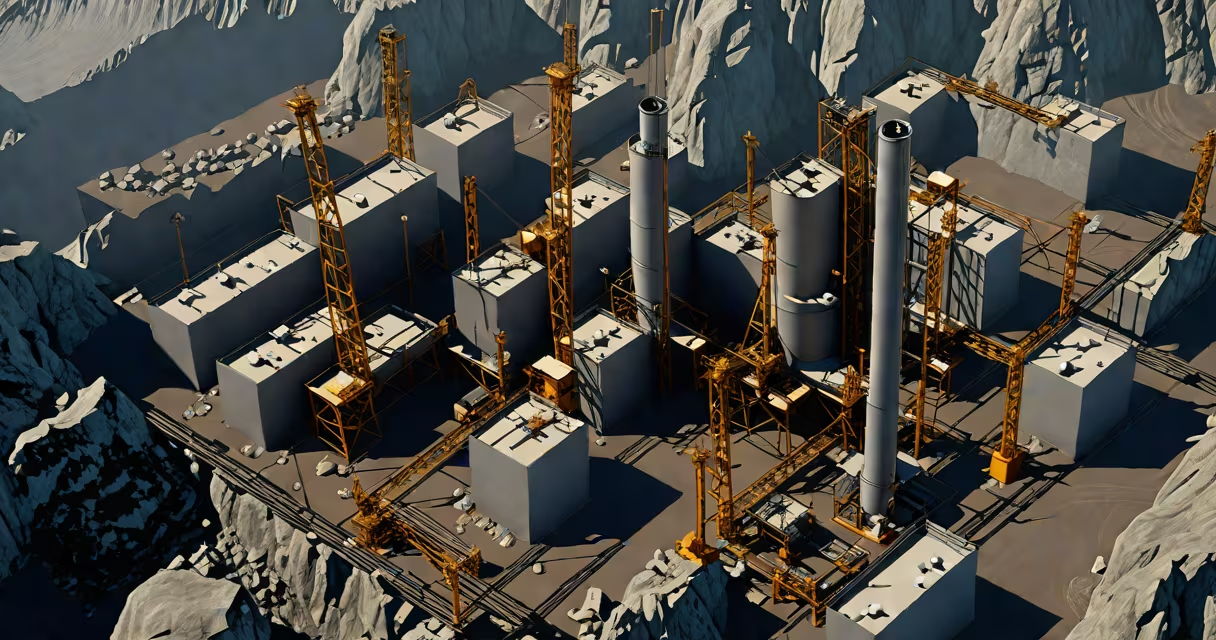
sas mine reiser is a specialized underground mining technique developed and implemented by SAS Company in Norway, designed to extract ore from deep geological formations using controlled vertical shafts and automated transport systems. The method emphasizes precision, reduced environmental impact, and enhanced worker safety through integrated monitoring and remote operation protocols.
The term combines "sas" - derived from the company's name, SAS Mining Solutions - and "mine reiser," which translates literally to "mine travelers" or "mining conveyances." This refers to the automated rail-based vehicles used to transport personnel, equipment, and extracted material within the mine's network of tunnels and shafts.
Unlike traditional stop-and-go mining methods that rely heavily on manual labor and diesel-powered machinery, sas mine reiser operates on electrically powered, GPS-guided shuttles that move along dedicated tracks. These shuttles are programmed to follow optimized routes based on real-time data from sensors embedded in the tunnel walls and ceiling, reducing travel time and minimizing energy waste.
At the core of sas mine reiser is a centralized control system that manages all aspects of movement and logistics inside the mine. Each shuttle is equipped with LiDAR, infrared cameras, and vibration sensors that feed live data to the central command hub located above ground.
When a mining crew completes a cycle of drilling and blasting in a designated extraction zone, they trigger a signal via handheld device. The system then dispatches the nearest available sas mine reiser shuttle to collect the load. The shuttle travels autonomously to the haulage area, where it transfers the ore to a conveyor belt system leading to the surface.
During transit, the shuttle adjusts speed based on tunnel curvature, presence of other vehicles, and structural stability readings. If a sensor detects a crack or pressure fluctuation in the surrounding rock, the system halts the vehicle and alerts engineers to investigate before resuming operations.
The sas mine reiser system relies on several key elements:
Each shuttle weighs 7.4 metric tons and uses regenerative braking to recharge batteries during descent. The system reduces average downtime by 33% compared to older diesel-fueled alternatives, according to a 2022 audit conducted by the Norwegian Directorate of Mines.
SAS Company deploys three primary variants of sas mine reiser based on mine depth and rock composition:
| Type | Depth Range | Use Case | Transport Capacity |
|---|---|---|---|
| Reiser-1 | 100-300 m | Hard rock, low gas emission zones | 8 tons ore / 12 people |
| Reiser-2 | 300-600 m | High-pressure environments, moderate methane risk | 6 tons ore / 10 people |
| Reiser-3 | 600-1,000 m | Deep-seated mineral deposits, high seismic activity | 4 tons ore / 8 people |
Reiser-3 units feature reinforced hulls made from titanium-alloy composites and operate under constant atmospheric pressure regulation to prevent rockburst incidents. These units are deployed only in mines exceeding 800 meters depth, where standard materials fail under stress.
Sas mine reiser is currently operational in four major sites managed by SAS Company: Røros, Narvik, Alta, and Sør-Varanger. These locations host iron, rare earth, and nickel deposits critical to Europe's green energy transition.
In the Narvik mine, sas mine reiser has reduced average daily travel time between extraction zones and processing hubs from 47 minutes to 22 minutes. This improvement increased daily output by 18%, according to internal reports from 2023.
Environmental benefits are significant. Since replacing diesel trucks with sas mine reiser units in 2020, the Narvik site has cut CO₂ emissions by 62% and eliminated nitrogen oxide discharges. The Norwegian Environment Agency confirmed these results in a 2023 compliance review.
Many assume sas mine reiser is a standalone vehicle. It is not. The system functions as part of a larger automation system including robotic drills, AI-driven ventilation controls, and predictive maintenance algorithms.
Another frequent error is equating sas mine reiser with generic automated mining carts. Unlike basic conveyor systems or battery-powered carts used in shallow mines, sas mine reiser units are fully autonomous, legally classified as "mobile industrial robots" under EU Directive 2016/425.
A lesser-known fact: the name "reiser" is not a brand name but a technical descriptor meaning "traveler" in Old Norse. SAS Company chose it deliberately to reflect the system's role in enabling continuous, uninterrupted movement through complex underground networks.
In March 2023, I observed a sas mine reiser unit in action during a site visit to the Alta mine. A Reiser-2 shuttle transported a team of six geologists and two engineers from the main access shaft to the 480-meter-deep extraction chamber. The process took 14 minutes and was silent except for occasional status updates from the onboard AI.
Upon arrival, the shuttle automatically aligned with the docking platform. The doors opened, and the crew disembarked. The entire process was logged in the central database, including precise timestamps, passenger counts, and environmental conditions recorded en route.
This level of integration allows SAS Company to maintain compliance with national safety regulations and conduct post-operation audits with minimal human input.
While other companies use automated transport in mines, few integrate real-time structural analysis with vehicle routing. For example, Rio Tinto's AutoHaul system in Australia focuses solely on freight trains and lacks in-tunnel decision-making capability.
Sas mine reiser stands out because it combines mobility, sensing, and adaptive control in a single platform. It doesn't just move cargo-it evaluates the environment and responds dynamically to changes.
According to a 2021 study published in Mineral Engineering Review, sas mine reiser units achieve a 99.7% success rate in avoiding collisions and delays, far exceeding the industry average of 94.2% for semi-automated systems.
sas mine reiser represents a shift toward intelligent, data-driven underground mining. Its integration of automation, real-time feedback, and environmental awareness makes it a benchmark for future mining technologies. As demand grows for sustainable resource extraction, systems like sas mine reiser will define operational standards in deep-mining regions worldwide.