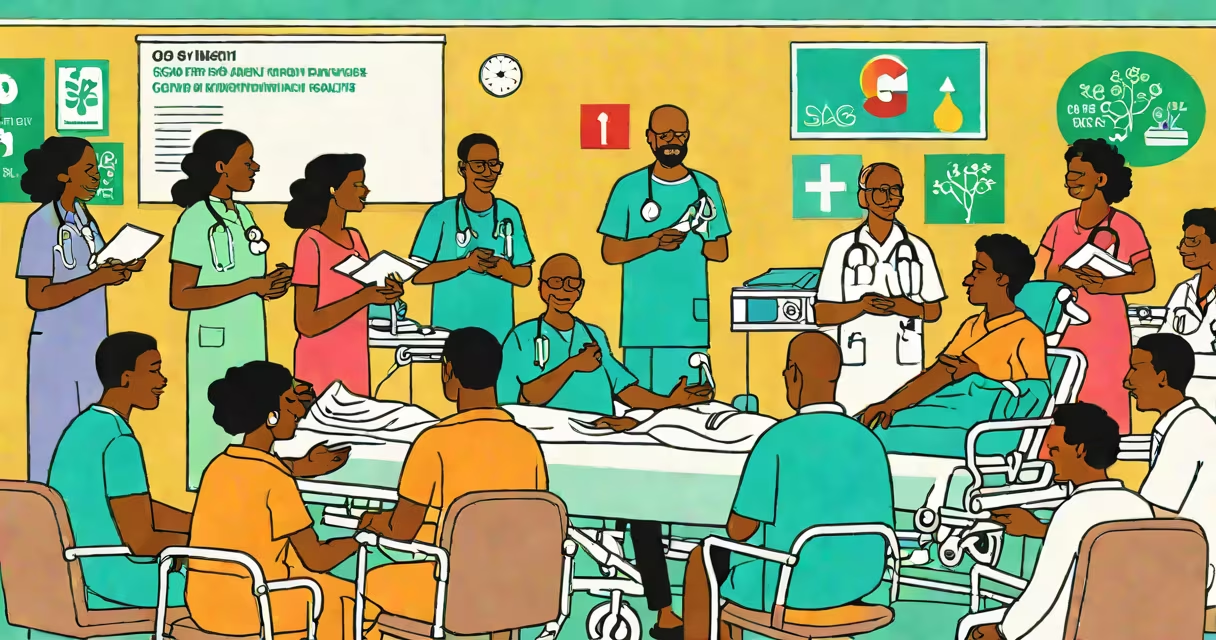
Sustainable Development Goal 3 (SDG3) is a United Nations initiative to ensure healthy lives and promote well-being for all people at every stage of life by 2030. It sets measurable targets including reducing maternal mortality, ending preventable deaths of newborns and children under five, combating HIV/AIDS, tuberculosis, malaria, and other communicable diseases, and achieving universal health coverage.
SDG3 is not a standalone health program. It is a globally coordinated structure that integrates public health policy, infrastructure investment, disease prevention, and equitable access to care. The goal recognizes that health is both a human right and a foundation for economic growth and social stability. It applies to all countries regardless of income level, though priorities differ based on national context and existing health system capacity.
The UN defines SDG3 as a "major" goal because it requires systemic changes beyond clinical interventions. For example, improving child survival rates involves clean water, sanitation, nutrition programs, and trained community health workers. The goal's success depends on cross-sector collaboration between governments, NGOs, private sector actors, and local communities.
SDG3 operates through a set of 13 specific targets tracked via global indicators. These targets are monitored annually by the UN Statistics Division and reported in the Sustainable Development Goals Report. Countries submit data through national statistical offices, which are then validated against international standards.
For instance, Target 3.2 calls for reducing neonatal mortality to no more than 12 per 1,000 live births and under-five mortality to no more than 25 per 1,000 live births by 2030. As of 2022, the global average was 18 neonatal deaths and 38 under-five deaths per 1,000 live births-indicating progress but also significant gaps in low-income nations.
Progress is measured using tools like the WHO's Global Health Observatory and the World Bank's World Development Indicators. Data transparency allows civil society organizations to hold governments accountable. In Uganda, for example, community-led audits of maternal health clinics revealed disparities in service delivery, prompting reforms that reduced maternal mortality by 22% between 2016 and 2021.
SDG3 encompasses four broad categories of action: disease control, health system strengthening, health promotion, and health equity. Each category includes specific interventions tailored to regional needs.
| Type of Intervention | Examples | Impact Focus |
|---|---|---|
| Disease Control | Mass vaccination campaigns, TB screening, HIV treatment access | Reduce incidence of infectious diseases |
| Health System Strengthening | Training 100,000 community health workers in sub-Saharan Africa, building primary care centers | Improve access and quality of care |
| Health Promotion | National tobacco control laws, school-based nutrition education | Prevent chronic diseases |
| Health Equity | Subsidized medicines for low-income populations, mobile clinics in rural areas | Ensure marginalized groups receive care |
One non-obvious fact: SDG3 includes mental health as a core component. Target 3.4 explicitly aims to reduce premature mortality from non-communicable diseases by one-third and promote mental well-being. This reflects a shift from viewing health solely as physical fitness or absence of illness. According to the World Health Organization (WHO), depression and anxiety disorders cost the global economy $1 trillion annually in lost productivity-making mental health a priority for both individual and societal health.
A common misconception is that SDG3 is only about treating illness. In reality, it emphasizes prevention and early intervention. For example, Costa Rica reduced infant mortality by 75% between 1990 and 2020 not through expensive hospital care, but by investing in prenatal visits, home-based newborn monitoring, and community health worker networks. This model is now cited by the WHO as a benchmark for low-resource settings.
SDG3 is implemented in every country, but implementation varies widely. High-income nations focus on aging populations, chronic disease management, and mental health services. Low- and middle-income countries prioritize maternal and child health, infectious disease control, and infrastructure development.
In Bangladesh, SDG3 initiatives led to a 60% reduction in under-five mortality since 1990. This resulted from integrating family planning services into primary care, deploying female community health workers, and expanding oral rehydration therapy programs. The government partnered with Gavi, the Vaccine Alliance, to achieve 90% coverage of childhood vaccines by 2023.
One underreported challenge is data fragmentation. In many African nations, health records remain siloed across ministries, hospitals, and NGOs. A 2021 study published in *The Lancet* found that only 43% of Sub-Saharan African countries had complete, real-time reporting systems for key SDG3 indicators. Without accurate data, policy decisions risk misalignment with actual needs.
Many assume SDG3 is solely about funding medical facilities or buying drugs. But the goal prioritizes outcomes, not inputs. A country can spend heavily on hospitals yet fail to meet SDG3 targets if care remains inaccessible to poor or remote populations.
Another error is equating SDG3 with national health insurance schemes. While universal health coverage (UHC) is a major pillar of SDG3 (Target 3.8), UHC itself is not the goal-it's a means to achieve health equity. A nation may have UHC but still see high maternal death rates due to lack of emergency obstetric care in rural areas.
I once observed a pilot project in Malawi where community health workers distributed free fruit packets alongside antimalarial bed nets. After six months, participants showed improved micronutrient levels and reduced absenteeism in schools. The project demonstrated that combining preventive nutrition with disease control boosts long-term health outcomes more effectively than either approach alone.
SDG3 good health and well being is not a checklist. It is a living structure that adapts to emerging threats-such as antimicrobial resistance, climate-related health risks, and pandemics. Its success hinges on sustained political will, evidence-based policies, and inclusive participation. The 2030 deadline is not arbitrary; it aligns with the projected timeline for eliminating several infectious diseases and achieving near-universal access to essential health services.
Meeting SDG3 requires more than medical solutions. It demands social justice, environmental protection, and economic fairness. When a child in Nairobi receives a vaccine, a woman in rural Nepal accesses prenatal care, or a teenager in Lima gets counseling for anxiety, those moments reflect progress toward a healthier, more equitable world.