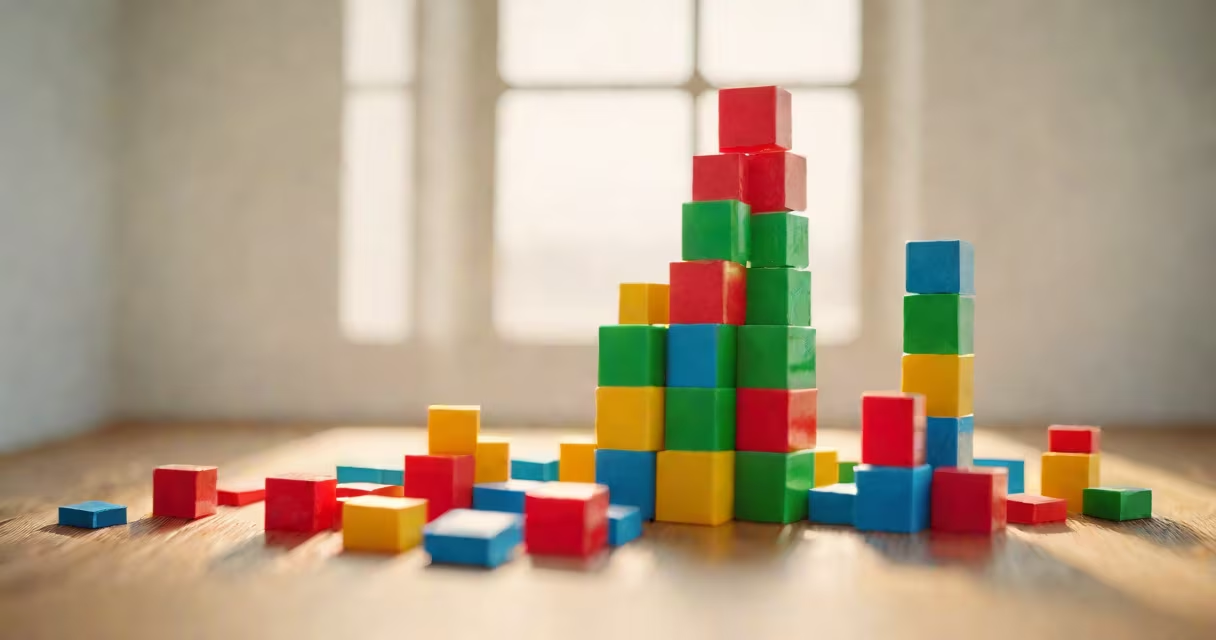
A toy for kids is any object intentionally designed to engage children in play, support developmental milestones, or teach skills through interaction. These items range from simple stacking blocks to interactive electronic devices, all serving to stimulate imagination, coordination, and learning.
Toys for kids are not just entertainment-they serve as tools for brain development. The American Academy of Pediatrics notes that unstructured play with toys strengthens executive function, emotional regulation, and problem-solving abilities in children aged 3 to 8. Play is not a luxury; it's a biological necessity for healthy neural wiring.
Not all toys are equal. A well-designed toy for kids encourages exploration, repetition, and open-ended outcomes. For example, a set of wooden train tracks allows endless configurations, while a battery-powered robot that only plays one tune limits creativity. The best toys grow with the child, adapting to new stages of understanding and physical ability.
Play engages multiple areas of the brain simultaneously. When a child stacks rings on a peg, they're using fine motor control, spatial reasoning, and pattern recognition. This multi-system engagement is why toys aren't passive objects-they actively shape how a child thinks and moves.
Research from the University of Washington shows that children who regularly interact with manipulative toys-like puzzles, LEGO bricks, or building sets-develop stronger visual-spatial skills. These skills correlate with later success in math and science. A study published in *Child Development* found that preschoolers who played with construction toys scored 15% higher on standardized spatial tests than peers who didn't.
Even sensory toys contribute to neurological development. Textured balls, soft dolls with varied fabrics, or sound-making instruments help infants and toddlers build tactile awareness and auditory discrimination. These early experiences lay the foundation for language acquisition and emotional expression.
Not all toys serve the same function. Different categories target specific developmental domains. Here's how common types align with growth stages:
| Type | Best Age Range | Skills Developed | Example |
|---|---|---|---|
| Stacking & sorting | 6 months - 3 years | Hand-eye coordination, color/shape recognition | Wooden nesting cups |
| Construction sets | 3 - 8 years | Problem-solving, spatial reasoning | LEGO DUPLO bricks |
| Imaginative play | 2 - 7 years | Language, empathy, narrative thinking | Plastic kitchen set with pretend food |
| Outdoor & gross motor | 1 - 6 years | Balance, strength, risk assessment | Wheeled balance bike |
| STEM-focused | 5 - 12 years | Logic, sequencing, early engineering | Simple circuit-building kit |
Parents often overlook the importance of open-ended toys. A doll with interchangeable clothes lets a child create stories, assign roles, and explore social dynamics. In contrast, a doll that only says "I love you" offers limited cognitive stimulation. The most effective toys don't give answers-they invite questions.
Many parents assume that expensive or flashy toys are better. That's not true. A 2021 study by the National Institute of Child Health and Human Development found that children showed greater sustained attention and deeper engagement with low-tech toys like cardboard boxes, fabric scraps, and simple tools than with high-cost electronic games.
Another myth is that all toys labeled "educational" are beneficial. Not all are. Some products market themselves as "learning" but focus only on rote memorization. A tablet app that drills letter sounds may improve recognition-but it doesn't develop critical thinking. True educational value comes from play that requires decision-making, trial-and-error, and adaptation.
One underappreciated fact: the best toys for kids are often those that don't require batteries. Battery-free toys reduce exposure to small parts, toxic materials, and electronic waste. They also encourage imaginative interpretation. A stick becomes a sword, a blanket a cape, a shoebox a spaceship. Children invent worlds when they're not handed predefined narratives.
In 2019, a kindergarten teacher in Portland, Oregon, replaced her class's digital puzzle tablets with a single set of 100 wooden blocks. Over six weeks, she documented changes in student behavior. Children who previously struggled to stay focused during group time began initiating collaborative projects. They negotiated roles, shared space, and solved structural problems together.
One boy, age 5, built a tower that collapsed repeatedly. He adjusted angles, changed base width, and eventually created a stable structure. His teacher noted: "He wasn't just stacking-he was testing hypotheses." Afterward, he drew a diagram of his design process. The act of building had taught him persistence, measurement, and cause-and-effect logic-all without a single screen.
This mirrors findings from the Harvard Graduate School of Education: hands-on manipulation leads to deeper conceptual understanding than passive observation. A child who builds a bridge with popsicle sticks learns about weight distribution, material strength, and stability through failure and revision. That kind of learning lasts longer than flashcards.
Play is essential in homes, schools, and clinics. Pediatricians recommend daily unstructured playtime for children ages 2 to 12. The World Health Organization includes play as a key component of child health, citing its role in reducing anxiety and improving resilience.
When selecting a toy for kids, prioritize safety and age appropriateness. Look for certifications like ASTM F963 (U.S. safety standard) or CE marking (European Union). Avoid toys with small detachable parts for children under 3. Check for lead-free paint and phthalate-free plastics.
For families managing developmental concerns, certain toys can support therapy goals. A child with autism spectrum disorder may benefit from sensory bins or matching games. A child with ADHD may thrive with fidget tools or structured board games. Always consult a specialist when choosing therapeutic play aids.
One personal insight: I once watched my nephew, age 4, spend 45 minutes arranging marbles in a spiral pattern on a tray. He didn't speak, didn't look away. When asked what he was doing, he said, "The rainbow goes around." That moment wasn't just play-it was focused attention, pattern recognition, and emotional satisfaction. The toy was nothing special: a $3 bag of colored glass beads. But the impact was profound.
A toy for kids is not defined by price, brand, or features. It's defined by whether it invites curiosity, supports growth, and sparks joy. Choose wisely-not for what's trendy, but for what's meaningful.