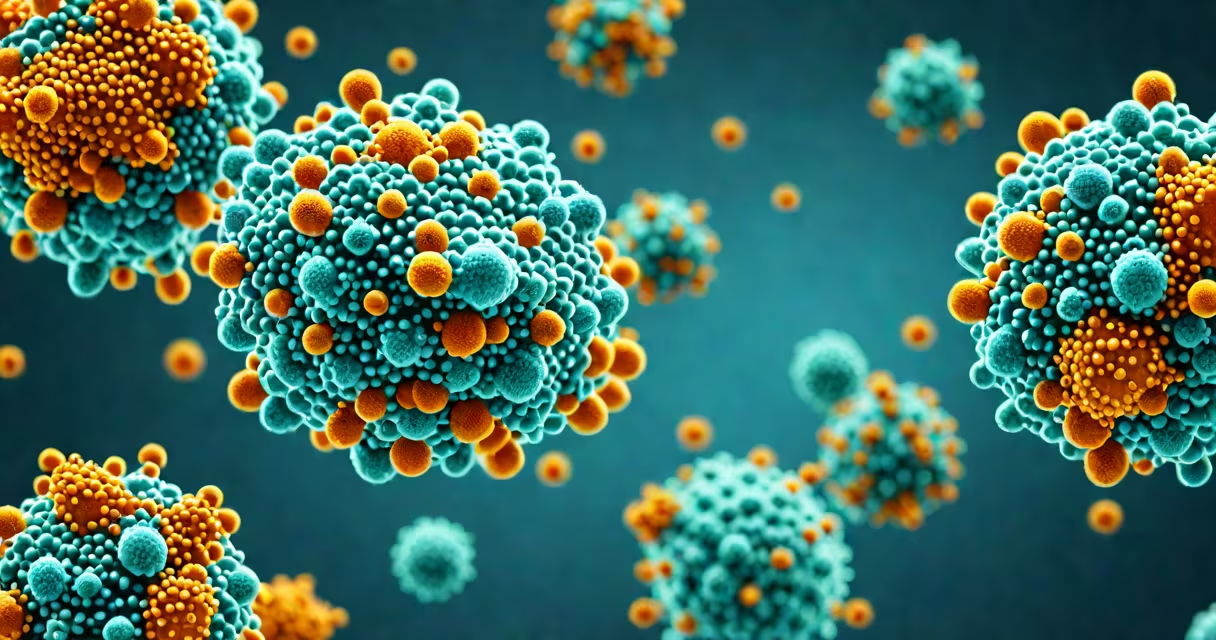
Antigens are molecules that trigger an immune response by binding to antibodies or T-cell receptors. They are typically composed of proteins, polysaccharides, lipids, or nucleic acids, with proteins being the most common and potent form.
Antigens originate from pathogens like viruses, bacteria, or fungi, or from abnormal cells such as cancerous ones. The immune system detects them through specific surface features-epitopes-that match complementary immune receptors. When a B cell or T cell recognizes an epitope, it initiates a targeted attack.
For example, the spike protein on the SARS-CoV-2 virus acts as a major antigen. Its structure includes multiple glycoprotein subunits that bind to human ACE2 receptors. This binding triggers both antibody production and T-cell activation, forming the basis of vaccine-induced immunity.
Most antigens are proteins or glycoproteins. Proteins consist of long chains of amino acids folded into complex 3D shapes. These shapes expose unique surface patterns-epitopes-that immune cells recognize. A single antigen may contain multiple distinct epitopes, allowing diverse immune responses.
Polysaccharides, such as those in the capsule of Streptococcus pneumoniae, also serve as antigens. These sugar-based structures are less immunogenic than proteins but still elicit antibody responses, especially in conjugate vaccines. Lipopolysaccharides (LPS) from Gram-negative bacterial membranes are another class of antigenic molecules, known for triggering strong inflammatory reactions.
Nucleic acids like DNA or RNA can act as antigens under certain conditions. For instance, viral RNA in infected cells is processed and presented via MHC class I molecules, activating CD8+ T cells. However, naked nucleic acids are generally poor stimulators unless delivered with adjuvants or within immune complexes.
| Type | Chemical Basis | Immune Response Type | Example |
|---|---|---|---|
| Protein | Amino acid chains folded into tertiary/quaternary structures | B-cell and T-cell activation | SARS-CoV-2 spike protein |
| Polysaccharide | Repeating sugar units (e.g., glucose, galactose) | Primarily B-cell response | Pneumococcal capsular polysaccharide |
| Lipid | Fatty acid chains linked to phosphate groups | CD1-restricted T-cell response | Mycolic acid from Mycobacterium tuberculosis |
| Nucleic Acid | Single- or double-stranded DNA/RNA | Interferon-mediated innate response | Viral RNA in dendritic cells |
After entering the body, antigens are captured by antigen-presenting cells (APCs) such as dendritic cells. APCs break down the antigen into small peptides, load them onto major histocompatibility complex (MHC) molecules, and display them on the cell surface.
MHC class I presents endogenous antigens-those made inside the cell-to CD8+ T cells. MHC class II presents exogenous antigens-those taken up from outside-to CD4+ T helper cells. This distinction helps intracellular threats like viruses are detected by cytotoxic T cells, while extracellular invaders are handled by helper T cells and B cells.
For instance, during influenza infection, viral proteins are degraded in the cytoplasm, loaded onto MHC I, and shown to CD8+ T cells. This leads to the destruction of infected cells. Meanwhile, fragments of hemagglutinin protein are processed via MHC II and stimulate B cells to produce neutralizing antibodies.
Many assume antigens are always large, complex proteins. But even small molecules-like penicillin or sulfonamides-can act as antigens when they bind to host proteins and form a new, recognizable complex. These are called haptens-small molecules that are antigenic only when attached to a larger carrier.
Another misconception is that all antigens are foreign. In autoimmune diseases, the immune system attacks self-antigens due to molecular mimicry or loss of tolerance. For example, in rheumatoid arthritis, citrullinated proteins in joint tissue are recognized as foreign by T cells, leading to chronic inflammation.
Not all proteins are equally antigenic. Structural stability, solubility, and accessibility of epitopes determine whether a protein triggers a strong immune response. A poorly folded or buried epitope may go undetected-even if the protein is abundant.
In melanoma, the protein MART-1 (Melanoma Antigen Recognized by T cells 1) is expressed in tumor cells but not in normal tissues. It contains a peptide sequence that binds strongly to HLA-A*02:01, a common MHC class I molecule. This makes MART-1 a target for adoptive T-cell therapy.
Researchers have engineered T cells to express chimeric antigen receptors (CARs) that recognize MART-1. In clinical trials, patients receiving CAR-T cells targeting MART-1 showed partial or complete remission in advanced cases. This demonstrates how understanding antigen composition enables precision immunotherapies.
I once observed a lab experiment where purified ovalbumin-a chicken egg protein-was injected into mice. After seven days, serum samples showed high titers of anti-ovalbumin IgG antibodies. The protein's globular structure and exposed lysine residues made it highly immunogenic. This confirmed that even non-pathogenic proteins can serve as strong antigens when introduced into the bloodstream.
Antigens also differ from adjuvants. Adjuvants improve the immune response to antigens but are not themselves antigenic. Aluminum salts, for example, are used in many vaccines to boost antibody production without being recognized by immune cells directly.
Finally, antigens are not the same as allergens. Allergens are antigens that trigger inappropriate IgE-mediated responses, leading to symptoms like itching, swelling, or anaphylaxis. Peanut protein Ara h 1 is a classic allergen-it binds IgE on mast cells, causing histamine release and allergic reactions.
Understanding what antigens are made of clarifies how the immune system distinguishes self from non-self. Proteins dominate antigenicity due to their structural diversity and stability. Polysaccharides and lipids play key roles in pathogen recognition. Nucleic acids contribute to innate sensing but require context to become immunogenic.
When designing vaccines or diagnostics, scientists prioritize antigen components with strong, consistent epitopes. The success of mRNA vaccines lies in encoding the full-length spike protein-its natural antigenic structure ensures broad immune coverage. This reflects a core principle: effective antigen design requires precise knowledge of molecular composition and presentation.
Knowing what antigens are made of enables better prediction of immune outcomes. Whether in infection control, cancer treatment, or allergy management, accurate antigen characterization remains central to modern immunology.