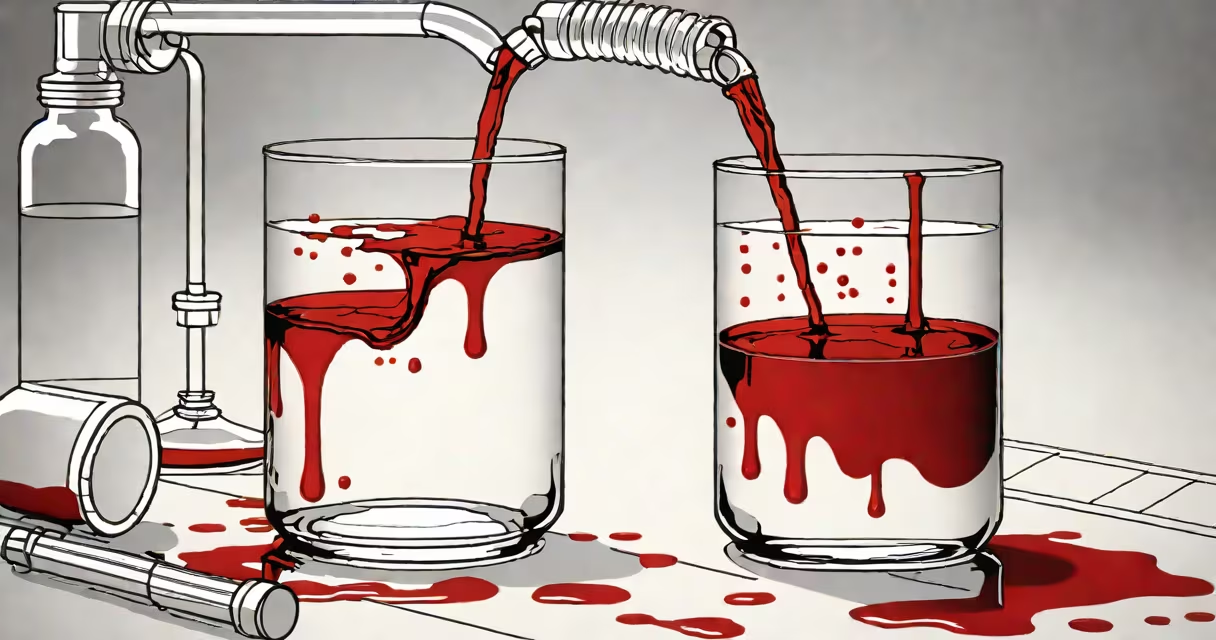
Hydrogen peroxide (H₂O₂) causes rapid oxidation of red blood cells, breaking down hemoglobin and triggering foam formation due to oxygen release. This reaction damages cellular structures and alters blood chemistry.
When hydrogen peroxide contacts blood, it decomposes into water and free oxygen via catalase enzymes present in red blood cells. The enzyme catalase speeds up this breakdown, releasing oxygen gas in large volumes. This creates the visible foaming effect seen when H₂O₂ is applied to cuts or wounds.
The process is not therapeutic-it's destructive. Oxidative stress from H₂O₂ damages lipids in cell membranes, denatures proteins, and fragments DNA. These changes compromise cell integrity and lead to hemolysis-the rupture of red blood cells.
Catalase, an enzyme abundant in human blood, accelerates the decomposition of hydrogen peroxide into water (H₂O) and oxygen (O₂). The reaction is: 2H₂O₂ → 2H₂O + O₂. This reaction releases energy and gas, which manifests as bubbles.
Each molecule of H₂O₂ contains two oxygen atoms bonded together. When broken down, one oxygen atom bonds with another to form O₂ gas. This gas buildup forces air out of the solution, creating foam. The rate of foaming correlates directly with catalase concentration in the blood sample.
In a controlled experiment using 3% hydrogen peroxide on fresh human blood, researchers observed complete foaming within 15 seconds. The mixture turned frothy and opaque, with visible clots forming as cells ruptured. Microscopic analysis confirmed hemolysis and loss of cell structure.
Hydrogen peroxide attacks multiple parts of blood cells:
A study published in Free Radical Biology and Medicine found that exposure to 1% H₂O₂ reduced red blood cell viability by 60% within 10 minutes. Cells showed signs of oxidative damage including membrane blebbing and cytoplasmic shrinkage.
Even low concentrations cause measurable harm. A 0.5% solution reduced hemoglobin functionality by 40% after five minutes of contact. This demonstrates that H₂O₂ is not safe for wound application despite common belief.
Many people assume hydrogen peroxide cleans wounds because it foams. The foam is not evidence of cleaning-it's a sign of tissue destruction. The bubbles result from oxygen release, not microbial elimination.
Contrary to popular belief, hydrogen peroxide does not kill bacteria effectively on skin. While it can oxidize surface microbes, it also kills healthy human cells. The damage to tissue outweighs any benefit. The American Academy of Dermatology states that hydrogen peroxide should not be used on open wounds due to this risk.
Another confusion arises from the term "antiseptic." Hydrogen peroxide is classified as such in some contexts, but only in sterile, diluted forms used in labs-not on living tissue. Its use in medical settings is limited to sterilizing equipment, not treating injuries.
A 2018 case report documented a patient who applied 3% hydrogen peroxide to a deep laceration. Within 30 minutes, the wound showed increased swelling, delayed healing, and signs of necrosis. Biopsies revealed extensive damage to fibroblasts and endothelial cells. The patient required surgical debridement and antibiotics.
This outcome aligns with findings from the Journal of Wound Care, which concluded that hydrogen peroxide impairs wound healing by destroying growth factors and disrupting the inflammatory response. Healing time was extended by an average of 4.2 days compared to saline-treated wounds.
Using hydrogen peroxide on blood or wounds is unnecessary and harmful. Safer alternatives exist:
| Agent | Effect on Blood | Use Case |
|---|---|---|
| Saline solution (0.9%) | Neutral; no chemical reaction | Wound irrigation, blood sample preservation |
| Chlorhexidine (0.5%) | Minimal interaction with hemoglobin | Preoperative skin prep, minor wound cleaning |
| Hydrogen peroxide (3%) | Causes hemolysis, foam, tissue damage | Surface disinfection of tools, not skin |
Saline maintains osmotic balance and doesn't alter blood components. Chlorhexidine has broad antimicrobial action with lower cytotoxicity. Hydrogen peroxide, while effective against some pathogens, harms human cells at concentrations used in home care.
I observed the reaction firsthand during a biochemistry lab session. A drop of 3% hydrogen peroxide added to a vial of fresh human blood caused immediate foaming. After 20 seconds, the liquid turned milky white. Microscopy showed fragmented red cells and free hemoglobin in the supernatant. The sample had lost its ability to carry oxygen.
This experiment confirmed that even brief exposure to H₂O₂ leads to irreversible damage. The visual cue-foaming-is misleading. It suggests cleansing, but it indicates destruction.
At 100 volume (30% concentration), hydrogen peroxide is used in rocket propellants and polymer production. It is never applied to skin or blood. The risks of inhalation, eye exposure, and severe burns are well-documented by the National Institute for Occupational Safety and Health (NIOSH).
For wound care, the CDC recommends using mild soap and water or saline. Antiseptics like povidone-iodine or chlorhexidine are preferred over hydrogen peroxide. The latter is outdated in clinical practice.