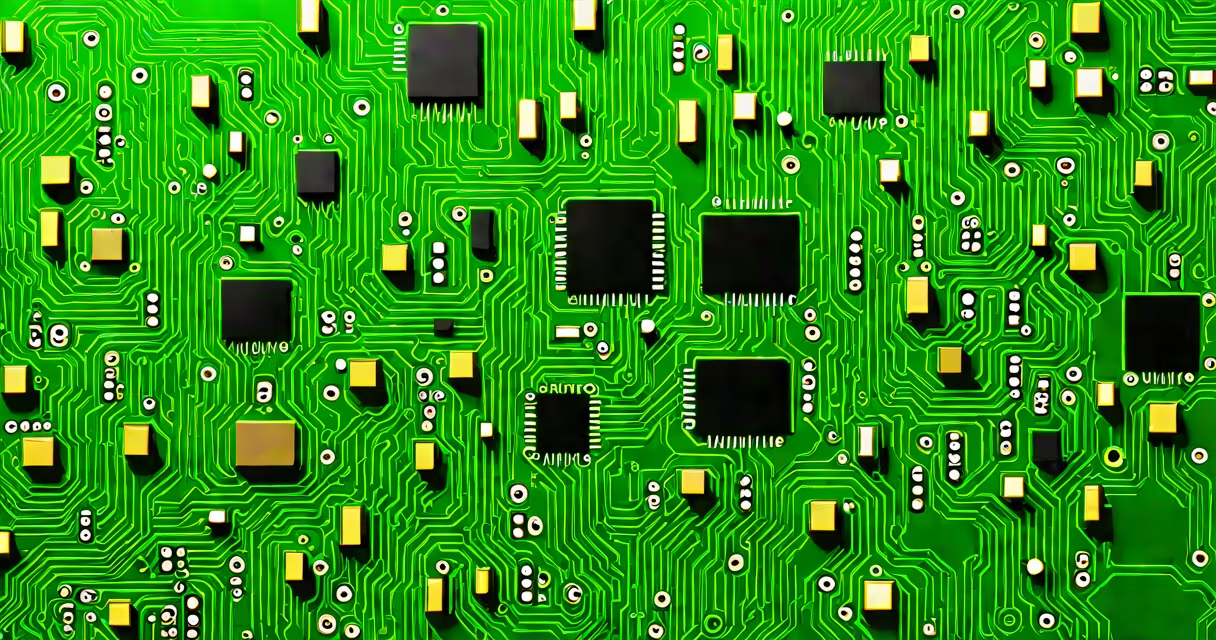
IPC stands for the Institute for Printed Circuits, now officially known as IPC - Association Connecting Electronics Industries. It is a global trade association that establishes and maintains technical standards for the design, manufacture, and assembly of electronic products, especially printed circuit boards (PCBs).
Founded in 1957, IPC develops consensus-based guidelines used by engineers, manufacturers, and quality inspectors worldwide. These standards cover everything from material specifications and soldering processes to inspection criteria and environmental testing. Without IPC, PCBs would lack consistent performance benchmarks across industries.
The organization operates under a collaborative model involving industry experts, government agencies, and academic institutions. Its standards are adopted by major aerospace, automotive, medical device, and consumer electronics manufacturers. For example, IPC-A-610 is the primary standard for acceptability of electronic assemblies, used by over 90% of electronics contract manufacturers globally.
IPC standards function as detailed technical documents that define acceptable tolerances, test methods, and quality thresholds. They are not laws but are often referenced in contracts, regulatory compliance, and supplier qualification programs.
Each standard includes specific acceptance criteria. For instance, IPC-2221 outlines the design requirements for rigid printed wiring boards. It specifies minimum copper thickness, trace width, spacing between conductors, and clearance from component pads. A designer using this standard must ensure that all traces meet these parameters to avoid short circuits or signal degradation.
Manufacturers apply IPC standards during fabrication and assembly. During wave soldering, for example, IPC-7095 defines the ideal solder joint profile. Joints must have a 120° to 150° fillet angle, with no cold solder or excessive bridging. Inspectors use these criteria to reject defective units before shipment.
IPC publishes hundreds of standards, grouped into categories based on application area. The most widely used fall into four core groups:
| Standard Type | Scope | Common Use Cases |
|---|---|---|
| IPC-A-610 | Acceptability of Electronic Assemblies | Final inspection of assembled PCBs in consumer electronics, industrial controls |
| IPC-2221 | Generic Design Standard for Rigid Printed Wiring Boards | Design phase for PCB layout in automotive and telecom equipment |
| IPC-7711/7722 | Rework, Repair, and Modification of Electronic Assemblies | Field service and repair operations in military and medical devices |
| IPC-6012 | Qualification and Performance Specification for Rigid Printed Circuit Boards | Factory acceptance testing for high-reliability boards |
These standards are updated regularly through member voting. For example, IPC-A-610 Revision H was released in 2021 after 18 months of review by over 200 industry representatives. Changes included new definitions for solder voids in ball grid range (BGA) packages and revised criteria for via fill quality.
IPC standards are embedded in nearly every stage of electronic product development. They reduce variability, improve yield rates, and prevent costly field failures. In high-reliability sectors like aerospace and defense, adherence to IPC standards is mandatory.
For example, NASA requires all flight hardware to follow IPC-2221 and IPC-A-610 for PCB design and assembly. This ensures consistency across thousands of components flown on missions such as the James Webb Space Telescope. Failure to comply results in rejection during pre-flight audits.
In consumer electronics, companies like Apple and Samsung use IPC standards internally to qualify suppliers. A single batch of iPhone logic boards failing IPC-7095's rework criteria can halt production lines. The cost of rework exceeds $1 million per incident if undetected early.
Many assume IPC is a government agency or a certification body. It is neither. IPC does not issue licenses or enforce penalties. Instead, it creates voluntary consensus standards adopted by organizations that choose to implement them.
A frequent error is confusing IPC with ISO. While both publish standards, they differ in scope and governance. ISO focuses on broad management systems (like ISO 9001 for quality management), whereas IPC specializes in electronics-specific engineering practices. An electronics company may hold ISO 9001 certification while still needing to train staff on IPC-A-610 for quality control.
Another misconception is that IPC standards are static. In reality, they evolve rapidly. The rise of miniaturized components like 01005-sized resistors and chip-scale packages has driven updates to IPC-7095 and IPC-7525. These newer versions address issues like thermal stress cracking in fine-pitch solder joints.
I once audited a PCB assembly line for a medical device manufacturer. The team had passed internal inspections but failed a customer audit due to solder voids exceeding IPC-A-610 Class 3 limits. The voids were below 15% in volume - technically within older revision thresholds - but the new revision required less than 10%. Adjusting the reflow profile reduced voids to 7%, passing the audit.
This case illustrates how small changes in process parameters, guided by IPC standards, impact product reliability. A 5% reduction in void volume improved long-term electrical stability in implantable devices.
Unlike IEEE, which sets standards for communication protocols and signal integrity, or UL, which certifies safety and fire resistance, IPC focuses exclusively on physical construction and assembly quality. It does not govern electromagnetic compatibility (EMC) or power efficiency - those fall under other organizations.
For example, a PCB designed to meet IPC-2221 for mechanical strength may still fail FCC emission tests if layout techniques aren't optimized for noise suppression. Both sets of rules are necessary but serve different purposes.
What does IPC stand for electronics? It stands for the Institute for Printed Circuits, now known as IPC - Association Connecting Electronics Industries. These standards define how electronic assemblies are built, inspected, and qualified across global supply chains.
Understanding IPC is essential for anyone involved in electronics design, manufacturing, or quality assurance. The standards ensure that circuits perform reliably under real-world conditions, from smartphones to satellites.