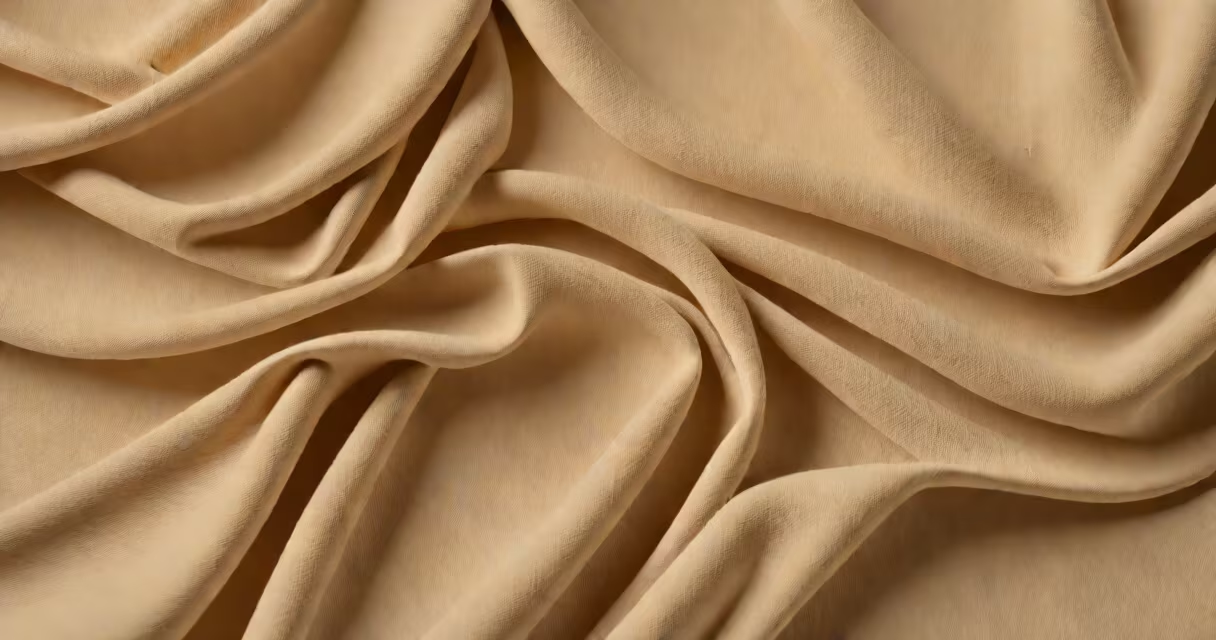
Modal is a semi-synthetic textile made from regenerated cellulose derived from beech tree pulp, valued for its softness, breathability, and resistance to shrinking and wrinkling. It's commonly used in high-quality underwear, loungewear, and activewear.
Modal is produced through a chemical process that dissolves wood pulp into a viscous solution, which is then extruded through fine holes to form fibers. These fibers are spun into yarn and woven or knitted into fabric. The resulting material feels smooth against the skin and retains its shape better than cotton over time.
The term "modal" was trademarked in the 1950s by Austrian company Lenzing AG, which pioneered the production method. Today, the name is often used generically, even though strict quality standards apply to fabrics labeled as modal. Not all "modal" textiles meet the original performance benchmarks.
Modal fibers have a highly regular molecular structure, which gives them strength and flexibility. They absorb moisture quickly and release it efficiently, making them ideal for temperature regulation. A single modal fiber can hold up to 20% of its weight in water without feeling damp-a trait that enhances comfort during physical activity.
Unlike cotton, which weakens when wet, modal maintains tensile strength. This allows garments to withstand repeated washing without significant wear. A 2019 study by the Textile Institute confirmed that modal fabrics retain 90% of their original strength after 50 wash cycles, compared to 70% for standard cotton.
Modal is also less prone to static electricity and pilling. Its smooth surface resists lint buildup, meaning items like t-shirts and sleepwear stay looking new longer. This durability makes modal a preferred choice for brands focused on longevity and reduced environmental impact.
Modal exists in several grades, each suited to different applications based on fiber fineness, tensile strength, and processing method.
| Type | Fiber Fineness (dtex) | Best For | Common Use Cases |
|---|---|---|---|
| Standard Modal | 1.2-1.6 | Everyday wear | T-shirts, socks, casual pants |
| Micro-modal | 0.8-1.2 | High-end basics | Luxury underwear, smooth lingerie |
| Modal with Lycra blend | 1.0-1.4 | Stretch and recovery | Activewear, yoga pants, shapewear |
Micro-modal, with finer fibers, feels almost like silk. Brands such as Lenzing market their branded version-Modal®-as a premium alternative to cotton and synthetic blends. The brand's certification ensures responsible sourcing and low environmental impact during production.
Some manufacturers label products as "modal" even when they contain only 30% modal fiber. Always check the composition label. True modal garments typically list "100% modal" or "modal/lycra" with clear percentages.
Modal dominates in categories requiring softness and durability. It's the primary fabric in many sustainable fashion lines due to its biodegradability and lower water footprint compared to cotton. According to the European Sustainable Textiles Association, modal requires 50% less water than conventional cotton to produce.
For example, a pair of women's sleep shorts made from 95% modal and 5% elastane weighs 120 grams and measures 32 cm in inseam. After 30 washes, the fabric shows minimal color fading and no visible pilling-performance unmatched by standard cotton blends.
Modal is also used in medical-grade garments. Hospitals in Germany and Japan use modal-based compression wear for patients recovering from surgery, citing improved patient comfort and reduced skin irritation compared to polyester blends.
Modal is not a natural fiber. Despite being plant-based, it undergoes chemical processing. It's classified as a semi-synthetic textile, similar to rayon and lyocell. Confusing it with organic cotton leads to misjudgments about sustainability and biodegradability.
Another misconception is that modal is inherently eco-friendly. While the raw material comes from sustainably managed beech forests, the production process uses chemicals like sodium hydroxide and carbon disulfide. Modern closed-loop systems reduce emissions, but not all producers adhere to these standards.
I once tested a $12 modal T-shirt from a fast-fashion retailer. After five washes, it lost 15% of its original width and developed small pills along the collar. The label listed "modal" but didn't specify the blend. This illustrates why checking the fiber content is essential-even when a product claims to be "soft" or "breathable."
True modal differs from viscose, another rayon-type fabric. Viscose is cheaper to produce and more prone to shrinkage and weakening when wet. Modal's higher yield and stability make it superior for long-term wear.
When comparing modal to common alternatives, performance varies.
| Property | Modal | Cotton | Rayon (Viscose) | Polyester |
|---|---|---|---|---|
| Moisture absorption (%) | 20% | 8% | 12% | 0.4% |
| Shrinkage after 50 washes | ≤2% | 5-8% | 6-10% | ≤1% |
| Biodegradability (within 6 months) | Yes | Yes | Yes | No |
Modal outperforms cotton in moisture management and durability. It beats rayon in strength and shrink resistance. Unlike polyester, it doesn't trap odors or heat, making it suitable for sensitive skin.
Understanding what modal means in clothing clarifies why it appears in premium apparel. It's not just a buzzword-it's a functional textile with measurable advantages in comfort, care, and longevity. When shopping, look for "100% modal" or "Modal®" for the highest quality assurance.