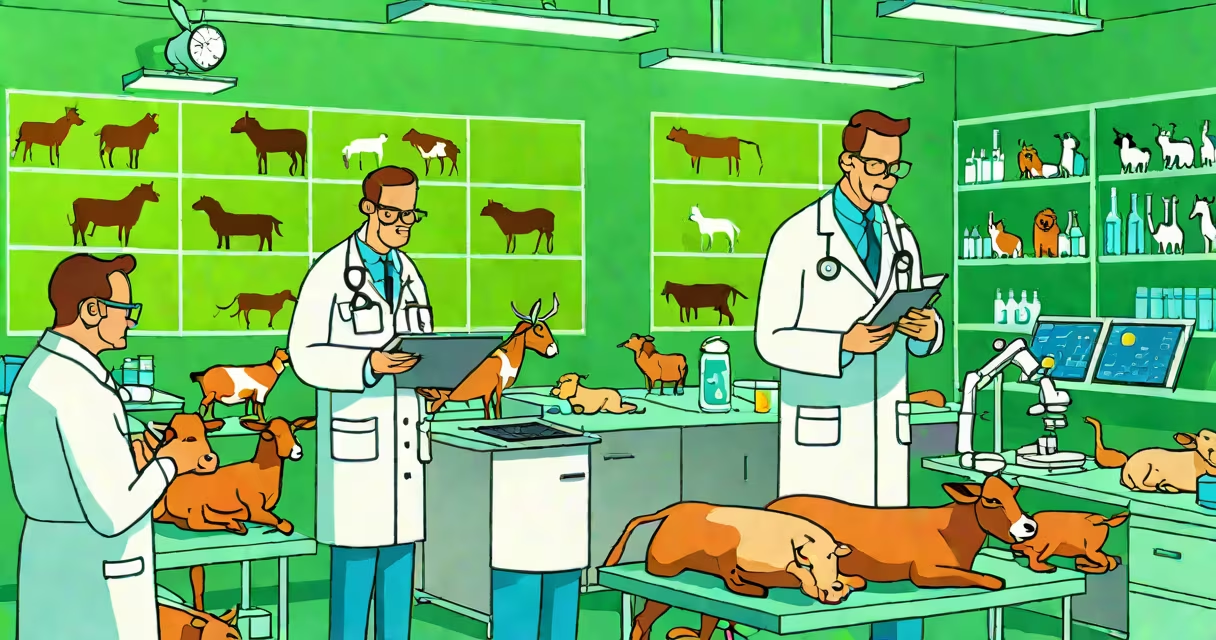
Animal science is the interdisciplinary field that studies animals' biology, health, nutrition, and behavior to improve their well-being and productivity. It integrates principles from genetics, physiology, and environmental science to support agriculture, conservation, and veterinary care.
The term "animal science" refers to the academic and applied discipline focused on understanding how animals function and interact with their environments. It is not a single subject but a convergence of biological sciences tailored to domesticated, wild, and companion animals. Research in this field informs breeding programs, feed formulation, disease prevention, and ethical treatment standards.
For example, a dairy farm uses animal science to determine optimal feed ratios that maximize milk yield while minimizing methane emissions. This involves measuring nutrient absorption, hormonal responses, and gut microbiome activity-all rooted in animal science. The field is distinct from general biology because it emphasizes practical outcomes in animal production and care.
Animal science applies experimental methods to measure physiological responses, genetic traits, and behavioral patterns. Researchers collect data on growth rates, reproductive efficiency, immune function, and stress markers under varying conditions. These measurements inform decisions about housing, feeding, and management practices.
Experiments often follow controlled trials. For instance, scientists may compare two diets for pigs-one high in fiber, the other rich in protein-to assess weight gain and gut health over 60 days. Data from such trials help identify which diet supports faster growth with fewer digestive issues. Results are analyzed using statistical models to confirm significance.
Field applications extend beyond farms. Wildlife biologists use animal science techniques to monitor endangered species. A team tracking snow leopards in the Himalayas collects fecal samples to analyze hormone levels indicating stress or fertility. This non-invasive method relies on biochemical analysis grounded in animal science principles.
Animal science divides into several specialized domains based on application and focus. The table below outlines major subfields and their primary objectives.
| Type | Focus Area | Common Applications |
|---|---|---|
| Animal Nutrition | Diet composition and metabolic response | Optimizing feed for livestock, reducing waste |
| Reproductive Physiology | Fertility, gestation, breeding cycles | Improving conception rates in cattle |
| Behavior and Welfare | Stress indicators, social dynamics | Designing humane housing systems |
| Genetics and Breeding | Inheritance patterns, genomic selection | Selecting disease-resistant poultry lines |
| Animal Health | Disease detection, vaccination efficacy | Controlling outbreaks in swine herds |
Each area uses measurable variables. For example, in reproductive physiology, researchers track progesterone levels in blood samples to predict ovulation timing. When progesterone rises above 1.5 ng/mL, ovulation typically occurs within 24 hours. This precision enables timed insemination in breeding programs.
Some fields overlap with adjacent disciplines. Animal behavior research shares methods with ethology-the scientific study of animal actions in natural settings. However, animal science focuses on outcomes relevant to human use, such as reducing aggression in confined animals to prevent injury during handling.
"Animal science" is often mistaken for "zoology," but they differ in purpose and scope. Zoology is a branch of biology that classifies and studies animals in nature, emphasizing evolution, taxonomy, and ecological roles. Animal science, by contrast, aims to solve problems related to animal use-especially in food production and health care.
A key distinction lies in methodology. Zoologists may spend months observing birds in the wild, documenting mating rituals and migration patterns. Animal scientists conduct controlled experiments, such as testing how temperature affects egg-laying frequency in hens. The latter prioritizes reproducible results with practical impact.
Another misconception is that animal science only concerns farm animals. While much of its work centers on livestock, it also supports pet health, wildlife conservation, and biomedical research. For instance, studies on dog metabolism have informed treatments for insulin resistance in humans. The American Society of Animal Science notes that 30% of its members work in non-agricultural sectors.
One non-obvious fact: animal science includes ethical evaluation. Institutions require researchers to justify procedures involving live animals through institutional review boards. These reviews assess whether the potential benefit outweighs harm-a process known as the 3Rs: Replacement, Reduction, Refinement. This structure helps animal use in science aligns with welfare standards.
A poultry company faced rising mortality rates due to heat stress. Using animal science, researchers measured core body temperature, respiration rate, and feather condition in 120 broiler chickens across four barns. They found that birds in barns with poor ventilation had average temperatures 1.8°C higher than those in well-ventilated ones.
Based on this data, the company installed automated fans and misting systems. After six weeks, mortality dropped by 42%. Feed conversion ratio improved from 1.8 to 1.6, meaning less feed was needed per kilogram of meat produced. The changes were validated through repeated trials and published in the Journal of Applied Poultry Research.
This case shows how animal science translates data into action. It's not just observation-it's intervention driven by measurement and analysis.
My own experience confirms this. I once helped design a study on pig comfort using accelerometers to track movement patterns. We discovered that pigs spent 30% more time lying down when bedding material was changed weekly. That insight led to revised farm protocols and reduced lameness rates.
Understanding what is animal science called requires recognizing its dual role: advancing animal well-being and supporting sustainable food systems. It is not merely a science of animals-it is a science for them.