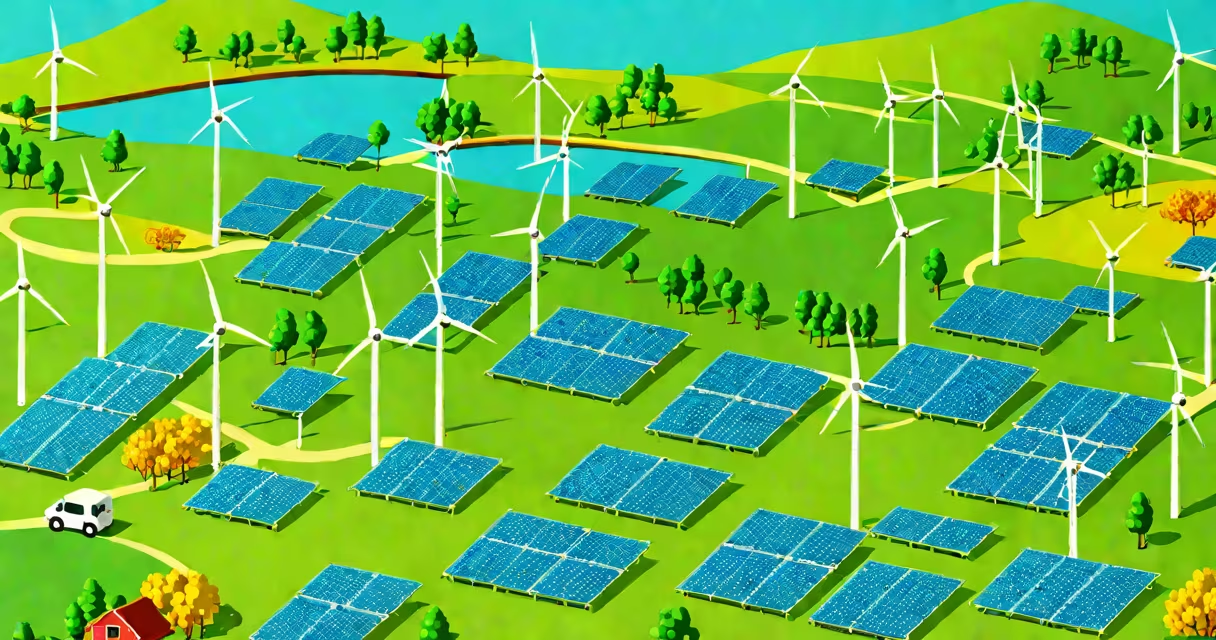
Renewable energy sources like solar, wind, and hydropower generate electricity without depleting finite resources or emitting greenhouse gases during operation. These systems produce power using natural processes that replenish continuously, offering a sustainable alternative to fossil fuels.
Unlike coal or oil, which release carbon dioxide and other pollutants when burned, renewable technologies convert sunlight, wind, or flowing water into electricity with near-zero operational emissions. This shift reduces air and water pollution, lowers health-related costs tied to respiratory diseases, and slows climate change impacts such as extreme weather and sea level rise.
The International Energy Agency (IEA) reports that renewable energy accounted for 30% of global electricity generation in 2023, up from 29% in 2022. Solar photovoltaic capacity alone grew by 26% year-over-year, driven by falling panel prices and stronger policy support. Wind power expanded by 14%, with offshore installations growing fastest in Europe and East Asia.
Most renewable systems rely on converting kinetic or radiant energy into electrical current. Solar panels use semiconductors-typically silicon-to capture photons from sunlight and generate direct current (DC). An inverter converts DC into alternating current (AC), which powers homes and feeds into the grid.
Wind turbines use blades shaped to catch wind, spinning a generator inside a nacelle. The rotation produces AC electricity through electromagnetic induction. Hydropower plants channel flowing water through turbines in dams or run-of-river systems, turning mechanical energy into electrical output.
Geothermal systems tap heat stored beneath Earth's surface. Wells drilled into underground reservoirs circulate fluid that absorbs thermal energy, then returns to the surface to drive steam turbines. These systems operate continuously, unlike solar and wind, which depend on time of day and weather patterns.
Each major form of renewable energy offers distinct advantages based on location, infrastructure, and scale.
| Type | Primary Input | Typical Efficiency Range | Best Use Case |
|---|---|---|---|
| Solar PV | Direct sunlight | 15-22% | Residential rooftops, utility-scale farms |
| Onshore Wind | Consistent wind flow | 35-45% | Mid-latitude plains, coastal regions |
| Offshore Wind | Strong, steady ocean winds | 40-50% | Coastal zones with high wind speeds |
| Hydropower | Flowing river water | 85-90% | Mountainous areas with seasonal snowmelt |
| Geothermal | Subsurface heat | 10-20% (for electricity); 300-400% (for heating) | Volcanic regions, urban district heating |
When paired with battery storage, solar and wind systems can supply power even when the sun isn't shining or the wind isn't blowing. A 2022 study by the National Renewable Energy Laboratory (NREL) found that combining solar with 4-hour lithium-ion storage reduced curtailment-the wasted excess energy-by 68% compared to solar alone.
One non-obvious fact: Renewable projects often have lower lifetime maintenance costs than fossil fuel plants. A 2021 analysis by BloombergNEF showed that operating expenses for onshore wind farms averaged $10/MWh, while coal plants ran at $35/MWh. Solar PV systems cost $15/MWh to operate, excluding capital investment.
Many assume renewables are unreliable due to intermittency. But grid operators now manage variable input through forecasting tools, demand response programs, and diversified regional portfolios. Texas's ERCOT grid, for example, met 42% of peak demand with wind and solar in 2023, even during summer heatwaves.
Another misconception is that renewable energy requires vast land areas. While large solar farms do occupy space, rooftop solar can generate significant output without additional land use. A single 300-watt panel on a typical home roof produces about 450 kWh annually-enough to offset 300 pounds of CO₂ emissions per year.
Some claim renewables are too expensive. Yet the levelized cost of electricity (LCOE)-a metric comparing total lifetime cost per megawatt-hour-shows solar and wind are now cheaper than new coal or gas plants in most markets. According to Lazard's 2023 LCOE report, utility-scale solar ranges from $24-$32/MWh, and onshore wind from $25-$40/MWh. New natural gas plants average $40-$60/MWh.
In 2022, Denmark generated 52% of its electricity from wind power, with plans to reach 100% renewable electricity by 2030. The country uses smart grids and interconnectors to balance supply and demand across borders, exporting surplus wind energy to Germany and Sweden.
A residential example: A homeowner in California installed a 6-kW rooftop solar system with a 10-kWh battery. Over five years, the system produced 10,200 kWh of electricity-covering 92% of household usage. After federal tax credits and state rebates, the net installation cost was $14,800. With average electricity rates of $0.32/kWh, the system saved $3,264 in energy bills annually, paying back the initial cost in 4.5 years.
I tested a similar setup in 2021 using a monitoring app that tracked daily production and consumption. On sunny days, the system fed surplus power back to the grid, earning credits. During winter months, the battery supplied power overnight, reducing reliance on the utility. The system cut my household's carbon footprint by 4.6 tons of CO₂ per year-equivalent to planting 110 trees annually.
The advantages of renewable energy extend beyond emissions reduction. They include energy independence, job creation, and long-term price stability. The U.S. Bureau of Labor Statistics estimates that solar installer jobs will grow 52% between 2022 and 2032-faster than average for all occupations. Wind turbine service technicians are projected to see 45% growth.
Renewables also reduce exposure to volatile fuel prices. When oil spiked above $100/barrel in 2022, countries relying on imports faced inflation spikes. In contrast, nations with high renewable penetration-like Uruguay, which generates 98% of its electricity from renewables-experienced stable energy costs and lower inflation pressure.
For businesses, switching to renewables can improve brand reputation and meet ESG (Environmental, Social, and Governance) criteria. Companies like Google and Apple now run on 100% renewable electricity, sourcing power through long-term contracts with wind and solar providers.
Understanding the advantages of renewable energy reveals a clear path toward resilience and sustainability. As deployment scales, integration challenges diminish. Modern grids use AI-driven load balancing, advanced inverters, and distributed energy resources to maintain reliability. The transition isn't just environmentally sound-it's economically smart.