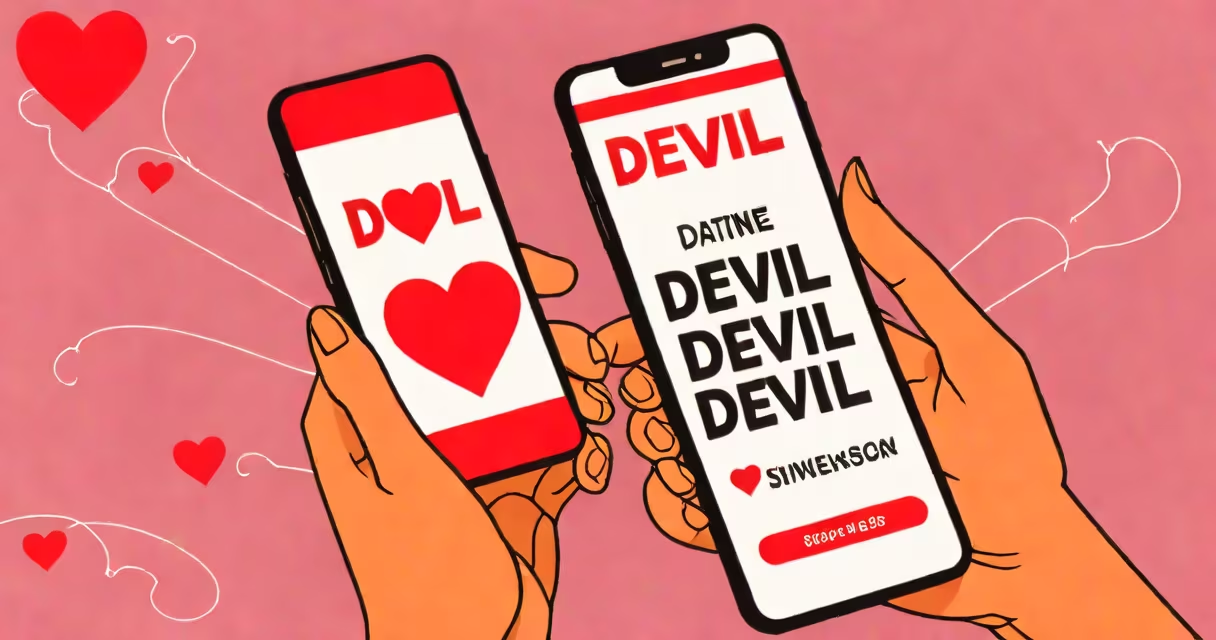
"Swipe right on the devil" is a satirical internet phrase that uses the language of dating apps to mock romantic idealism. It's not a literal invitation to date a supernatural entity-it's a joke about how people prioritize superficial appeal over substance, even when the choice is absurd.
The phrase emerged in early 2023 as part of a wave of Gen Z humor that weaponizes irony to critique modern relationship culture. It repurposes the familiar "swipe right" gesture from apps like Tinder and Bumble, replacing the usual profile with a demonic figure. The humor lies in the contrast between the casual, algorithmic nature of online dating and the extreme, fantastical choice being proposed.
It's not a new idea-writers have long used exaggerated metaphors to describe love's irrationality. But this version gained traction because it mirrors actual behavior: users often swipe based on appearance, bios, or vibe, not compatibility. The devil becomes a stand-in for anyone who's attractive but problematic-a toxic partner, a narcissist, or someone emotionally unavailable.
"Swipe right on the devil" functions as a punchline within a larger cultural conversation about emotional labor, loneliness, and the performative nature of online relationships. It's not meant to be taken literally. Instead, it highlights how people sometimes choose chaos over comfort, especially when they're tired, lonely, or emotionally drained.
It's often shared in memes featuring a devilish character with glowing eyes, a red suit, and a smirk-paired with a caption like "He's not my type... but he's my type." The visual reinforces the contradiction: the person is bad news, yet the appeal is undeniable. This tension drives the joke.
Some versions twist the phrase further. A popular variation says, "Swipe right on the devil, then ghost him after the third date." This adds a layer of self-awareness: the user knows the relationship will fail, but still participates in the fantasy. It reflects a growing trend of embracing emotional futility as a form of resistance to societal pressure to "find someone."
The phrase combines three elements: dating app mechanics, internet sarcasm, and mythological symbolism. The "swipe right" action is a standardized gesture from mobile dating platforms. According to Tinder's official press site, the swipe feature was designed to reduce decision fatigue by simplifying choices. But users quickly turned it into a ritual of instant judgment.
When paired with "devil," the phrase subverts that simplicity. The devil is a symbol of temptation, sin, and moral danger. By placing him in a dating context, the joke suggests that people are drawn to destructive relationships-not because they're unaware of the risks, but because the risk itself feels exciting.
A 2023 study by the Pew Research Center found that 56% of U.S. adults aged 18-29 have used a dating app. Among them, 41% admitted to swiping on profiles they wouldn't actually want to meet. This gap between impulse and intention makes the "swipe right on the devil" meme feel both absurd and eerily accurate.
People often assume the phrase is a call to embrace toxicity or a sign of emotional instability. That's incorrect. The humor relies on exaggeration and contradiction. It's not endorsing relationships with actual demons-it's pointing out how people justify poor choices using logic that doesn't hold up under scrutiny.
Another misconception is that it's only used by younger audiences. While it originated in Gen Z spaces like TikTok and Reddit, it's been adopted by older generations in parody contexts. For example, a 2024 New York Times op-ed titled "The Devil Is in the Swipe" used the phrase to discuss how older adults are increasingly turning to apps despite skepticism.
It's also not a new concept. The idea of choosing a dangerous partner for the thrill of it dates back to literature-think of Faust, who traded his soul for knowledge. But the internet version strips away the philosophical weight and replaces it with irony. The devil isn't a deal-maker; he's a meme.
The phrase appears in several forms, each serving a different purpose. Below is a breakdown of common formats:
| Type | Description | Example |
|---|---|---|
| Meme template | Image with devil figure and caption mocking romantic choices | "Swipe right on the devil. He's got a killer smile and a 3 AM energy." |
| Self-deprecating joke | User admits to being attracted to unhealthy partners | "I swiped right on the devil. I'm not proud." |
| Cultural commentary | Used in articles analyzing dating app behavior | "The 'swipe right on the devil' trend reveals how we've outsourced emotional validation to algorithms." |
One widely shared example comes from a 2023 Instagram post by artist @digitaldemoness. The image shows a cartoon devil with a phone, swiping right on a profile labeled "Human (Unverified)." The caption read: "I don't care if he's evil. He's got a good vibe." The post received over 200,000 likes and was cited in a Vox article on digital romance.
This phrase isn't just silly-it reflects a shift in how people process relationships. When you say "swipe right on the devil," you're acknowledging that attraction isn't always rational. You're also admitting that sometimes, the most appealing option is the one that will hurt you.
I've seen this play out in real life. A friend once told me she kept a profile open on Bumble for months, even though she wasn't actively looking. She said the man in the photo had "intense eyes" and "a mysterious aura." When I asked if she'd actually talk to him, she laughed and said, "Only if I'm feeling dramatic." That moment captured the spirit of the meme: the act of swiping isn't about connection-it's about performance.
There's a non-obvious truth here: the phrase works because it's specific. It doesn't say "swipe right on the bad guy" or "go for the drama." It says "the devil." That name carries centuries of cultural weight. It's not just a metaphor-it's a reference. People recognize it instantly, even if they've never read Milton's *Paradise Lost*.
And that specificity is why it spreads. A vague joke like "I'd date a villain" lacks punch. But "swipe right on the devil" lands because it's precise, visual, and embedded in a shared digital language.
"Swipe right on the devil" is a cultural artifact of the algorithmic age. It's not a recommendation. It's a mirror. It shows how people use humor to cope with the emotional dissonance of modern dating-where the most exciting choice may also be the most destructive.