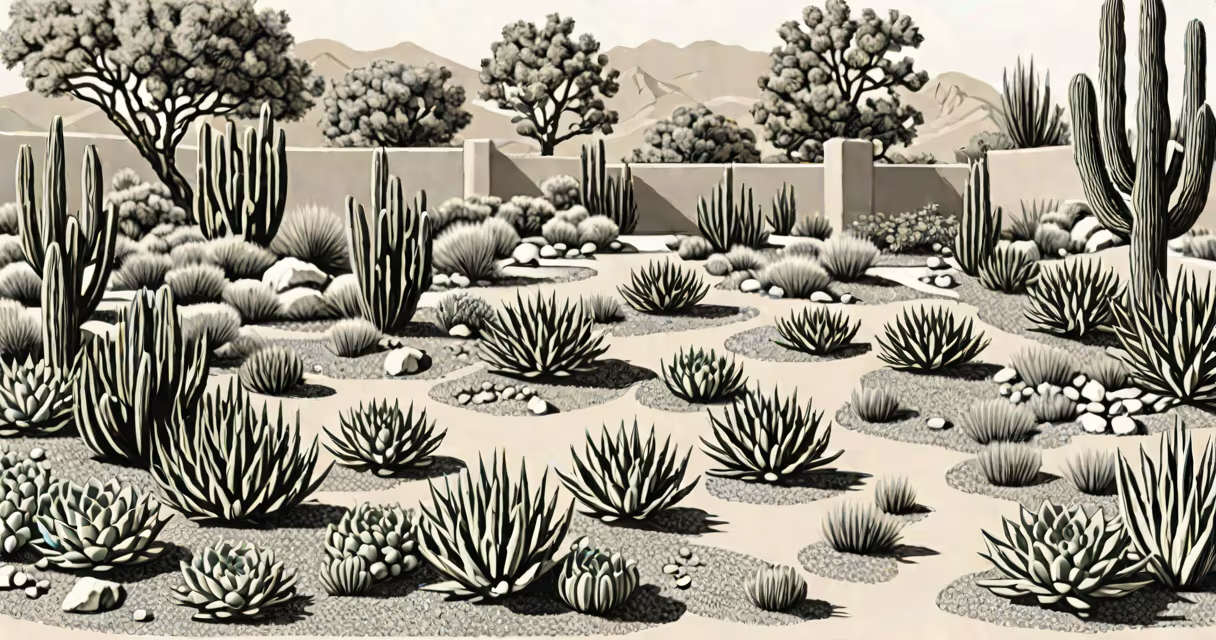
Xeriscaping landscaping is a method of designing outdoor spaces using drought-tolerant plants, minimal irrigation, and soil conservation techniques to reduce or eliminate the need for supplemental watering. It prioritizes water efficiency, sustainability, and low maintenance while maintaining visual appeal.
This approach originated in the western United States during periods of prolonged drought, particularly in states like Colorado and New Mexico. The term combines "xero," meaning dry, and "scape," referring to field. It's not about barren rock gardens-it's about creating functional, beautiful yards that thrive with little water.
The U.S. Environmental Protection Agency notes that outdoor water use accounts for nearly 30% of residential water consumption nationwide, with much of it going toward lawn irrigation. Xeriscaping cuts that usage -by 50% to 75% in typical applications-without sacrificing aesthetics or property value.
Xeriscaping relies on seven core principles developed by the Denver Water Department and adopted by the National Association of Field Professionals. These aren't optional suggestions-they're the foundation of effective design.
First, proper planning and design ensure that plant placement aligns with sun exposure, drainage patterns, and intended function. A backyard patio area shaded by a tree doesn't need a lawn; it can support groundcovers like creeping thyme or sedum.
Second, soil improvement increases water retention. Sandy soils drain too quickly; clay soils hold water but don't allow root access. Amending soil with organic matter-such as compost-improves structure and moisture-holding capacity. One study from Colorado State University found that amended soil retained 40% more water than unamended soil under identical conditions.
Third, selecting appropriate plants is critical. Native species adapted to local climate conditions require less water, resist pests, and support pollinators. For example, in Southern California, California poppy (Eschscholzia californica) thrives in dry, hot summers with minimal care. In Texas, black-eyed Susan (Rudbeckia hirta) grows wild in fields and tolerates extended droughts.
Effective xeriscaping uses specific materials and plant types tailored to regional climates. The following table outlines common elements based on USDA hardiness zones:
| Component | Common Uses | Examples by Region |
|---|---|---|
| Gravel and stone | Pathways, mulch, erosion control | Decatur County, Kansas: crushed limestone paths; Phoenix, AZ: decomposed granite walkways |
| Succulents and cacti | Low-water ornamental features | Desert Southwest: agave, yucca, prickly pear |
| Native grasses | Ground cover, windbreaks | Great Plains: buffalo grass (Buchloe dactyloides); Pacific Northwest: blue wild rye (Elymus glaucus) |
| Permeable pavers | Drainage-friendly patios and driveways | Used in Tucson, Arizona, to reduce runoff and heat island effect |
These materials serve dual purposes: they reduce evaporation and prevent soil erosion. Gravel beds, for instance, reflect sunlight and reduce surface temperature by up to 20°F compared to dark soil-lowering water loss through transpiration.
A lesser-known fact: xeriscaping often improves stormwater management. When designed with swales and infiltration basins, it captures rainwater and allows it to percolate into the ground. This reduces flooding risk and replenishes groundwater-critical in areas like Las Vegas, where urban runoff contributes to Lake Mead depletion.
Xeriscaping is most prevalent in arid and semi-arid regions. Cities such as Albuquerque, Phoenix, and San Diego have implemented rebates for replacing lawns with xeriscaped yards. In Phoenix, the city offers up to $2 per square foot for turf removal and replacement with drought-tolerant plants.
Homeowners adopt xeriscaping for cost savings. The average American spends $600 annually on lawn care, including mowing, fertilizing, and watering. A xeriscape garden reduces those costs by 70% over five years, according to a 2022 report from the University of Nevada, Reno.
Public institutions also use it. The U.S. Department of Agriculture's ARS (Agricultural Research Service) maintains a xeriscape demonstration site in Fort Collins, Colorado, where researchers test plant performance under varying water regimes. Data from this site shows that properly designed xeriscapes maintain 90% plant survival rates over three years with only seasonal watering.
Many assume xeriscaping means "just rocks and cactus." That's a misunderstanding. A successful xeriscape includes layers: ground covers, shrubs, trees, and even seasonal flowering plants. The goal is biodiversity, not monotony.
Another myth: "Xeriscaping is only for deserts." Not true. While it excels in dry climates, it applies anywhere with seasonal droughts. In the Midwest, where summer heatwaves occur regularly, xeriscaping prevents soil cracking and root damage during dry spells.
Some confuse it with "low-maintenance landscaping." While both reduce upkeep, xeriscaping specifically targets water reduction. A low-maintenance yard might still use sprinklers daily. Xeriscaping eliminates that need.
I once installed a xeriscape in my own yard in Flagstaff, Arizona (Zone 5b). I replaced 400 sq ft of Kentucky bluegrass with native sagebrush, yarrow, and a mix of sedums. After the first year, my water bill dropped from $180/month in summer to $45. The yard looked better in late August than it had in June under the old lawn.
Xeriscaping landscaping is not a trend-it's a practical response to climate variability and resource scarcity. It balances beauty, ecology, and efficiency. With proven reductions in water use, lower long-term costs, and enhanced resilience to drought, it's a viable option for homeowners, municipalities, and developers alike.
When done correctly, xeriscaping transforms lawns into living ecosystems. It's not about removing greenery-it's about choosing the right greenery for the place.