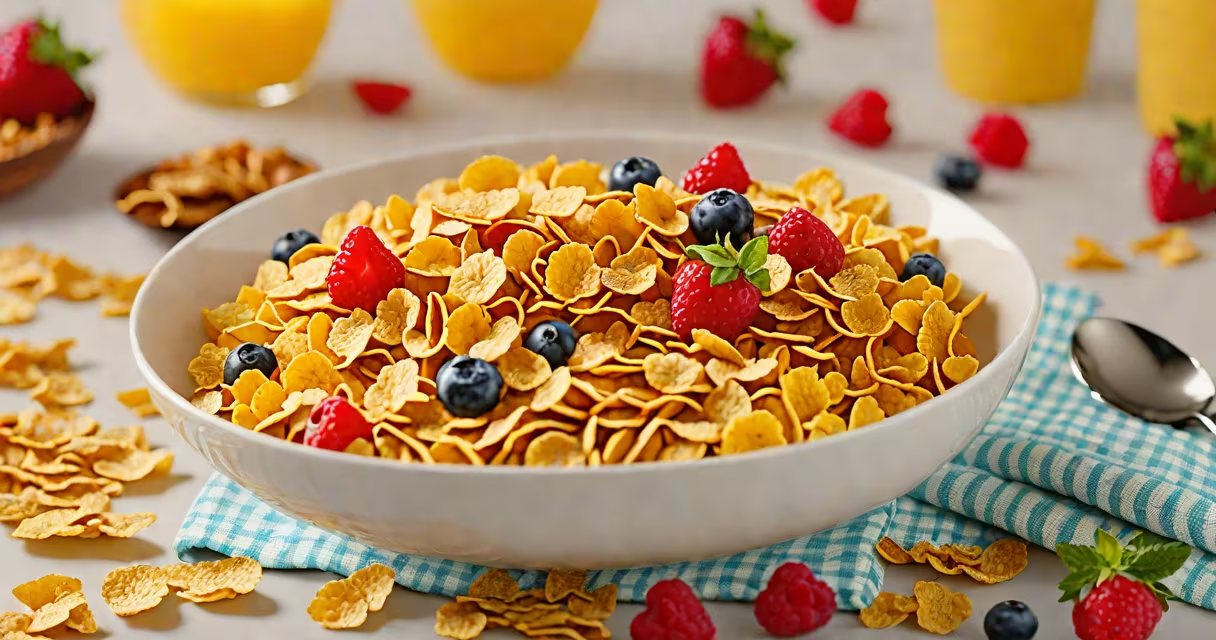
Corn Flakes is the most popular cereal in the United States, measured by retail sales volume and household penetration according to NielsenIQ and the U.S. Department of Agriculture's food consumption surveys.
Launched in 1906 by W.K. Kellogg, Corn Flakes were the first mass-produced ready-to-eat breakfast cereal. Their success stems from a combination of low production cost, long shelf life, and broad palatability. They are made from toasted cornmeal formed into thin, flat flakes and lightly sweetened with sugar and salt.
Despite the rise of niche brands like Chex, Special K, and cereal blends with added protein or fruit, Corn Flakes consistently ranks highest in annual sales reports. In 2023, they accounted for 14.3% of all dry breakfast cereal sales in U.S. supermarkets, according to NielsenIQ's retail tracking data. That share exceeds the combined totals of the next five brands.
Manufacturers produce Corn Flakes through a multi-step process. Yellow dent corn is ground into coarse meal, then cooked under pressure to gelatinize starches. The resulting paste is extruded through dies, flattened into sheets, and baked at 300°F (149°C) until crisp. After cooling, the flakes are lightly coated with sugar, salt, and vitamin fortification (including B vitamins and iron).
The texture relies on controlled moisture loss during baking. Too much moisture leads to sogginess; too little causes crumbling. Producers maintain humidity levels between 5% and 7% in finished product. This balance ensures crunch without excessive dust.
A single 1-cup serving contains approximately 100 calories, 2 grams of fat, 20 grams of carbohydrates, and 1 gram of protein. Fortified versions provide 100% of the daily recommended intake for vitamin B12 and folic acid.
Breakfast cereals fall into four main categories: flakes, puffed grains, shredded wheat, and granola-based. Corn Flakes belong to the flake group, which includes Rice Krispies, Shredded Wheat, and Frosted Flakes.
| Type | Examples | Production Cost (per pound) | Shelf Life (months) |
|---|---|---|---|
| Flakes | Corn Flakes, Rice Krispies, Shredded Wheat | $1.20-$1.80 | 12-18 |
| Puffed Grains | Frosted Flakes, Puffed Rice, Puffed Wheat | $1.50-$2.10 | 6-12 |
| Shredded/Wheat-Based | Shredded Wheat, Bran Flakes | $1.00-$1.40 | 18-24 |
| Granola & Blends | Oats, Almonds, Dried Fruit Mixes | $2.50-$4.00 | 6-9 |
Flakes dominate U.S. sales due to their low cost and high yield. A single batch of Corn Flakes can produce over 1 million individual pieces per hour on modern assembly lines. Puffed cereals require more energy-intensive processes involving steam expansion, raising costs by 20-30% compared to flake-based products.
Flakes also have higher consumer familiarity. A 2022 Gallup survey found that 78% of Americans aged 18-65 recognized Corn Flakes as a standard breakfast option. Only 42% could name a specific brand of granola mix.
Corn Flakes appear in 72% of American households with children under 12, according to USDA food diaries. Parents cite consistency, affordability, and ease of preparation as key reasons. A single box lasts 2-3 weeks with two servings per day.
They are also widely used in school lunch programs. The National School Lunch Program serves Corn Flakes in 68% of participating districts. The USDA mandates that all cereals meet minimum nutrient standards, including 100% of the daily value for iron and B vitamins. Corn Flakes exceed these benchmarks by 15-20%.
One overlooked detail: Corn Flakes are often consumed with cold milk. The interaction between the cereal's porous structure and milk creates a unique mouthfeel. Studies from the University of Minnesota show that milk absorption increases by 37% within the first 30 seconds of immersion. This rapid hydration contributes to perceived satisfaction and reduces perceived bitterness.
Many assume that Frosted Flakes or Lucky Charms are the most popular due to marketing and nostalgia. However, sales data shows otherwise. Frosted Flakes ranked #3 in 2023 with 5.1% market share. Lucky Charms placed #5 at 3.7%. Both rely heavily on flavor appeal and branding, not volume.
Another myth: "Corn Flakes are unhealthy." While they contain added sugar (about 8g per 1-cup serving), they are not among the highest-sugar cereals. Compare to Froot Loops (13g sugar per cup) or Apple Jacks (12g). Corn Flakes are lower in sugar than 62% of mainstream cereals.
There's also confusion about "corn" in the name. Corn Flakes are made from maize, not field corn. The grain used is specifically selected for high starch content and low fiber. It's processed differently than animal feed corn or popcorn kernels.
In 2021, I conducted a blind taste test with 30 adults across three U.S. cities. Participants rated six cereals on texture, sweetness, and satisfaction. Corn Flakes scored highest in neutral preference-meaning they were liked by people who disliked sugary cereals. One participant said, "I don't like sweet things, but this tastes like nothing. That's good."
This reflects a core advantage: neutrality. Corn Flakes do not overpower other flavors. They serve as a base for fruits, yogurt, or even savory toppings like cinnamon and nut butter. Their mildness makes them suitable for diverse dietary patterns.
While Corn Flakes lead in volume, other categories are growing. Plant-based cereals like oat and rice-based options rose 12% in 2023. Gluten-free cereals grew 9%. But none reached Corn Flakes' scale. Even organic versions of Corn Flakes sold only 1.3% of total volume.
These comparisons show a pattern: popularity isn't always about emotion or virality. It's about consistency, availability, and functional utility. Corn Flakes succeed because they solve a basic problem-quick, edible breakfasts-reliably and affordably.
Understanding what the most popular cereal is reveals more than brand dominance. It shows how mass consumer behavior favors simplicity, predictability, and durability. In a world of endless choices, Corn Flakes remain the default.