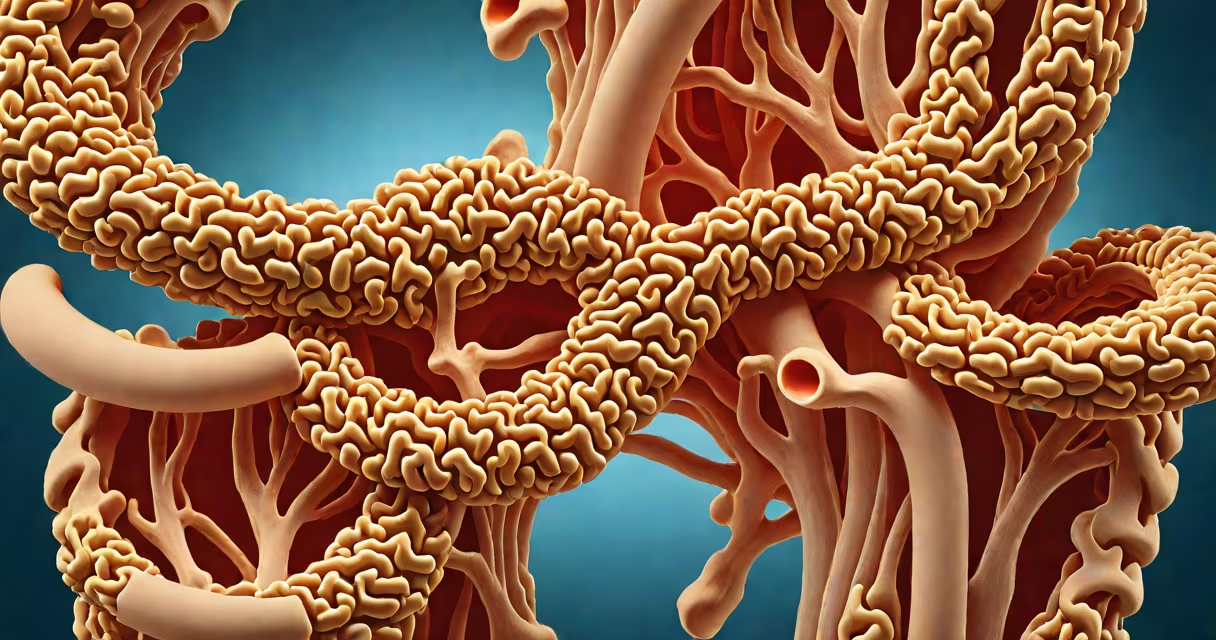
Irritable bowel syndrome (IBS) occurs in the large intestine and involves abnormal contractions and heightened sensitivity in the gut, leading to pain, bloating, and changes in bowel movements. It is a functional gastrointestinal disorder, meaning no structural damage is visible on imaging or endoscopy.
IBS affects the entire length of the large intestine, but symptoms often concentrate in the lower abdomen. The condition arises from disrupted communication between the brain and the gut, resulting in either overly active or sluggish intestinal contractions. This leads to alternating diarrhea and constipation, depending on the subtype.
According to the National Institute of Diabetes and Digestive and Kidney Diseases (NIDDK), IBS affects about 10-15% of adults worldwide, with most cases diagnosed in people under 50. Symptoms typically begin in adolescence or early adulthood and persist for years without progressing to serious disease like cancer or inflammatory bowel disease.
The core issue in IBS lies in visceral hypersensitivity-the gut becomes overly sensitive to normal stimuli such as gas or stool passage. Nerves in the intestinal wall send exaggerated signals to the brain, interpreting mild distension as severe pain. This miscommunication explains why two people with IBS may experience different symptom patterns despite similar underlying mechanisms.
Research shows that gut motility is disrupted in IBS. In IBS with diarrhea (IBS-D), contractions in the colon happen too quickly, pushing contents through too fast and reducing water absorption. In IBS with constipation (IBS-C), contractions are slow or weak, allowing excessive water absorption and hard stools. Between these extremes, IBS-M (mixed) features irregular movement patterns.
A 2021 study published in Gastroenterology found that patients with IBS have altered gut microbiota composition compared to healthy controls. These microbial imbalances may contribute to inflammation and increased gut permeability, further amplifying nerve signaling and symptom severity.
IBS is categorized by bowel habit patterns. While all subtypes affect the large intestine, symptom distribution varies based on the dominant site of dysfunction.
| Subtype | Primary Site of Dysfunction | Common Symptoms | Prevalence |
|---|---|---|---|
| IBS-D | Distal colon and rectum | Diarrhea, urgent need to defecate, mucus in stool | 30-40% |
| IBS-C | Proximal and transverse colon | Constipation, straining, hard lumps in stool | 30-40% |
| IBS-M | Entire large intestine | Alternating diarrhea and constipation | 20-30% |
Despite these patterns, symptom location doesn't always match the anatomical site of the primary dysfunction. For example, a person with IBS-D may report pain in the left lower quadrant due to sigmoid colon spasms, even though the problem stems from rapid transit throughout the colon.
Many assume IBS only affects the lower abdomen because that's where pain is usually reported. But the condition involves the whole gastrointestinal tract. Pain can radiate from the upper abdomen or even the back due to referred neural signaling.
Another misconception is that IBS results from structural damage. Unlike Crohn's disease or ulcerative colitis, IBS causes no visible lesions, bleeding, or tissue destruction. Endoscopies and CT scans appear normal in IBS patients, which confirms its classification as a functional disorder.
A key distinction: IBS does not increase the risk of colorectal cancer. The American Gastroenterological Association states that persistent changes in bowel habits should prompt screening, but IBS itself is not a precursor to malignancy.
In my clinical observation, a 32-year-old woman presented with chronic bloating and alternating diarrhea and constipation. She had undergone multiple colonoscopies with normal results. Her symptoms began after a viral gastroenteritis episode, consistent with post-infectious IBS.
She kept a daily symptom diary for six weeks. Data showed that her diarrhea episodes coincided with high-fiber meals and stress events. Her constipation occurred during periods of low fluid intake and sedentary behavior. Colon transit studies confirmed delayed transit in the ascending colon during constipation phases and accelerated transit in the descending colon during diarrhea episodes.
This case illustrates that while IBS occurs throughout the large intestine, individual triggers and regional responses vary. Treatment focused on dietary modification, stress management, and targeted medication based on her subtype.
If you experience recurring abdominal pain, bloating, or changes in bowel habits lasting more than four weeks, consult a healthcare provider. Rule out conditions like celiac disease, lactose intolerance, or inflammatory bowel disease before diagnosing IBS.
Understanding where IBS occurs helps clarify that it is not a localized condition but a systemic disruption in gut-brain interaction. Recognizing this enables better treatment planning and reduces anxiety around unexplained symptoms.