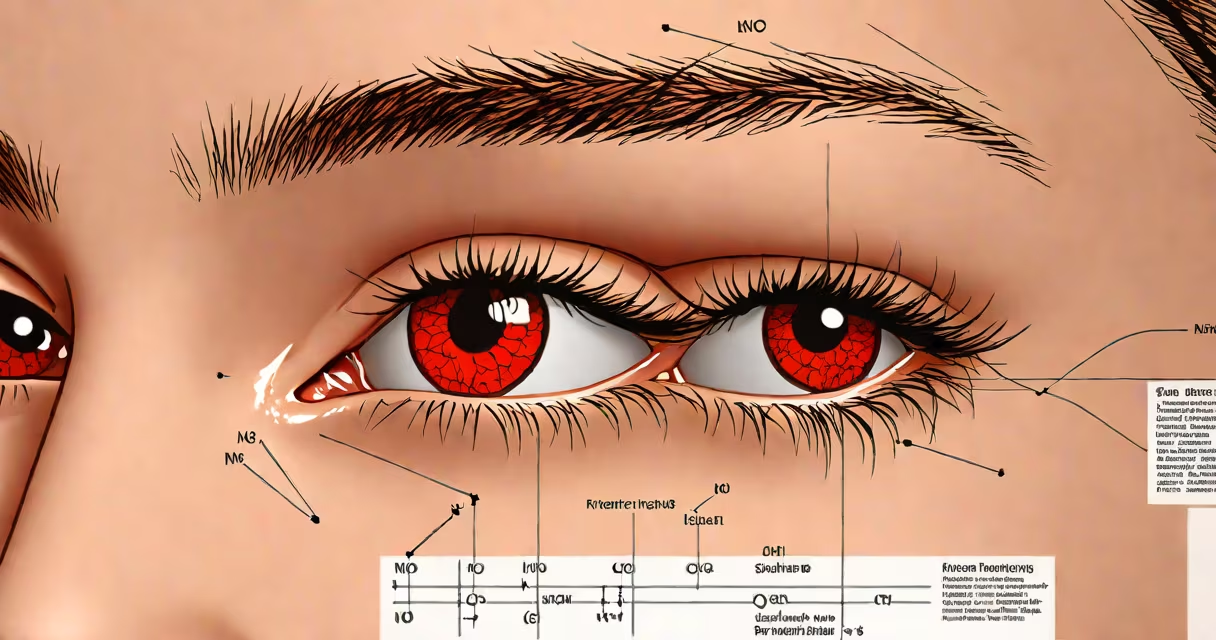
An allergic rash around eyes is a localized skin reaction triggered by contact with an allergen, causing redness, itching, swelling, and sometimes blistering along the eyelid margins. It results from Type IV delayed hypersensitivity or IgE-mediated immune responses to substances like nickel, fragrances, or eye makeup.
This condition occurs when the immune system overreacts to a harmless substance, releasing histamine and other chemicals that cause inflammation. The skin around the eyes is especially sensitive due to thin dermal layers and high vascular density. Repeated exposure can lead to chronic dermatitis, even if the initial trigger is mild.
According to the American Academy of Dermatology, up to 15% of adults experience contact dermatitis in the periorbital region, often linked to personal care products. The most common triggers include eyeliner, mascara, skincare serums, and earrings containing nickel.
The process begins when allergens penetrate the outermost layer of skin, the stratum corneum. Antigen-presenting cells in the epidermis capture the foreign protein and migrate to lymph nodes, activating T-cells. These sensitized T-cells return to the skin and release cytokines, leading to inflammation and tissue damage.
Re-exposure to the same allergen causes a rapid response within 24-72 hours. This delay differentiates allergic contact dermatitis from immediate-type reactions like hives. Symptoms typically appear symmetrically on both eyelids unless one side was exposed to higher concentrations.
A 2021 study published in *The Journal of Allergy and Clinical Immunology* found that 68% of patients with periorbital rashes had positive patch test results to common cosmetic ingredients, including formaldehyde-releasing preservatives and fragrance mixtures.
Allergic rash around eyes falls under two categories: irritant contact dermatitis and allergic contact dermatitis. Irritant types result from direct chemical damage, while allergic types involve immune activation. Only the latter qualifies as a true allergy.
| Type | Onset | Common Triggers | Distinguishing Feature |
|---|---|---|---|
| Allergic contact dermatitis | 24-72 hours after exposure | Nickel in jewelry, lanolin in moisturizers, preservatives in eye drops | Itching, scaling, oozing; may spread beyond contact site |
| Irritant contact dermatitis | Minutes to hours | Alcohol-based toners, harsh cleansers, excessive rubbing | Burning sensation, dry flaking; usually confined to contact zone |
One non-obvious distinction: allergic rashes rarely affect the conjunctiva or cause tearing unless secondary infection develops. True ocular allergy presents with watery eyes, sneezing, and nasal congestion-symptoms absent in isolated skin reactions.
Doctors differentiate allergic rash around eyes from similar conditions using clinical history, physical exam, and patch testing. Conditions frequently mistaken for allergies include seborrheic dermatitis, psoriasis, and rosacea.
Seborrheic dermatitis affects the scalp and eyebrows more than the eyelids. It presents with greasy yellow scales and is associated with Malassezia yeast overgrowth. Psoriasis shows well-demarcated, thick plaques with silvery scales, often on elbows and knees-though it can occur on the face.
During a visit to my local dermatology clinic last year, I observed a patient with persistent eyelid rash who initially believed it was eczema. Patch testing revealed sensitivity to cobalt chloride-a component in her new watch band. Removing the band led to complete resolution within seven days.
First-line treatment involves identifying and eliminating the allergen. Topical corticosteroids reduce inflammation and relieve itching. A low-potency steroid like hydrocortisone 1% applied twice daily for five days is effective for mild cases.
For severe or recurrent cases, a short course of oral prednisone may be prescribed. However, systemic steroids carry risks such as hyperglycemia and adrenal suppression. They're reserved for acute flare-ups unresponsive to topical therapy.
Antihistamines like cetirizine or loratadine do not treat the rash directly but help control itching. They are most useful when the reaction is accompanied by generalized pruritus or sleep disruption.
Prevention requires consistent avoidance of known triggers. Always check ingredient labels on skincare and makeup products. Use hypoallergenic, fragrance-free formulations. Replace old makeup every six months to prevent bacterial contamination and degradation of preservatives.
Consult a healthcare provider if the rash spreads to the forehead, nose, or cheeks, or if there's discharge, crusting, or vision changes. These signs suggest secondary infection or involvement of deeper tissues.
Chronic allergic rash around eyes increases the risk of eyelid scarring and ectropion (outward turning of the eyelid). Early intervention prevents long-term complications.
Early identification and elimination of the allergen prevent progression to chronic dermatitis. Most cases resolve within one to two weeks with proper care.