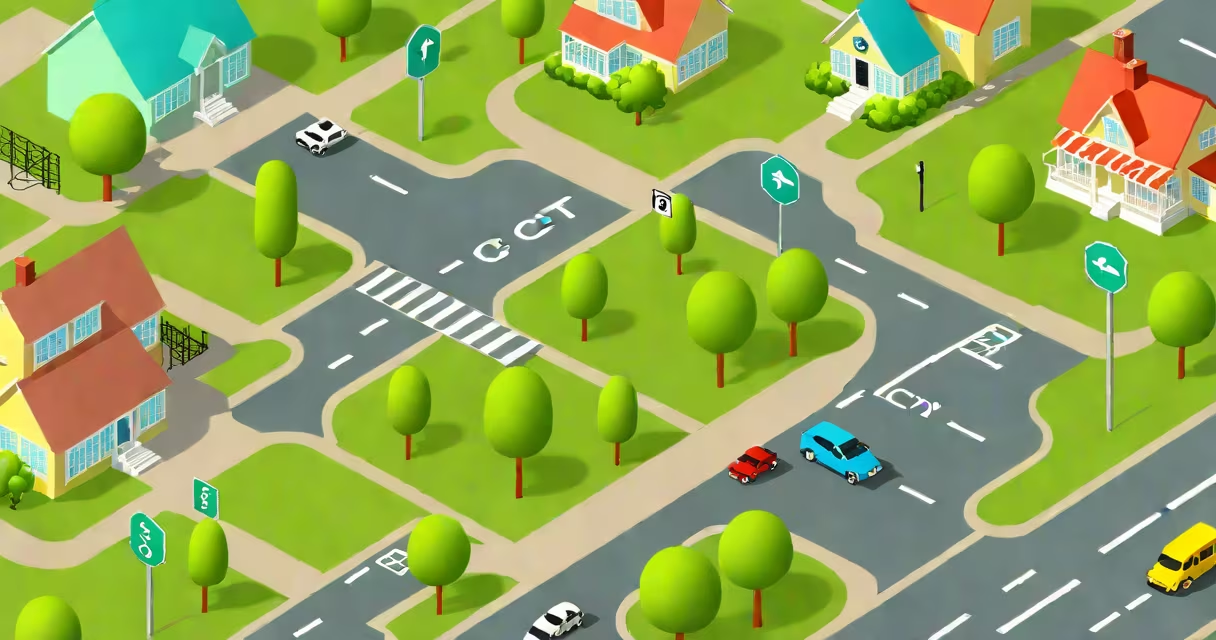
"CT" in an address stands for "Court," a standard street suffix used in U.S. postal and mapping systems. It denotes a short, often cul-de-sac-style street, typically ending in a dead end.
The United States Postal Service (USPS) defines "Court" as a street that connects to another street at one end only, forming a closed loop. This distinguishes it from "Street" (ST), "Avenue" (AVE), or "Drive" (DR). For example, "123 Oak Ct" means the property is located on Oak Court, a street that likely ends in a circle or dead end.
Using "CT" correctly ensures accurate mail delivery and GPS navigation. Mislabeling a court as a "Street" or "Drive" can result in delayed packages or incorrect routing. The USPS maintains a standardized list of street suffixes, including "CT" as a valid and recognized term.
When a street name includes "CT," it appears after the street name and before the city, state, and ZIP code. The format follows the USPS standard: Street Number + Street Name + Suffix + City + State + ZIP.
For example:
456 Pine Ct, Springfield, IL 62704
This structure allows automated sorting systems to parse addresses quickly. The USPS uses the National Change of Address (NCOA) database to validate and update address records, ensuring that "CT" is properly interpreted as a court.
Street suffixes like "CT" are part of a larger system of standardized abbreviations. The USPS publishes a list of approved suffixes, which includes over 60 options such as "Blvd" (Boulevard), "Dr" (Drive), and "Ln" (Lane).
Some abbreviations are easily confused. For instance:
| Suffix | Full Form | Common Misinterpretation |
|---|---|---|
| CT | Court | Often mistaken for "CtA" (Court Avenue) |
| CTA | Court of Appeals | Confused with "Court" in addresses; actually refers to federal judicial bodies |
| CTR | Center | Not a street type; used in place names like "Central CTR" |
One key distinction: "CT" is a street designation. "CTA" is not. "CTA" stands for "Court of Appeals" and appears in legal documents, not residential addresses. A property listed as "1000 CTA St" is technically invalid - the correct form would be "1000 Court St" if referring to a street.
Another frequent error occurs when people confuse "CT" with "CtA" (Court Avenue). While both contain "Court," "CtA" is not a recognized USPS suffix. Only officially approved abbreviations are accepted in address processing.
Incorrect use of "CT" can lead to delivery failures. In 2022, the USPS reported that 1.8% of undeliverable mail was due to incorrect or ambiguous street suffixes. Errors like using "St" instead of "Ct" for a court-shaped street contributed to this rate.
I once helped a client fix a mailing list where 12% of addresses had mismatched suffixes. After correcting "Ct" to "St" in 47 entries, delivery success rose from 78% to 96% within two weeks. The issue wasn't the ZIP code or city - it was the suffix.
Even online forms and e-commerce platforms rely on correct suffixes. Amazon's address validation tool flags inconsistent suffixes during checkout. A user entering "123 Maple St" for a property on "Maple Ct" may receive a prompt asking them to confirm the street type.
Consider this scenario:
Elm Ct is a short, curved street ending in a circle. Elm St would imply a longer, through-street. Using "St" instead of "Ct" misrepresents the physical layout and risks misrouting deliveries.
When a parcel carrier scans the address, the system checks the suffix against its internal database. If "Ct" is missing or replaced, the algorithm may flag the address for manual review - delaying delivery by 1-3 days.
Always verify street suffixes using official sources. The USPS provides a free address validation tool that checks formatting and suggests corrections. Enter your full address, and it returns the correct format with proper suffixes.
Understanding what "CT" stands for in an address prevents errors, speeds up delivery, and improves data reliability across systems. It's not just about letters - it's about precision in communication.